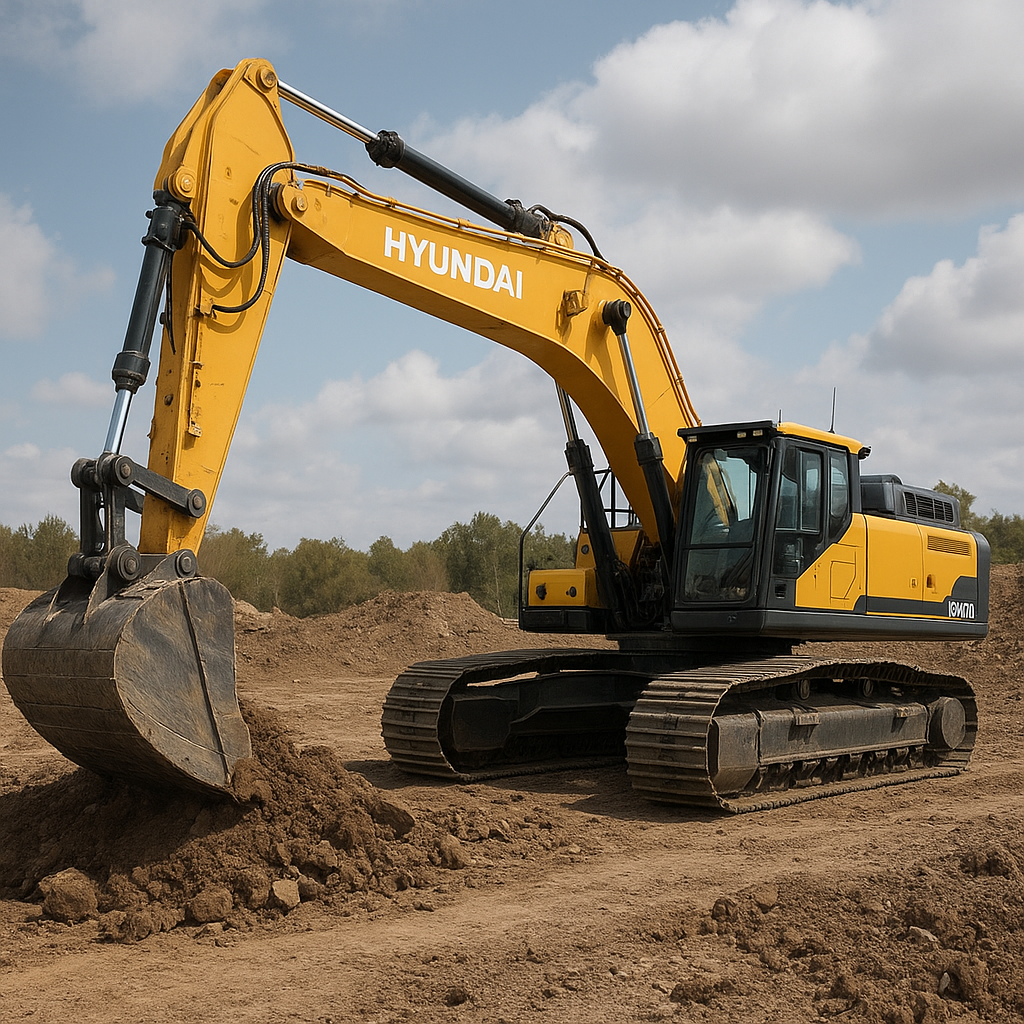
The Hyundai HX900L is a heavyweight member of Hyundai Construction Equipment’s line of large-scale machines, engineered to tackle some of the most demanding earthmoving and material-handling tasks. Combining robust mechanical design with modern hydraulics, operator comfort improvements, and service-friendly layouts, the HX900L has been adopted in sectors where scale, reach, and endurance are primary concerns. This article explores the machine’s features, typical applications, operational characteristics, maintenance considerations, and market context — helping fleet managers, site supervisors, and equipment enthusiasts understand what sets this class of excavator apart.
Overview and Market Position
The HX900L is positioned in the heavy excavator segment, serving projects that require high-capacity digging, loading, ripping, or material handling. As part of Hyundai’s HX series, it benefits from the manufacturer’s focus on combining proven mechanical systems with modern electronic control and comfort features. In this class, the machine is typically used as a primary production excavator on large civil works, open-pit mining support, quarry operations, and major infrastructure projects.
Hyundai markets the HX900L as a machine that balances power and controllability, aiming to deliver high hourly production while controlling fuel consumption and downtime. Compared with compact or medium excavators, the HX900L offers substantially greater reach, breakout force, and bucket volume, translating into fewer cycles and lower cycle times per cubic meter moved — a key advantage on high-volume jobsites.
Design and Key Features
The HX900L’s engineering focuses on three pillars: structural robustness, hydraulic performance, and operator productivity. The undercarriage, upper frame, boom and arm are typically constructed from high-strength steel with reinforcements in high-stress zones. The machine’s layout emphasizes service access, enabling mechanics to reach filters, pumps, and key components without extensive disassembly.
Hydraulics and Controls
At the heart of the HX900L are sophisticated hydraulic systems designed to deliver consistent flow and precise control under heavy load. The machine commonly features variable-displacement axial-piston pumps, load-sensing valves, and advanced electronic control units that modulate flow to match operator demands. This reduces parasitic losses, improves multi-function efficiency, and provides smoother cycle times when executing simultaneous boom, arm, and bucket movements.
Engine and Powertrain
The powertrain is typically centered on a robust diesel engine tuned for high torque at low engine speeds, which enhances fuel economy and longevity. The drivetrain components — swing gearbox, final drives, and travel motors — are selected for heavy-duty cycles, with emphasis on heat management and contamination resistance. Operators benefit from consistent swing torque, reliable travel speed under load, and predictable performance in hot or dusty environments.
Cab and Operator Environment
Operator comfort is a focus in modern heavy excavators because it directly affects productivity and safety. The HX900L usually offers a spacious cab with sound insulation, ergonomic controls, adjustable seating, and climate control systems. Visibility is improved through large glazing and optional camera systems. Intuitive joystick and pedal layouts, combined with multi-function displays, make long shifts less fatiguing and reduce the learning curve for new operators.
Typical Applications and Use Cases
The HX900L is designed for high-demand environments. Typical applications include:
- Large-scale earthmoving and cut/fill operations on highways, dams, and airports
- Primary loading excavator at quarries and sand/gravel pits, loading haul trucks or crushers
- Surface mining support for overburden removal, benching, and road building
- Port and bulk-material handling with specialized buckets or grapples
- Demolition and material processing when fitted with breakers or shears
- Pipeline trenching and deep foundation excavation when paired with long-reach configurations
Because of its scale and reach, the HX900L is often used in situations where cycle efficiency and machine uptime drive the cost-per-cubic-meter. Using large buckets and powerful hydraulics, it can reduce the number of cycles required compared with smaller machines, which is a major economic advantage on long-duration projects.
Performance and Typical Specifications
Specifications for machines in this class vary by market, configuration, and optional equipment. Below are typical ranges and representative figures to illustrate expected performance characteristics for a large excavator like the HX900L. For absolute values, consult the factory spec sheet for a specific model year and configuration.
- Operating weight: generally in the range of 80,000–95,000 kg (approximately 80–95 tonnes), depending on counterweights, undercarriage length, and attachment choice.
- Engine power: commonly in the range of 350–550 kW (≈470–740 hp), tuned for high torque at low rpm to support heavy digging cycles.
- Bucket capacity: typical production buckets range from 3.0 to 6.0 m3 for general rock and earth, with specialized buckets available for high-density materials.
- Maximum digging depth: often between 7.5 and 10.5 meters, with long-reach arm options extending that reach further for specialized tasks.
- Maximum reach at ground level: often from 11 to 14 meters in standard boom/arm configurations.
- Hydraulic pressure: operating system pressures commonly between 28 and 35 MPa, depending on pump and valve design.
- Payload and loading: designed to match large haul trucks (30–60+ tonne truck classes) to optimize loading cycles.
Actual fuel consumption depends on duty cycle, attachment, operator behaviour, and site conditions. However, modern control systems and engine tuning aim to minimize specific fuel consumption while maintaining productivity. Telemetry and fuel-management options can further help fleet managers quantify and optimize fuel usage.
Attachments and Customization
One of the HX900L’s strengths is adaptability through a wide range of attachments. Typical options include:
- General-purpose and rock buckets with wear-resistant liners
- Heavy-duty rippers for breaking up compacted layers or frozen ground
- Hydraulic breakers and hammers for demolition and secondary breaking
- Grapples and magnets for scrap handling or demolition debris sorting
- Thumbs and quick couplers for rapid switching between tools
- Long-reach booms and arms for dredging, deep trenching, or high-reach demolition
Specialized attachments often require reinforcement of boom and arm structures, adjustments to hydraulic flow provisions, and changes in counterweight to maintain stability. Manufacturers and aftermarket suppliers can provide engineered kits for those needs, allowing the HX900L to serve as a multipurpose platform across seasons and project types.
Maintenance, Serviceability, and Reliability
Maintenance strategy for the HX900L emphasizes uptime and predictable service intervals. Key elements include easy access to daily service points (filters, grease points, fluid checks), modular components for quicker replacements, and diagnostics integrated into the machine display or telematics platform.
Planned maintenance typically covers:
- Daily inspections: visual checks, fluid levels, lubrication, track tension
- Short intervals (250–500 hours): filter replacements, lubrication, basic inspections
- Medium intervals (1,000–2,000 hours): hydraulic oil and filter changes, engine service
- Major intervals (3,000–5,000+ hours): transmission service, pump rebuilds, structural inspections
Maintenance philosophies for large excavators often include condition-based monitoring (oil analysis, vibration checks) and predictive maintenance enabled through telematics. These practices can significantly reduce unplanned downtime and extend component life. Fuel filters, hydraulic hoses, and undercarriage wear parts are typical high-maintenance items on heavy machines; proactive stocking and scheduled replacements are essential for continuous operation.
Safety, Operator Productivity, and Ergonomics
For heavy machines like the HX900L, safety systems are integral to design. Features often include:
- ROPS/FOPS-certified cabs to protect operators in the event of rollovers or falling objects
- Rear and sideview cameras, proximity sensors, and audible alarms for safer maneuvering
- Automatic engine shutdown options and working-mode limits to prevent misuse
- Emergency exits and fire suppression system options for high-risk environments
Operator productivity is a function of both machine capability and human factors. A comfortable, well-isolated cab with intuitive controls reduces fatigue and errors. Advanced control modes (e.g., power modes, fine-control settings, and automated return-to-dig sequences) allow operators to match the machine’s response to the task, increasing per-hour output while lowering fuel consumption and wear.
Training and competency are also critical: properly trained operators can reduce cycle times, minimize harmful machine movements, and extend component life. Simulator-based training and manufacturer/operator programs can accelerate skill development, especially for complex attachments and multi-machine workflows.
Economics, Resale, and Lifecycle Considerations
Purchasing a machine like the HX900L is a capital-intensive decision. Cost factors to consider include initial acquisition price, financing, parts and service availability, fuel costs, operator training, and expected utilization rate. High initial utilization (i.e., many operating hours per year) tends to justify the ownership of large excavators, whereas lower hourly use may favour rental strategies.
Resale value depends on maintenance history, hours, operating conditions, and market demand. Machines with comprehensive service records and original components typically command higher prices in the secondary market. Hyundai’s global dealer network and parts availability influence lifecycle cost and resale attractiveness in different regions.
Environmental and Regulatory Aspects
Environmental compliance is increasingly relevant for heavy equipment. Engines meet regional emission standards (Tier/Stage/Fuel regulations), and HVAC and exhaust treatments may be included to meet local requirements. Efficient hydraulic systems and optimized controls help reduce fuel consumption and emissions per unit of work, aligning with broader sustainability goals on large projects.
Noise and dust control are additional site considerations: mufflers, acoustic packages, and water-spraying or dust-suppression attachments are common measures to comply with site permits and community expectations.
Comparisons and Competitive Context
Within its class, the HX900L competes with machines from major OEMs that offer similar tonnage and capacity. Buyers typically compare metrics such as fuel efficiency per cubic meter, cycle times, operating weight, hydraulic force, aftersales support, and local dealer network strength. The HX900L’s competitive advantages often stem from a balance of rugged construction, modern hydraulic systems, and price-positioning within the heavy-excavator market.
Practical Tips for Operators and Fleet Managers
- Match bucket size to the truck or crusher to avoid overloading cycles — right-sizing maximizes productivity and reduces wear.
- Use telematics to track utilization, idle time, and fuel burn; continuous monitoring allows optimized scheduling and preventive maintenance.
- Establish a parts inventory plan for common wear items (undercarriage links, teeth, pins and bushings, filters) to minimize downtime.
- Train operators on machine modes and eco-driving techniques; small changes in throttle and hydraulic mixing can yield measurable fuel savings.
- Consider full-life cost comparisons (acquisition + operation + maintenance + disposal) rather than sticker price alone.
Conclusion
The Hyundai HX900L is representative of modern heavy excavators designed for high-capacity production environments. Its strengths lie in robust structural design, advanced hydraulic control, and adaptability through a wide range of attachments. While exact specifications vary by model year and configuration, machines in this class are engineered to deliver substantial hourly production with attention to efficiency, durability, and operator-centered features. For organizations undertaking large civil works, quarrying, or mining support, the HX900L and comparable machines are critical assets that, when properly integrated into fleet and maintenance strategies, can deliver strong project economics and sustained performance.
Note: For precise technical specifications (engine model, exact weights, hydraulic flow rates, or factory performance certificates), consult the official Hyundai Construction Equipment documentation or an authorized dealer. Configurations and figures may change over time and vary by region.


)
)