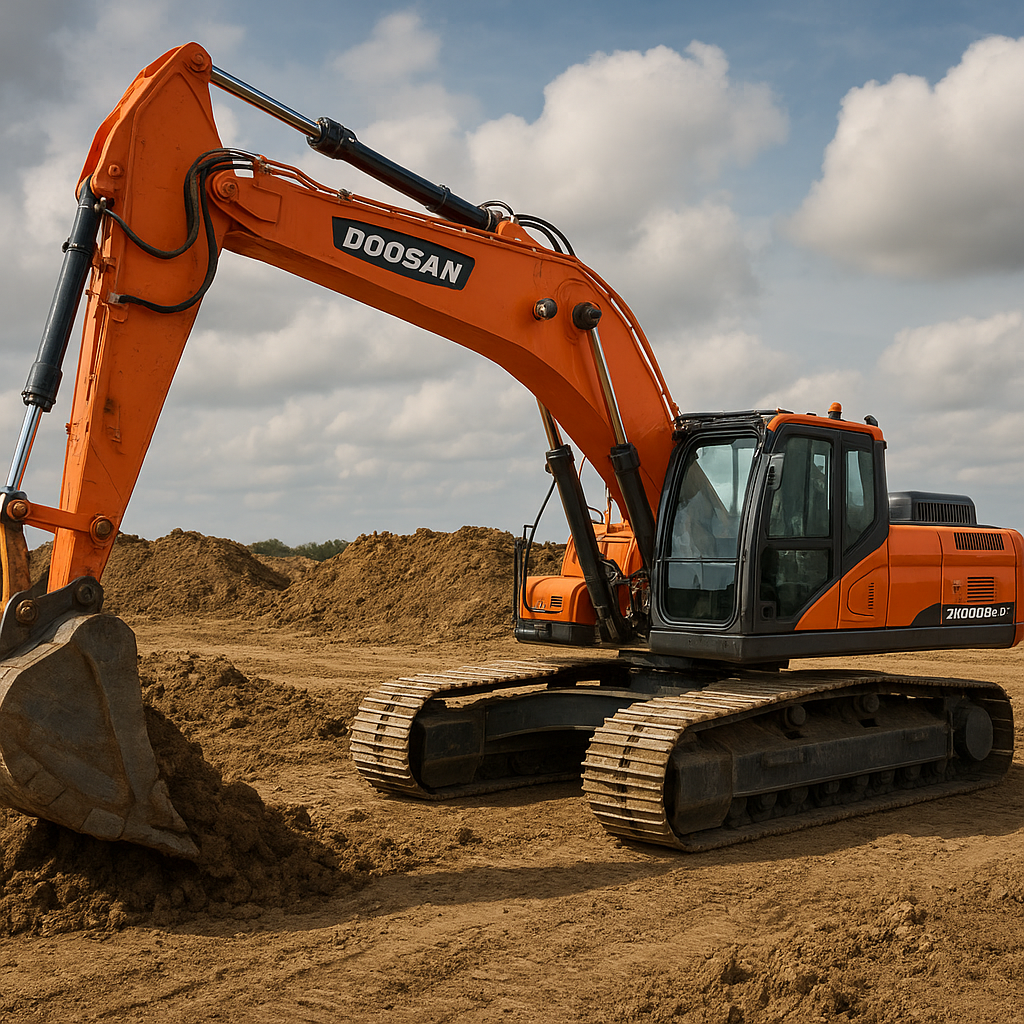
The Doosan DX1000LC is a heavyweight contender in the world of hydraulic excavators, designed to meet the demanding needs of large-scale mining, quarrying and heavy civil engineering projects. Combining robust construction with advanced hydraulics and operator-focused features, this machine represents a blend of power, durability and versatility. In the sections that follow, we will explore the DX1000LC’s design, typical applications, technical characteristics, operational performance, maintenance considerations and other noteworthy aspects relevant to owners, operators and fleet managers.
Overview and key design principles
The Doosan DX1000LC belongs to the ultra-large excavator class, built to tackle tasks that require exceptionally high digging force, large bucket capacities and continuous heavy-duty operation. From the outset, Doosan’s engineering for this model focuses on maximizing productivity per operating hour while ensuring long-term reliability in harsh working environments.
Core design priorities include a reinforced undercarriage and upperstructure to withstand heavy loads, an efficient hydraulic system tuned for both power and controllability, and an engine package optimized for high torque at the low-to-mid RPM range—where most heavy digging cycles occur. The DX1000LC typically features a long boom and durable stick configurations to reach deep benches and load high-capacity haul trucks.
Typical applications and industries
This model is most commonly deployed where sheer mass-moving capability is required. Primary applications include:
- Open-pit mining — high production digging of ore and waste, loading of large haul trucks and primary trenching.
- Quarrying — extraction of stone, aggregates and dimension stone where large bucket volumes and high breakout force increase cycle efficiency.
- Civil and heavy construction — excavation for dam foundations, levees, and major infrastructure projects that need heavy earthmoving and rock handling.
- Bulk material handling and port terminals — stockpiling, reclaiming and loading ships where reach and bucket size boost throughput.
- Specialized demolition and scrap handling — when fitted with appropriate hydraulic breakers, grapples or shears the DX1000LC can be used in large-structure demolition and heavy scrap processing.
Technical specifications and performance (typical values)
Specifications for large excavators can vary depending on the final configuration, attachments and market-specific options. The following figures reflect typical values for the Doosan DX1000LC class; always refer to manufacturer documentation or the machine’s data plate for final, model-specific numbers.
- Operating weight: approximately 95,000–105,000 kg (about 209,000–231,000 lb), depending on configuration and counterweight.
- Engine power: typically in the range of 400–550 kW (540–740 hp), tuned for high torque at low engine speeds.
- Bucket capacity: commonly between 3.5 and 7.0 m³ (4.6–9.2 yd³) for general-purpose buckets; specialized rock buckets may be smaller.
- Maximum digging depth: around 9.5–12 m (31–39 ft) depending on boom and arm choice.
- Reach at ground level: in the region of 12–15 m (39–49 ft).
- Hydraulic system pressure and flow are configured to enable high breakout and crowd forces while maintaining fine control for precision work.
- Travel speed is modest given the machine’s mass: typically under 4 km/h in low-range travel, designed more for stability than transit speed.
These figures translate into substantial digging force and bucket payload per cycle, making the DX1000LC efficient when paired with large-capacity haulers and conveyors. For example, when loading a 100–150 tonne haul truck, each bucketful can represent a significant portion of the truck’s payload capacity, reducing loading cycles per truck and improving pit productivity.
Hydraulics, powertrain and fuel considerations
The DX1000LC’s hydraulic architecture is typically designed around high flow and pressure to supply powerful main pumps, swing motors and hydraulic attachments simultaneously. Important features often found on machines of this class include:
- Variable displacement pumps that deliver flow efficiently according to load, improving fuel efficiency.
- Load-sensing control systems that balance power between travel, swing and working hydraulics, ensuring responsive control under heavy loads.
- Advanced filtration and cooling to protect hydraulic fluid under high temperature and contamination conditions.
Engine choice and tuning play a big role in overall operating economics. The DX1000LC is typically fitted with a high-displacement diesel engine that meets regional emissions standards (Tier/Stage equivalents), often paired with systems to manage particulate emissions and NOx. Intelligent engine management and eco-mode features allow operators to dial back fuel consumption when full power isn’t required, contributing to lifecycle cost optimization.
Operator environment and safety features
Given the long shifts common in mining and heavy construction, the DX1000LC focuses on operator comfort and safety. Typical cabin and control features include:
- Spacious, climate-controlled cab with vibration damping to reduce operator fatigue.
- Ergonomic joystick controls and adjustable seating to improve precision and reduce strain.
- Panoramic glazing and thoughtfully placed mirrors and cameras for enhanced visibility around the machine.
- Integrated monitoring systems that display hydraulic, engine and diagnostic information, enabling proactive maintenance.
- Safety systems such as emergency stops, guard rails on walkways, anti-slip surfaces and optional proximity detection for personnel working near the excavation zone.
Operator training is emphasized by fleet managers because a skilled operator can extract significantly more value from a large excavator: smoother cycles, less unnecessary idle time, and longer component life all contribute to better fleet economics.
Attachments, customization and versatility
One of the DX1000LC’s strengths is its compatibility with a wide range of heavy-duty attachments, allowing operators to adapt the same base machine to many tasks. Typical attachments include:
- Large general-purpose and rock buckets
- Hydraulic breakers and hammers for primary rock breaking
- Grapples for scrap and bulk handling
- Shears for demolition
- Clamshells and specialized grabs for material handling operations
Attachment integration and hydraulic circuitry are engineered so that swapping tools is relatively straightforward for trained technicians, minimizing downtime. Counterweight and undercarriage options are often available to match stability requirements for heavy attachments or deep digging configurations.
Maintenance, uptime and lifecycle costs
Durability and maintainability are central to the economics of a machine like the DX1000LC. Typical maintenance and fleet-management considerations include:
- Regular oil and filter changes on engine and hydraulic systems—intervals scaled to operating hours and environmental conditions.
- Wear monitoring for undercarriage components such as tracks, rollers and sprockets, which represent a significant portion of recurring maintenance.
- Periodic inspection and potential replacement of boom and stick pins and bushings—areas of concentrated wear under heavy cyclic loading.
- Condition monitoring via telematics and on-board diagnostics to spot impending failures and optimize service scheduling.
When managed correctly, a DX1000LC can offer many years of productive service in mining and quarry environments. Preventive maintenance, operator training and using quality lubricants and replacement parts are key levers to control lifecycle costs and maintain high availability.
Environmental impact and regulatory compliance
Large excavators consume significant fuel and must meet emissions standards set by regulatory bodies in different markets. Manufacturers address this through:
- Engines that comply with Tier 4 Final, Stage V or equivalent emissions regulations depending on the market, often using exhaust aftertreatment systems.
- Efforts to improve fuel efficiency via intelligent hydraulics and engine mapping to reduce CO2 emissions per tonne moved.
- Options for biodegradable hydraulic fluids or improved filtration to reduce environmental contamination risks.
In many operations, fleet managers track fuel consumption per tonne of material moved as a key environmental and cost metric. Reducing fuel use not only lowers operating expense but also helps sites meet sustainability targets and community expectations.
Case scenarios and productivity examples
To understand how the DX1000LC translates into field performance, consider a few hypothetical scenarios:
- Open-pit mining: Working alongside 100–150 tonne haul trucks, a DX1000LC equipped with a 6 m³ bucket can deliver large, consistent payloads. If the machine averages 300–350 cycles per shift, daily material moved can exceed several thousand tonnes, depending on bucket fill and cycle time.
- Quarry operations: With a durable rock bucket and hydraulic breaker attachment for initial freeing of material, the excavator can minimize drilling/blasting cycles and prepare oversized material for further crushing and processing.
- Bulk handling: In port or stockpile contexts, fitted with a clamshell or heavy-duty grapple, the DX1000LC can load large-capacity vessels or transfer conveyors, increasing throughput relative to smaller machines.
Actual productivity depends heavily on operator skill, site layout, material characteristics and support equipment. The DX1000LC’s advantage shows most strongly when paired with complementary heavy-duty infrastructure—large haul trucks, high-capacity conveyors and well-planned benches.
Market positioning and fleet considerations
As a top-tier, high-capacity excavator, the DX1000LC competes with machines from several global manufacturers in the 80–110 tonne class. Fleet managers evaluate this machine based on:
- Initial acquisition cost versus expected useful life and resale value.
- Maintenance and parts availability in the operating region.
- Fuel efficiency and per-tonne operating cost benchmarks.
- Compatibility with existing fleet infrastructure and transport logistics (trailering, assembly/disassembly for road movement).
In many cases, the decision to include a machine like the DX1000LC in a fleet is driven by a specific operational need—once a site reaches a production threshold or adopts larger haul trucks, economies of scale favor the deployment of ultra-large excavators to reduce per-tonne costs.
Final remarks: strengths and considerations
The Doosan DX1000LC is engineered to perform where scale matters: high breakout forces, large buckets and durable construction enable operators to move massive volumes of material. Its principal strengths are power, durability, and flexibility with heavy attachments. Key considerations for potential buyers include the significant capital and operating costs, the need for skilled operators and technicians, and infrastructure needs for transport and servicing.
When operated within the right context—large open pits, quarries or heavy civil works—the DX1000LC can be a cornerstone asset that delivers high throughput, stable performance and long service life. Proper maintenance regimes, telematics-supported monitoring and investment in operator training will significantly increase the machine’s return on investment and contribute to sustainable, efficient operations.


)
)