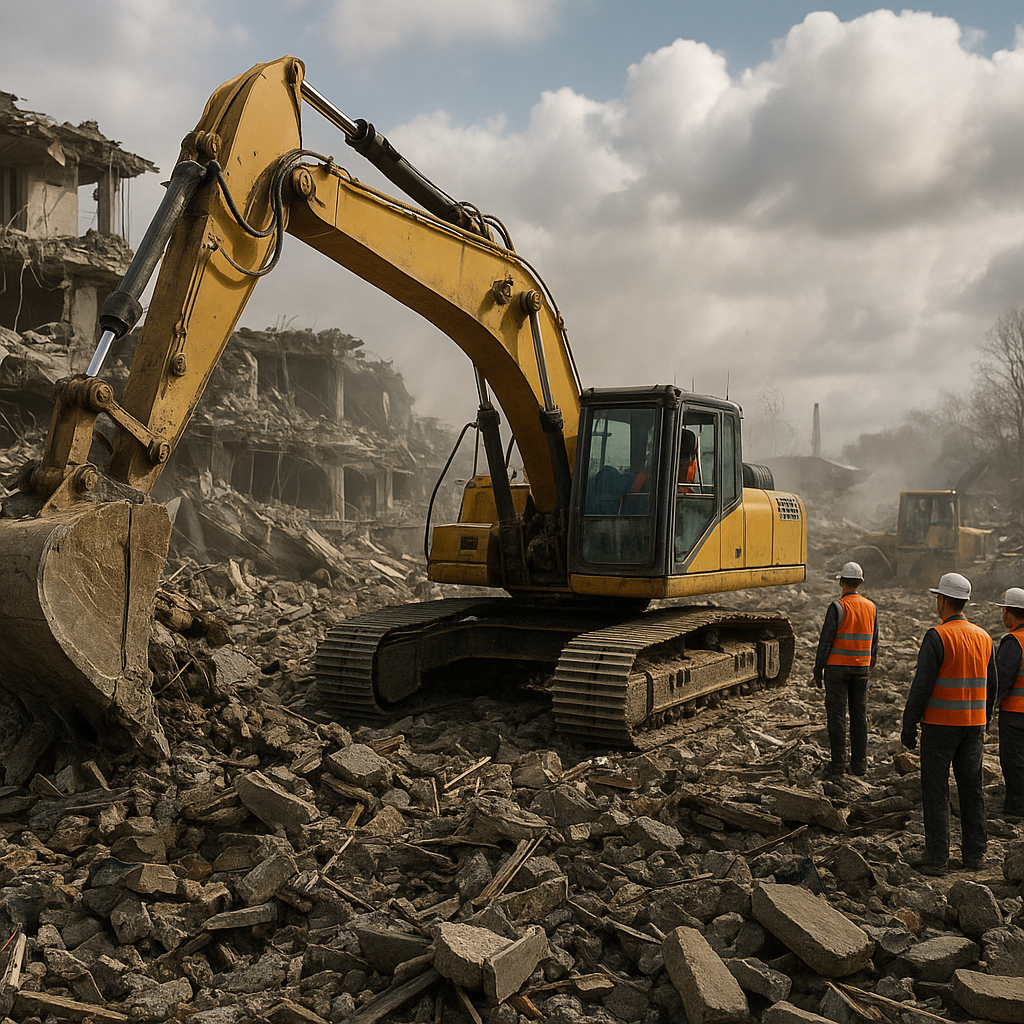
The integration of heavy machinery plays a pivotal role in modern disaster recovery operations, enabling responders to restore critical infrastructure, clear debris, and facilitate relief efforts with unprecedented speed and precision. From the initial damage assessment to the long-term rebuilding phase, the deployment of robust mechanical assets can mean the difference between prolonged disruption and accelerated community resurgence. This article explores key strategies for mobilizing equipment, examines specialized machines and their applications, highlights cutting-edge innovations, and addresses safety and environmental considerations that underpin effective recovery missions.
Strategic Deployment of Heavy Machinery in Disaster Zones
Effective mobilization begins with a thorough site assessment and risk analysis. Teams must rapidly evaluate terrain conditions, access routes, and structural stability following events such as earthquakes, hurricanes, floods, or industrial accidents. Coordination among government agencies, relief organizations, and private contractors ensures that the right assets arrive when and where they are needed most.
Logistical challenges often include damaged roads, collapsed bridges, and restricted airspace. To overcome these obstacles, planners may stage equipment at forward operating bases, employ specialized transporters for oversized loads, and leverage modular platforms that allow machinery to be airlifted or shipped by sea. Maintaining open lines of communication—via satellite uplinks, portable command centers, and robust digital maps—supports ongoing coordination and resource allocation.
The rapid response of heavy machinery hinges on pre-established agreements and mutual aid compacts, which streamline permitting and customs clearance in cross-border scenarios. Public–private partnerships can also secure immediate access to fleets of excavators, cranes, and loaders, significantly reducing the delay between disaster onset and equipment activation.
Key Equipment and Functional Roles
Excavators and Earthmovers
Excavators combine power and agility to remove debris, dig trenches for utilities, and stabilize unstable ground. Equipped with hydraulic arms and various attachments—such as rock crushers, grapples, and augers—they adapt to diverse recovery tasks. Earthmovers, including bulldozers and motor graders, excel at leveling terrain, creating access roads, and redistributing spoil material. Their tracks or heavy-duty tires allow safe navigation over muddy or uneven surfaces.
Cranes and Lifting Units
Cranes provide essential vertical lift capacity for clearing collapsed structures, lifting prefabricated units, and positioning heavy beams during reconstruction. Mobile telescopic cranes offer fast setup times, while lattice-boom variants handle extreme loads at extended reach. Specialized attachments—such as concrete grabs and magnet blocks—enable multi-modal utility, transforming a single crane into a versatile tool for debris extraction and material handling.
Loaders, Dump Trucks, and Transport Vehicles
Front-end loaders and skid-steer vehicles shuttle debris into dump trucks, accelerating removal from work sites. Articulated haulers and all-terrain trucks deliver earthfill, sandbags, and relief supplies to remote or cut-off communities. Flatbed trailers and containerized modules support the rapid deployment of portable shelters, medical facilities, and field kitchens, extending the reach of humanitarian assistance.
Technological Innovations and Remote Operations
Recent advances in automation and telematics have revolutionized equipment performance and oversight. Real-time data streams from onboard sensors monitor fuel consumption, engine health, and hydraulic pressures, enabling predictive maintenance and minimizing costly downtime. Integrated GPS and drone-based surveys generate accurate 3D topographical maps, guiding machinery to focus on priority areas with surgical precision.
- Autonomous navigation systems permit excavators and bulldozers to follow preprogrammed paths, reducing operator fatigue and enhancing consistency in repetitive tasks.
- Remote-control consoles allow skilled operators to manage machinery from safe distances, mitigating exposure to hazardous environments such as unstable structures or chemical spill sites.
- Augmented-reality displays overlay critical information—load charts, obstacle alerts, and safety zones—directly in the field of vision, improving situational awareness.
- Teleoperated robotic attachments fit onto standard heavy equipment frames, transforming them into remote responders capable of entering confined spaces or high-radiation zones.
These innovations not only boost operational efficiency but also contribute to greater resilience by reducing the manpower footprint and accelerating the pace of recovery missions.
Ensuring Safety, Sustainability, and Community Involvement
Rigorous safety protocols are vital when operating in dynamic disaster environments. Mandatory pre-shift inspections, clear demarcation of exclusion zones, and continuous air quality monitoring protect crews from secondary collapse, airborne particulates, and toxic exposures. Onsite medical teams and emergency evacuation plans further bolster worker welfare.
Environmental stewardship demands careful planning to minimize ecosystem disruption. Erosion control measures, sediment barriers, and proper disposal of hazardous waste prevent long-term damage to watercourses and wildlife habitats. Energy-efficient engines, hybrid power systems, and bio-based hydraulic fluids reduce the carbon footprint of large-scale recovery operations.
Community engagement ensures local needs and cultural sensitivities shape recovery priorities. Hiring and training residents fosters local ownership, accelerates skills transfer, and injects resources into the affected economy. Workshops on basic machine operation and maintenance empower communities to undertake minor repairs and upkeep, extending the lifecycle of borrowed or rented equipment.
By aligning technological prowess with human-centric strategies, disaster recovery efforts achieve sustainable rehabilitation, restoring not only infrastructure but also hope and stability to impacted populations.