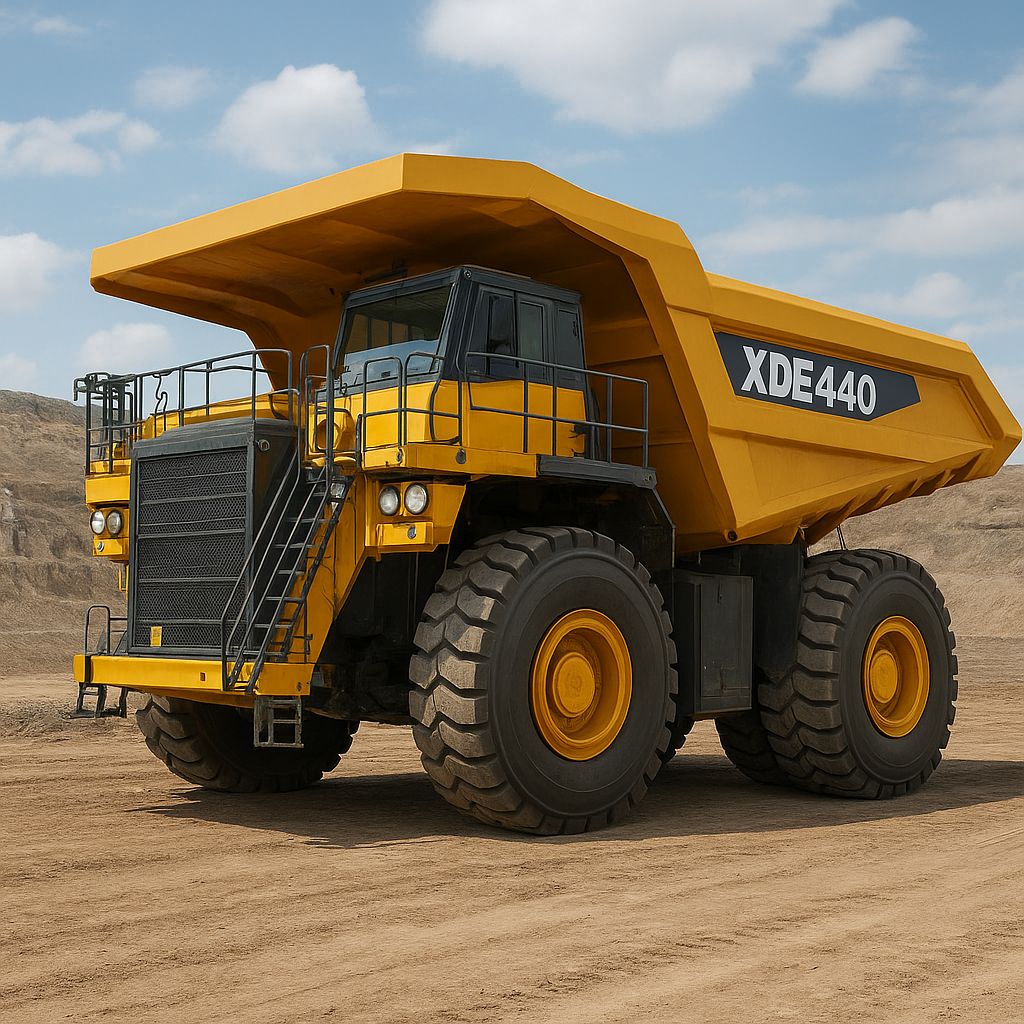
The XCMG XDE440 represents a modern approach to large-scale material handling in mining and heavy civil works. Combining robust engineering with operator-focused ergonomics, this rigid-frame haul truck is built to move large volumes of overburden, ore and construction materials efficiently and reliably. In the following sections we explore the machine’s design, typical applications, technical characteristics, operational advantages and lifecycle considerations. The article also highlights safety, environmental and maintenance aspects that influence fleet decisions in mining operations.
Overview and design philosophy
The XCMG XDE440 is part of Xuzhou Construction Machinery Group’s expanding lineup of mining equipment aimed at mid-to-large scale surface mining operations. As a rigid-frame mining truck, its primary role is to transport heavy loads between pit faces, processing plants and waste dumps. The model designation XDE440 suggests positioning in the 40–44 tonne payload class, although the exact marketed payload depends on configuration and regional variants.
Core design objectives
- Durability and frame integrity for prolonged service in abrasive environments.
- Efficient powertrain design to balance speed, gradeability and fuel consumption.
- Improved operator comfort and visibility to reduce fatigue and increase safety.
- Ease of maintenance and parts availability to minimize downtime.
XCMG aims to compete with established global manufacturers by offering machines with competitive acquisition cost, supported by a growing international sales and service network. The XDE440 reflects this strategy, combining proven technologies with local adaptation to meet diverse market requirements.
Typical applications and operational contexts
The XDE440 is engineered for heavy-duty use in several settings:
- Open-pit mining: Transporting blasted material and ore within the pit and to crushers or stockpiles.
- Quarrying: Moving quarried stone, aggregates and other bulk materials.
- Large civil earthworks: Highway construction, dam projects and land reclamation where large daily volumes must be moved.
- Port and terminal operations: Handling bulk materials in terminals that require mobile, high-capacity haulage.
In each context, the XDE440 is selected for its capacity-to-cost ratio, reliability in harsh conditions, and adaptability to site-specific requirements such as tyre choices, body configurations and optional equipment like payload monitoring systems.
Technical specifications and performance
Manufacturers often release multiple configurations for a single model, which means exact values can vary by market and specified options. Below are representative technical attributes and performance metrics commonly associated with a truck in this class. Where manufacturer data is available it is preferable for procurement decisions; the figures here give a realistic expectation for planning and comparison.
- Payload capacity: Approximately 40–44 tonnes (metric), consistent with the model’s class. Some regional variants may be tuned to 36–45 tonnes depending on regulatory and site constraints.
- Gross vehicle weight (operating): Typically in the 60–80 tonne range when loaded, depending on body capacity and optional equipment.
- Engine power: Diesel engines in this class commonly range from 300 kW to 450 kW (roughly 400–600 horsepower), offering the torque required for steep grades and heavy loads.
- Transmission: Heavy-duty mechanical or automated power-shift transmissions optimized for mine duty cycles; torque converters and retarder packages are common for braking control.
- Top speed: When unloaded, typical top speeds range 50–65 km/h; loaded speeds are lower and depend on slope and ground conditions.
- Fuel capacity: Large tanks (several hundred liters) to support long operating shifts without refueling; exact volume varies with configuration.
- Body and dump volume: Body capacity is tailored to payload and material density; approximate volumes often range 18–30 m3 for trucks in this payload class.
- Turning radius and mobility: Designed to balance manoeuvrability in pit roads with stability when loaded; articulation is minimal for rigid-frame designs, so haul road geometry is a planning factor.
Performance in real-world conditions will depend on tyre selection, road maintenance, climate, operator behavior and site layout. Operators typically monitor cycle times, fuel consumption per tonne and mean time between failures (MTBF) to assess fleet effectiveness.
Operator environment and safety features
Modern mining trucks prioritize the human-machine interface to improve productivity and reduce incidents. The XDE440 is no exception, offering cab and control features designed for demanding shifts.
- Ergonomic cab layout: Adjustable seats, intuitive controls and good sightlines to minimize operator fatigue and increase situational awareness.
- Climate control: Effective heating and air conditioning to maintain a controlled cabin environment in extreme temperatures.
- Visibility aids: Large windows, mirrors and optional camera systems to assist in blind-spot management around the vehicle.
- Active and passive safety: Available features may include speed limiters, automatic brake intervention, rollover protection structures (ROPS), and operator restraint systems.
- Fleet management integration: Telemetry and fleet management systems allow remote monitoring of vehicle health, fuel usage and location, enabling predictive maintenance and improving safety oversight.
Training and procedural controls remain essential. Even with advanced safety systems, safe operation depends on well-trained operators and robust site procedural disciplines.
Maintenance, serviceability and lifecycle costs
Maintenance philosophy is critical to the total cost of ownership. The XDE440 is designed to simplify routine servicing and reduce downtime through modular components and accessible service points.
Key maintenance considerations
- Regularly scheduled inspections for drivetrain, braking systems and hydraulics.
- Proactive tyre management to manage the largest recurring cost item after fuel.
- Use of OEM or approved parts to maintain warranty and reliability expectations.
- Availability of local service networks—spare parts lead times greatly affect mean time to repair.
Lifecycle cost comparisons should account for fuel consumption per tonne moved, routine maintenance intervals, tyre wear rates, and resale value. Many operators use telematics data to refine maintenance windows and optimize parts stocking. Reliable dealer support and local parts availability can be decisive when selecting models from global manufacturers.
Fuel efficiency and environmental considerations
Fuel is a major operational expense and significant source of carbon emissions for surface haul fleets. Manufacturers and fleet managers aim to reduce consumption through engine tuning, powertrain efficiencies and operational practices.
- Engine efficiency: Modern diesel engines with electronic management systems provide improved fuel economy and lower emissions.
- Idle management: Automated shutdown and start systems help cut unnecessary idling losses.
- Alternative technologies: While battery-electric and hybrid haul trucks are expanding in some markets, diesel remains the dominant technology for many mines due to range and refueling logistics. The XDE440 platform can be part of a gradual decarbonization strategy when paired with low-emissions fuels or operational changes.
Operators focused on sustainability typically track fuel usage per tonne-kilometre and pursue incremental improvements through driver training, fleet right-sizing and road maintenance to shorten cycle times.
Comparison with global competitors
In the mid-40 tonne payload class, the XDE440 competes with offerings from established vendors. Key comparison factors include:
- Unit price and financing options—XCMG generally positions competitively on purchase price.
- After-sales support—regional dealer presence and parts logistics can favor well-established brands in certain markets.
- Performance metrics—payload utilization, fuel efficiency, and reliability determine lifecycle costs.
- Customization and optional equipment—payload monitoring, tailgate options, and telematics packages add operational flexibility.
Prospective buyers should conduct side-by-side trials or request detailed lifecycle cost models, including predictive failure modes and parts availability assessments, before committing to large fleet purchases.
Operational case scenarios and best practices
Mining operations seeking to integrate the XDE440 into their fleet typically evaluate the truck against specific site metrics:
- Daily tonnage targets and the number of trucks required to achieve those targets.
- Haul road geometry and slope limitations that affect haul cycles and engine loading.
- Material density, which influences body sizing and cycle payloads.
- Maintenance capabilities and parts logistics at remote sites.
Best practices for maximizing machine productivity include:
- Optimizing haul road surfaces to reduce rolling resistance and tyre wear.
- Implementing driver coaching to reduce fuel consumption and brake use.
- Using telematics to schedule proactive maintenance and minimize unscheduled downtime.
- Applying right-sizing—matching body volume to payload limits and material density to avoid underutilization or overloading penalties.
Trends and future developments
The mining haul truck segment is evolving under the influence of automation, electrification and digitalization. Trends affecting machines like the XDE440 include:
- Automation: Increasing adoption of autonomous haulage systems (AHS) in large, repetitive operations. While AHS is more common in very large trucks, mid-sized machines are also being integrated in mixed fleets through retrofit solutions and standardized communication protocols.
- Electrification: Hybrid and battery-electric drive systems are being piloted across the industry. Adaptation of smaller rigid trucks to partial electrification (regenerative braking, electric-assist) can reduce fuel consumption and emissions.
- Digital twins and predictive maintenance: Enhanced analytics from vehicle sensors enable predictive interventions, extending component life and improving uptime.
XCMG and other manufacturers are progressively offering platforms that can accept electronic control modules, telematics suites and compatibility with fleet management providers to remain relevant in this changing landscape.
Practical procurement advice
When evaluating the XDE440 for purchase or lease, consider the following checklist items:
- Obtain detailed technical data sheets and verify payload, engine output and operational weights for the exact configuration.
- Request references from operations that run the same model in similar conditions.
- Assess dealer network coverage and spare parts lead times for your region.
- Include total cost of ownership calculations covering fuel, tyres, parts, scheduled maintenance and expected resale value.
- Plan training programs and initial support packages during the commissioning phase.
A careful, data-driven procurement process greatly reduces the risk of unexpected costs over the machine’s lifecycle and helps ensure optimal fleet performance.
Concluding remarks
The XCMG XDE440 is positioned as a cost-effective option for operators needing a reliable mid-to-large class haul truck for surface mining and heavy civil works. Its appeal lies in the balance of capacity, maintainability and competitive acquisition cost, supported by improving global service networks. For operations focused on lowering operating expenses and improving uptime, attention to maintenance regimes, operator training and telematics integration will be as important as the initial purchase decision. As mining evolves toward greater automation and lower emissions, models like the XDE440 that can integrate modern digital and powertrain options will remain relevant to a wide range of projects.


)
)