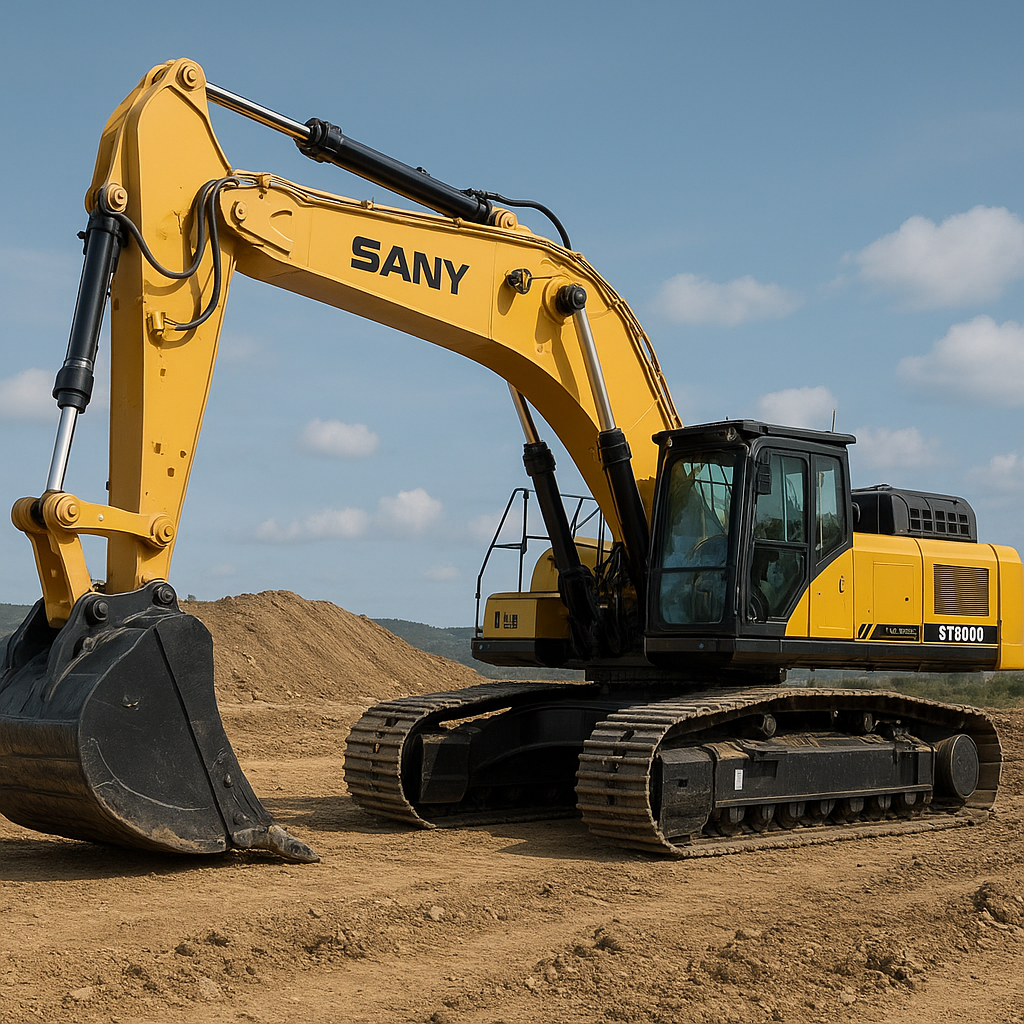
The SANY SY5000 is a powerful example of modern heavy-duty excavation equipment designed for the demanding needs of large-scale mining and bulk-material handling operations. Combining robust mechanical design, advanced hydraulic and control systems, and operator-focused ergonomics, this type of machine aims to deliver high levels of reliability and long-term cost-effectiveness in some of the world’s most challenging work environments. In the sections that follow, you will find a detailed look at the machine’s characteristics, typical technical and performance figures (where public information is limited, representative industry ranges are provided), practical applications, operational economics, maintenance considerations, safety and environmental aspects, and how the SY5000 fits into the broader market of mining shovels.
Overview and design philosophy
The SANY SY5000 represents a class of large hydraulic/mining shovels engineered to move very large volumes of material efficiently. SANY, a global heavy-equipment manufacturer, has developed its mining-shovel line with a focus on combining raw power with modern electronics and serviceability. The SY5000 name suggests a heavy-duty machine intended for open-pit mining, large infrastructure projects and bulk materials handling yards.
Key points of the SY5000’s design philosophy include robust structural framing to withstand cyclic fatigue, a heavy-duty undercarriage for stability and mobility, and a focus on maximizing the ratio between fuel/energy input and moved material output. SANY also emphasizes user-centered cab design, intelligent control systems for optimized digging cycles, and modular components to simplify repairs and parts replacement.
Across the machine, manufacturers—including SANY—often prioritize the following design goals: durability, ease of maintenance, high production per hour, and safety. The SY5000 pursues these goals through reinforced booms and arms, optimized bucket geometries, and integrated electronic control packages that can assist the operator with consistent cycle times and load management.
Technical characteristics and representative specifications
Exact manufacturer specifications for the SY5000 may vary by configuration and market, and some detailed figures are not always publicly disclosed. The numbers below are representative ranges typical for large hydraulic mining shovels in the same class and for SANY products of comparable size. These figures should be treated as indicative rather than definitive for every SY5000 unit.
Typical structural and power characteristics
- Operating weight: commonly in the range of 80–160 metric tons depending on configuration, counterweight, and attachments.
- Bucket capacity: typical bucket volumes for machines in this class commonly range from 5 to 15 cubic meters for hydraulic shovels; rope shovels in larger classes can have even bigger buckets. The SY5000 is often fitted with buckets optimized for the intended material type (coal, overburden, ore, etc.).
- Engine power: diesel engine power for comparable machines typically ranges from 350 to 1,000+ kW depending on whether the machine is a high-power mining variant or a lower-power configuration.
- Digging reach and depth: boom and arm geometries commonly allow for digging depths from ~4–7 meters and reach up to ~10–12 meters or more depending on boom length.
- Hydraulic system pressure and pump flow are engineered to provide high bucket cycle rates while protecting components through load-sensing and heat-management systems.
Performance-related figures (representative)
- Cycle time: typical full dig-and-swing cycles for large hydraulic shovels may range from 20 to 40 seconds depending on bucket size, material, and operator technique.
- Hourly production: depending on bucket size, cycle time and material density, hourly production can range from tens to a few hundred cubic meters per hour. In many open-pit scenarios, a productive SY5000-class shovel might comfortably move several thousand cubic meters per shift.
- Fuel consumption: fuel burn varies widely; representative values for machines in this class can range from 30 to 150 liters per operating hour depending on load and hydraulic demand.
- Payload match: in loading operations, machine and truck pairing is critical; the SY5000 is typically matched to large-mining haul trucks or a fleet of mid-capacity haulers chosen to optimize payload per truck cycle.
Again, because SANY offers different configurations and clients request tailored options, owners and operators should consult the official SANY data sheets or their SANY dealer for certified, model-specific figures for any given SY5000 unit. Nevertheless, the ranges above reflect practical expectations when deploying a heavy hydraulic mining shovel of this general class.
Applications and industrial use cases
The primary applications for a machine like the SANY SY5000 revolve around tasks that require the movement of large volumes of earth or fragmented rock with consistent, high productivity. Typical use cases include:
- Open-pit mining operations (coal, copper, iron ore, gold, bauxite and other bulk commodities).
- Quarrying and stone extraction, where frequent, repeated cuts are needed to load haul trucks or conveyors.
- Large-scale earthworks for infrastructure projects such as dam construction, airport runways, or major highway earthmoving works.
- Port and bulk-handling yards, where the shovel can load ships, barges or transfer conveyors.
- Reclamation and overburden management, where below-surface material must be moved and stored or reshaped extensively.
These environments demand machines that can operate for long shifts in dusty, abrasive conditions and that can be rapidly reconfigured (different bucket types, wear packages) to suit changing material characteristics—hard rock versus soft overburden, for example. The SY5000 is positioned to serve these needs through its heavy-duty undercarriage, modular wear parts, and flexible hydraulic controls.
Operational performance, productivity and matching to fleets
Getting the most from a shovel like the SY5000 requires careful matching to the haulage fleet, planning of shovel position and swing paths, and optimizing operator practices and maintenance intervals. Performance is not solely determined by the shovel’s raw specifications; the ecosystem of trucks, cycle times and material handling strategy all contribute to site productivity.
Some practical considerations that influence productivity:
- Truck-shovel match: Ideally, trucks should be sized so that average bucket fills closely match truck payload capacity; undersized trucks lead to unnecessary idling and increased cycle counts per ton.
- Bucket selection: using the correct bucket geometry and lip design improves fill factor and reduces spillage. For cohesive soils, larger volume buckets work well; for dense rock, smaller rock buckets with reinforced teeth reduce wear and improve fill.
- Operator training and controls: modern shovels include assistive electronics that help operators control swing, crowd, and throttle to maintain consistent cycle times and reduce fuel consumption.
- Maintenance scheduling: planned maintenance and predictable component replacement minimize unplanned downtime and protect residual value.
From an economics perspective, the cost per tonne of material moved is the most important KPI. The SY5000 aims to lower that cost by increasing hourly throughput, reducing unscheduled downtime, and optimizing fuel consumption via intelligent hydraulic controls and power management.
Maintenance, serviceability and lifecycle considerations
Robust maintenance practices are essential for any mining shovel. The SY5000 is designed with service access, modular components, and wear-part replaceability in mind, allowing for efficient maintenance cycles in harsh environments. Key maintenance and lifecycle themes include:
- Predictive maintenance: vibration monitoring, hydraulic oil analysis, and electronic fault-logging can predict component wear and enable pre-emptive repairs.
- Wear parts: buckets, teeth, lip shrouds, and bucket adapters are consumables. Having a supply chain and planned replacement intervals ensures continuous operation.
- Hydraulic system health: maintaining proper filtration, monitoring temperatures and replacing seals proactively extend pump and motor life.
- Structural inspection: booms, arms and chassis must be inspected for fatigue cracks and stress concentrators—especially after high-impact excavations.
- Component modularity: modular engine and hydraulic packs minimize turnaround time for major repairs; some operators maintain spare modules to reduce downtime.
Maintenance logistics, availability of parts and trained service personnel are decisive factors in total cost of ownership. SANY’s global service network and dealer support are designed to help reduce mean time to repair and support long-term lifecycle management for machines like the SY5000.
Safety features and environmental considerations
Safety systems onboard a modern mining shovel are multifunctional: protecting the operator, preventing collisions with other equipment or personnel, and ensuring stable operations on steep benches. Common safety and environmental features relevant to the SY5000 class include:
- Operator protection: ROPS/FOPS cabins, climate control, ergonomic seating, and visibility enhancement (cameras and mirrors) reduce fatigue and the risk of accidents.
- Collision avoidance: proximity detection systems that can detect people and vehicles in blind spots, sometimes integrated into site-wide fleet management systems.
- Emergency systems: fire detection and suppression, rapid shutdowns and redundant control systems contribute to safer workplaces.
- Emissions control: modern engine packages and optional after-treatment systems reduce NOx and particulate output; electrification or hybrid systems are increasingly available across the industry to reduce fuel consumption and emissions.
- Noise and dust mitigation: sealed cabins, bucket design minimizing splatter, and dust suppression systems (water sprays, fogging) are often used in dusty mining environments to satisfy regulatory requirements and protect worker health.
Environmental considerations also include efficient fuel use, hydraulic oil management and the correct handling of used parts and fluids. Increasingly, mines and operators seek machines that minimize lifecycle environmental impact through improved efficiency and recycling of major components at end of life.
Market positioning, competitors and real-world deployments
Within the mining-shovel market, SANY competes with global OEMs that produce both hydraulic and electric rope shovels. The competitive landscape includes brands that specialize in large-scale mining equipment and have deep service networks and aftermarket parts availability. Buyers evaluate machines on factors such as initial capital cost, operating cost per tonne, fuel efficiency, parts availability, and service support.
Real-world deployments of shovels similar to the SY5000 demonstrate strong performance in open-pit coal and metal ore operations. In many cases, owners report multi-year service lives with major rebuilds scheduled based on hours of service and the severity of the operating environment. Operators who have standardized fleets often achieve faster diagnostics and part replacement times, improving overall availability.
Some typical commercial considerations when acquiring a machine like the SY5000:
- Total cost of ownership analyses that include purchase price, fuel consumption, maintenance, downtime, and residual value.
- Fleet compatibility—ability to interface with existing truck and conveyor logistics and digital fleet-management platforms.
- Availability of local dealer support and trained technicians for routine and major maintenance.
- Financing, parts-supply agreements, and potential trade-in or upgrade programs offered by the manufacturer or dealers.
Case examples and practical tips for operators
Although specific case studies for the SY5000 may not be publicly listed in all regional markets, lessons from analogous machine deployments provide useful guidance for operators aiming to maximize performance:
- Perform detailed material characterization before selecting bucket and tooth configuration—rock fragmentation, moisture content and material density strongly influence fill factor and cycle times.
- Use onboard diagnostics and telematics to monitor hydraulic pressure charts, cycle consistency, fuel consumption and idle time—addressing inefficiencies quickly yields measurable gains.
- Create standard operating procedures for shovel positioning, swing arcs and truck loading patterns to reduce truck queuing and non-productive cycles.
- Plan preventive maintenance during scheduled downtimes (night shifts, low-production periods) to reduce impact on throughput.
- Provide operators with simulation or refresher training to optimize performance and reduce wear caused by poor digging technique.
Conclusion: value proposition and final remarks
The SANY SY5000, as a representative of large mining shovels, is engineered to deliver a combination of high production capacity, structural durability and modern operator-friendly controls. Deploying such a machine successfully requires not only selecting the right model and configuration but also integrating it into a well-planned fleet, maintaining rigorous maintenance practices, and leveraging data-driven operational improvements.
Key advantages typically associated with machines like the SY5000 include increased hourly throughput when properly matched to haulage fleets, reduced cost per tonne through reliable performance and fuel-optimized hydraulics, and improved operator comfort and safety via modern cabins and assistive systems. For mine planners and fleet managers, the most important considerations are matching bucket and truck capacities, ensuring local parts and service availability, and committing to predictive maintenance practices to protect uptime.
For precise, model-specific technical data and certified performance figures for the SANY SY5000, contact an authorized SANY dealer or consult the official product documentation. A site visit, material testing and truck-shovel matching study will also help to define expected production rates, fuel usage, and the optimal configuration to achieve the best economic outcome for any given project.


)
)