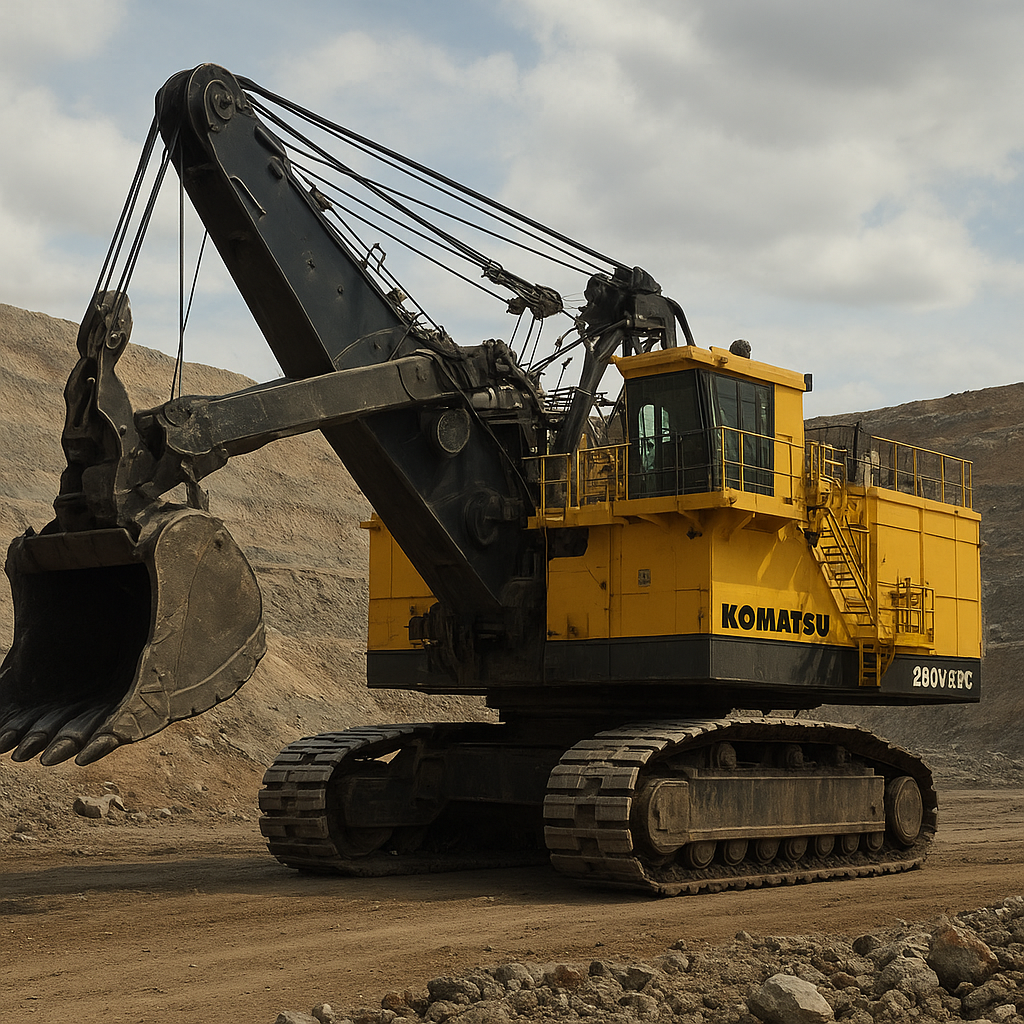
The Komatsu P&H 2800XPC represents a class of large electric rope shovels engineered for demanding surface mining operations. Combining legacy P&H design with Komatsu’s global support and modern electronics, the 2800XPC is tailored to maximize material movement, reduce downtime and integrate with contemporary mine fleet management systems. In the following sections, we examine the machine’s design philosophy, typical applications, operational considerations, maintenance and safety features, and how it fits into modern mining operations.
Overview and design philosophy
The P&H 2800XPC is part of a lineage of rope shovels developed to handle the massive tonnages of modern open-pit mines. As an electric rope shovel, it uses a combination of power from the mine electrical distribution system or onboard electric drives to operate a complex arrangement of hoist, crowd and swing mechanisms. The fundamental purposes of the design are to increase material throughput, extend component life, and make maintenance predictable and efficient.
Key design objectives include robust structural components to withstand cyclic stresses, modular systems for easier component replacement, and advanced controls for operator efficiency and machine protection. The XPC designation emphasizes features targeted at improving overall productivity and reducing unplanned downtime through electronic controls and monitoring. The machine’s architecture prioritizes heavy-duty frames, reinforced ropes and drums, and service access points oriented to minimize maintenance time and maximize safety.
While individual mine sites often specify particular configurations, some design attributes are typical for the class: a rope-operated dipper system with a large-capacity bucket, powerful hoist motors sized to achieve competitive cycle times, and a swing/crowd arrangement designed for efficient loading of haul trucks or conveyors. The combination of these elements is intended to optimize shovel cycles for a wide variety of materials, from friable overburden to more cohesive ore types.
Applications and operational use
The primary role of the 2800XPC is in large-scale surface mining where continuous high-volume loading is required. Typical applications include:
- Coal strip mines where high bank angles and large overburden movements demand reliable, high-capacity shovels.
- Metallic ore operations (copper, iron ore, gold, etc.) that require large production rates to feed milling and processing facilities.
- Quarry operations that need consistent loading of primary haulage units and crushing circuits.
- Bulk earthmoving projects such as large civil works, where material handling efficiency is paramount.
In practice, the 2800XPC often works as the primary loader in a fleet that includes large rigid-frame haul trucks, in-pit crushers, and conveyor systems. Its job is to rapidly and consistently transfer material from the bench to haulage, supporting high daily production targets. Operators typically match the shovel’s bucket configuration to truck payloads and dig face conditions to minimize cycle times and maximize payloads per scoop.
One of the strengths of this class of shovel is its ability to maintain production in harsh conditions. With appropriate attachments and ground preparations, the unit can handle varying geologies — from soft friable overburden to harder, intermittently cemented materials. Electrical drive systems offer advantages in torque delivery and efficiency, particularly where stable mine-site electrical infrastructure exists. This makes the 2800XPC particularly suitable for long-life open pits with reliable power supply.
Technical features and configurations
The 2800XPC is configurable to meet specific site needs. While exact specifications can vary by order, the machine typically includes:
- Electric propulsion for the major functions (hoist, swing and crowd), which provides high torque at low speeds and simplifies the powertrain compared with diesel-mechanical alternatives.
- Rope crowd and hoist systems that use large-diameter drums and multiple-part rope reeving to achieve the necessary force and rope life.
- Heavy-duty dipper/bucket options selected to match rock hardness, friability and desired payload.
- Advanced operator stations with ergonomic controls, camera systems and integrated machine diagnostics.
- Onboard monitoring systems for temperature, vibration and electrical health to support predictive maintenance.
Manufacturers and owners typically choose from a set of buckets and wear packages to match performance targets. The selection impacts cycle time, stripping ratio economics and wear rates. To optimize loading, mines commonly align bucket size with the payload range of their haul trucks so that each pass loads a predictable portion of the truck payload, minimizing under- or overloading.
Modern 2800XPC units are often supplied with enhanced control packages that include features such as automatic swing cutoff, hoist interlocks, and anti-two-block protection. Integrated telematics allow fleet managers to monitor shovel productivity, availability and energy consumption remotely. This integration into mine management systems supports real-time decision-making for dispatch, preventive maintenance scheduling and productivity reporting.
Performance, statistics and practical metrics
Performance of a given 2800XPC depends on configuration, geology, and operational discipline. Mines commonly measure shovel effectiveness through hours-based and production-based metrics, including:
- Cycle time (seconds per cycle), which varies with bench height, reach and operator technique.
- Material moved per hour or per shift (waste and ore), reported by many sites as the primary productivity indicator.
- Availability and utilization — percentage of scheduled time that the machine is capable of performing productive work.
- Cost per tonne moved, which combines energy, maintenance, labor and capital depreciation.
Many well-run fleets aim for availability targets in a range that supports consistent production planning — for example, operational availability commonly targeted between the mid-80s to mid-90s percent. These targets acknowledge scheduled maintenance but aim to minimize unplanned outages. Electrical rope shovels in this class often demonstrate strong performance when supported by robust maintenance regimes and parts inventories.
Although specific numbers for a single machine vary widely, mine teams often optimize shovel-truck match to reach economical dig rates and minimized truck idle time. The integration of shovel performance into haulage models is a routine task in production planning — ensuring each shovel’s hourly production aligns with downstream capacity (crushers, screens, conveyors) and fleet serviceability.
Maintenance, lifecycle and cost considerations
Maintenance planning is central to maximizing the value of a Komatsu P&H 2800XPC. The machine is a significant capital investment, and effective maintenance strategies can substantially reduce the total cost of ownership. Key practices include:
- Routine inspections of ropes, drums and structural welds to detect wear and fatigue early.
- Use of condition monitoring (vibration, oil analysis, thermal imaging) to enable predictive maintenance rather than calendar-based schedules.
- Modular component replacement programs that allow for planned swaps of major assemblies to minimize downtime.
- Controlled spare parts inventory, focused on long-lead or high-wear components to ensure quick turnarounds.
With diligent care, rope shovels in this class often achieve service lives measured in decades. Major rebuilds are routine during a shovel’s lifecycle and can extend operational life significantly. The economics of rebuild versus replacement depend on remaining structural life, refurbishment costs and the availability of newer technology that might offer lower operating costs.
Capital and operating costs include initial purchase, electrical infrastructure, spare parts, labor, and energy. Electric shovels require robust power distribution systems in the pit and potentially substations sized to handle the load. While electric power is typically less expensive and cleaner than diesel for equivalent work output, the upfront electrical infrastructure costs must be factored into project budgets.
Safety, environmental and operator considerations
Safety is a core concern in the operation of large rope shovels. Design and operational protocols reduce risks associated with high forces, heavy components and complex electrical systems. Typical safety features and practices include:
- Anti-two-block devices and hoist interlocks to prevent rope entanglement and load collisions.
- Ground and access platforms designed to minimize fall risks and ensure safe maintenance zones.
- Emergency power cutoff and lockout-tagout procedures for electrical systems to protect service personnel.
- Comprehensive operator training programs focusing on safe digging practices, spotting, and communication with truck drivers and dispatchers.
From an environmental perspective, electric shovels reduce direct diesel emissions at the dig face, contributing to improved local air quality. When paired with power generated from lower-carbon sources, electric shovels can significantly lower the mine’s greenhouse gas footprint. Noise and dust mitigation measures — such as cab filtration, dust suppression at the face and controlled digging techniques — further help reduce environmental impact.
Operator comfort and ergonomics are also important for sustained high performance. Modern cabs include climate control, vibration isolation and advanced controls to reduce fatigue and improve situational awareness. Remote operation and semi-autonomous features are increasingly common, allowing operators to control machines from safer, more comfortable locations or to intervene in automated cycles only when necessary.
Integration into mine fleets and digitalization
The Komatsu P&H 2800XPC is often part of a broader strategy to digitize and optimize mine operations. Integration points include:
- Telematics and health monitoring platforms that feed live data into fleet management systems.
- Integration with dispatch systems to optimize shovel-truck matching and reduce truck waiting time.
- Predictive analytics that use machine data to forecast failures and schedule maintenance proactively.
- Automation options for repetitive tasks, such as controlled crowd/hoist profiles, to reduce operator variability and improve cycle consistency.
These integrations allow mines to move from reactive maintenance and manual dispatch toward data-driven, predictive operations that improve throughput and lower unit costs. Fleet-level optimization can significantly increase the value delivered by each shovel, especially when combined with reliable maintenance practices and well-trained operational teams.
Case examples and practical outcomes
Across the industry, rope shovels similar to the 2800XPC have demonstrated their value by enabling large, continuous shifts in production. Typical outcomes reported by mining operations when deploying shovels of this caliber include:
- Consistent hourly production that stabilizes subsequent processes such as crushing and milling.
- Lower unit energy costs on the dig face relative to equivalent diesel shovel operations.
- Extended equipment lifecycles with planned rebuilds and well-managed spare parts strategies.
Real-world performance always depends on local conditions. Mines that invest in operator training, predictive maintenance and integrated fleet management typically report the best returns, including higher availability and lower cost per tonne moved. Conversely, inadequately supported deployments can suffer from extended downtime and higher lifecycle costs.
Conclusions and strategic considerations
The Komatsu P&H 2800XPC is a heavyweight contender in the market for high-capacity electric rope shovels. Its strengths lie in robust mechanical design, compatibility with modern electrical and digital mine infrastructure, and flexibility through configurable buckets and control systems. For large-scale surface operations, the shovel provides a proven means to sustain high material movement rates, while offering pathways to reduce operational costs through improved efficiency, automation and predictive maintenance.
Key considerations for mines evaluating the 2800XPC include the availability of reliable mine power, the capability to support scheduled and predictive maintenance, and the alignment of shovel capacity with the overall fleet and processing plant. The machine performs best when it is part of a well-integrated, data-driven operation that emphasizes reliability, operator competency and safety.
In summary, the 2800XPC’s combination of rugged design, electric drive benefits and modern control features make it a strong option for mines aiming to move large volumes with predictable economics. With a focus on maintenance regimes, fleet integration and operator training, mines can leverage the shovel’s potential to deliver significant productivity gains and long-term value.


)
)