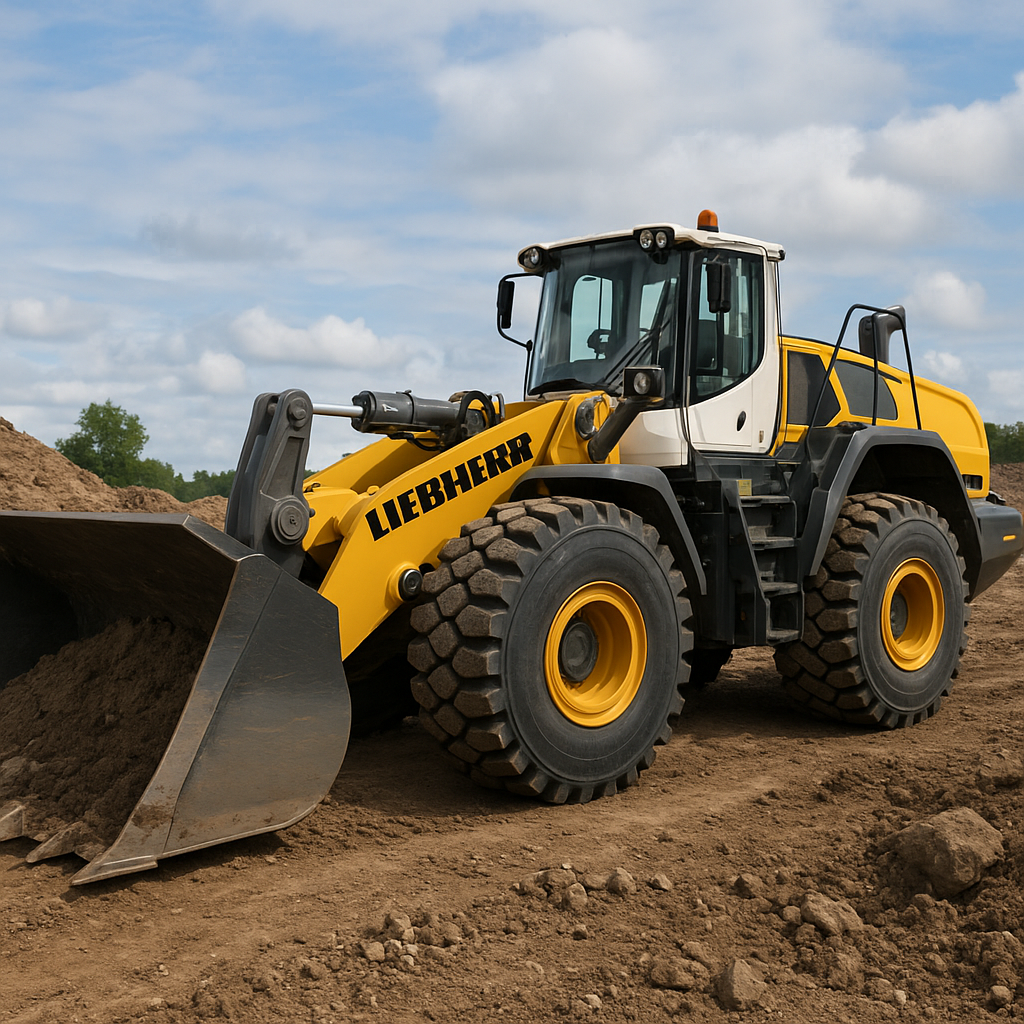
The Liebherr L 586 XPower is a heavy-duty wheel loader designed to combine high productivity with advanced fuel efficiency and long-term reliability. Built for demanding environments — from quarries and mining yards to ports, recycling plants and construction sites — this machine represents Liebherr’s focus on performance, operator comfort and low operating costs. In the following sections you will find a technical overview, typical use cases, operational and economic considerations, and details about maintenance, safety and attachments that make the L 586 XPower a versatile choice for fleet managers and machine operators alike.
Design and technical overview
The L 586 XPower series is engineered around a robust frame and drivetrain intended for continuous high-load cycles. At the heart of the model is Liebherr’s proprietary XPower drivetrain, a system that optimizes power transfer and traction while reducing fuel consumption compared with conventional drivetrains. The XPower concept integrates hydrodynamic elements with hydrostatic components to regulate torque, traction and speed in a manner that is adapted to the working cycle of wheel loaders, especially in loading and loading-transport tasks.
Engine and emissions
Liebherr equips the L 586 XPower with high-performance diesel engines that meet modern emissions standards (Stage V / Tier 4 final where applicable). Output for machines in this class typically falls within a broad range depending on market specification and optional packages. Engine calibration focuses on delivering consistent torque at lower rpm to improve response during bucket-filling and to reduce fuel burn under load. Fuel tank sizes are designed to support long shifts, limiting downtime for refuelling on busy sites.
Drive and transmission
The XPower drivetrain is one of the defining features of the L 586. By intelligently distributing power between hydrostatic and mechanical paths, it allows for smooth acceleration, powerful traction at low speeds, and efficient cruising at higher speeds. The result is a drivetrain that can reduce fuel consumption by a significant percentage in many applications (manufacturer and independent tests often report fuel savings in the low double digits compared with earlier or conventional architectures), while also improving cycle times during repetitive loading tasks.
Hydraulics, lift and breakout forces
Hydraulic systems on the L 586 are dimensioned for fast, strong implement movements. Whether equipped with a Z-bar linkage for maximum breakout force or a parallel kinematics system for gentle handling of pallets and bags, the loader offers high hydraulic flow and pressure for attachments. Typical bucket volumes for machines in this class span roughly from 3.0 up to 6.3 cubic metres (selection depends on material density and application). Lift height to hinge pin and breakout force vary with the linkage and bucket combination; buyers can choose configurations that favour either lifting height or digging force according to their priorities.
Chassis, axles and tyres
The undercarriage and axles are engineered for heavy-duty use with a focus on durability and uptime. Heavy-duty planetary axles, large-diameter articulation joints and a robust frame reduce stress concentrations and extend component life. Various tyre options are available (earthmoving, mixed-service, rock, and solid fill) to match the operating environment and to manage total cost of ownership through longer tyre life or reduced puncture risk.
Representative technical ranges (indicative)
- Operating weight: typically in the region of 22–30 t depending on equipment
- Bucket capacity: usually 3.0–6.3 m³ depending on material and configuration
- Engine power: generally specified within a range that supports heavy-load cycles; consult local Liebherr data for exact model numbers
- Fuel tank volume: sized for long shifts (typical mid- to large-class loader volumes)
- Breakout force: varies with linkage and bucket, designed for high productivity in digging/loading
Typical applications and industry uses
The L 586 XPower is a multi-purpose heavy loader that finds its place across many industries due to its blend of power, control and adaptability. The following outlines the most common applications and explains why this model is chosen for each.
Quarrying and mining
In quarries and smaller-scale mining operations, the L 586 is valued for its ability to load heavy haul trucks and move large volumes of rock and aggregate. The combination of high breakout force and robust tyres makes it suited for abrasive materials and uneven rock faces. Fast cycle times mean fewer machines are needed to achieve a target tonnage, improving site economics.
Ports and bulk handling
Port terminals and bulk-handling facilities use the L 586 for handling grain, coal, ores and other bulk goods. Specialised buckets, high-tip options and pallet forks transform the loader into a flexible tool for loading ships, stacking or moving material between stockpiles. Telemetry and scale options allow operators to manage payloads precisely, increasing throughput and reducing overloading risks.
Recycling and waste management
Recycling centres and waste-transfer stations benefit from the loader’s compact manoeuvrability relative to its payload capacity, rugged construction to resist abrasive and contaminating materials, and optional attachment packages such as grapples and big-material buckets. The cab’s visibility helps operators safely manipulate awkward loads.
Construction and infrastructure
On large construction sites the L 586 is used for backfilling, site preparation and stockpile management. Its lifting capabilities and the availability of forks, snow-ploughs or sweepers enable seasonal tasks and multi-role use, making it a cost-effective choice for contractors that require versatility.
Agriculture and bulk feed
While perhaps less common than in mining or ports, large agricultural operations adopt heavy wheel loaders for feed handling, biomass, and manure treatment. The machine’s hydraulic control and bucket options allow gentle handling of bulk agricultural materials without damaging product quality.
Productivity, efficiency and fleet economics
Fleet managers consider more than just purchase price when evaluating heavy equipment — operating costs, fuel consumption, uptime and resale value are decisive. The L 586 XPower addresses these aspects through targeted design choices.
Fuel efficiency and cycle productivity
One of the major claims for the XPower concept is reduced fuel consumption for comparable work. The drivetrain’s ability to match torque delivery to the task often results in lower average fuel use during loading and transport cycles. While exact savings depend on material, operator technique and site layout, case studies and manufacturer testing commonly cite fuel savings in the range of 10–25% versus comparable conventional drivetrains under similar duty cycles. Typical on-site fuel consumption for large loaders under heavy use tends to vary widely but commonly falls between approximately 12 and 25 litres per hour; precise figures for a given machine and job should be measured under operational conditions.
Uptime and maintenance philosophy
Liebherr emphasises ease of servicing and long component life. Ground-level service points, long service intervals for major components and modular designs for replacement parts reduce planned maintenance downtime. Heavy-duty components — such as axles and articulation bearings — are engineered for predictable life cycles, and Liebherr’s global dealer network offers parts and field service, which helps maintain availability in diverse regions.
Telematics and fleet management
Integrated telematics systems (such as Liebherr’s LiDAT or similar solutions) enable remote monitoring of machine health, fuel usage, location and operating hours. Fleet managers can use these data to optimise maintenance scheduling, reduce idling, and measure productivity across sites. Implementing telemetry often reveals operational improvements that translate directly into lower cost per tonne moved.
Operator comfort, safety and on-board systems
Operators working long shifts benefit from machine features designed to reduce fatigue and increase safety. Liebherr cabs typically include ergonomic controls, excellent all-round visibility, climate control and an adjustable air-suspended seat. A multi-function joystick reduces repetitive movements, and intuitive menus simplify configuration of drive and hydraulic characteristics.
Safety systems
Standard and optional safety features include ROPS/FOPS-certified cabs, rear-view and 360° camera systems, load-indicating systems, automatic park brakes and secure access ladders and handholds. Visibility enhancements and camera monitoring are particularly valuable in busy yards and port facilities with pedestrian and vehicle traffic.
Operator assistance and weighing
On-board weighing systems allow operators to load to target payloads quickly, reducing cycle time and minimising the risk of overloading transport trucks. Operator assistance modes, such as eco settings or automatic idle control, help less experienced operators achieve better fuel economy without sacrificing productivity.
Attachments, customization and integration into fleets
One of the L 586’s advantages is its adaptability via a wide range of attachments and configuration options. This flexibility increases the machine’s utilisation rate and can lower overall fleet capital requirements.
- Buckets — general purpose, tooth, rock, high-tip, light-material and multi-purpose buckets tailored to material density and application
- Forks — pallet forks and log forks for handling packaged goods or timber
- Grapples — for recycling, demolition and timber handling
- Snow and road tools — ploughs, pushers and spreaders for winter maintenance
- Specialised tooling — sweepers, roll-off systems and quick-hitch plates for rapid exchange
Customization extends to axle ratios, brake packages, cab and climate options, lighting packages for night shifts, and software calibrations that tailor engine and hydraulic behaviour to specific tasks. Integration with fleet telematics ensures consistent monitoring and reporting across mixed-brand fleets.
Maintenance, parts and resale considerations
From a lifecycle cost perspective, access to parts, standardised service intervals and dealer support are critical. Liebherr’s global parts network, and the strategy of using common components across families of machines, helps reduce inventory needs and speeds repairs. Machines kept with dealer-recommended maintenance tend to retain stronger resale values; well-documented service histories and telematics logs are assets in remarketing heavy machinery.
Comparisons and market positioning
Within the large-wheel-loader segment, the L 586 XPower is positioned as a machine that balances raw capability with an emphasis on efficiency and operator experience. Competing models from other major OEMs also offer high horsepower, robust axles and various drivetrain concepts; the XPower system is a differentiator for buyers focused on reducing fuel consumption and increasing cycle productivity across mixed duty cycles. Buyers should compare real-world productivity figures (tonnes per hour), fuel consumption per tonne and maintenance intervals rather than headline power figures alone.
Case examples and real-world performance
Site-specific case studies often show that the L 586 XPower can reduce the number of machines required for a given throughput by improving per-cycle payload and speed, while simultaneously lowering fuel costs through more efficient power use. For example, in loading and short-haul cycles typical of a quarry, machine operators report measurable reductions in fuel per tonne moved when switching from older generation loaders without XPower-like systems. In port operations, accurate payload weighing and strong hydraulic control reduce re-handles and accelerate truck turnarounds. Outcomes naturally depend on operator training, site layout and the match between bucket size and material density.
Where the L 586 XPower excels
The L 586 XPower is particularly appropriate for operators who need a reliable, heavy-duty loader that can perform across a broad set of tasks without sacrificing fuel efficiency or operator comfort. It is a strong choice for:
- Quarries and aggregates: powerful digging and fast loading cycles
- Ports and terminals: accurate handling and payload management
- Recycling: ruggedness and attachment flexibility
- Large construction projects: lift and move versatility
- Mixed fleets that value telematics-driven optimisation and lower lifecycle costs
Summary
The Liebherr L 586 XPower is a versatile and robust wheel loader designed to deliver high productivity, lower fuel consumption and a comfortable working environment. Its XPower drivetrain, durable chassis components, broad attachment compatibility and fleet integration tools make it suitable for demanding applications in quarries, ports, recycling yards and construction sites. While exact specifications vary by market and configuration, operators can generally expect strong breakout forces, sizeable bucket options, and a machine engineered for uptime and economical operation. For an accurate match to specific job requirements, prospective buyers should discuss detailed specifications and on-site performance data with a Liebherr dealer and, where possible, evaluate machines in operational conditions to measure real-world fuel consumption, cycle times and payload efficiency.


)
)