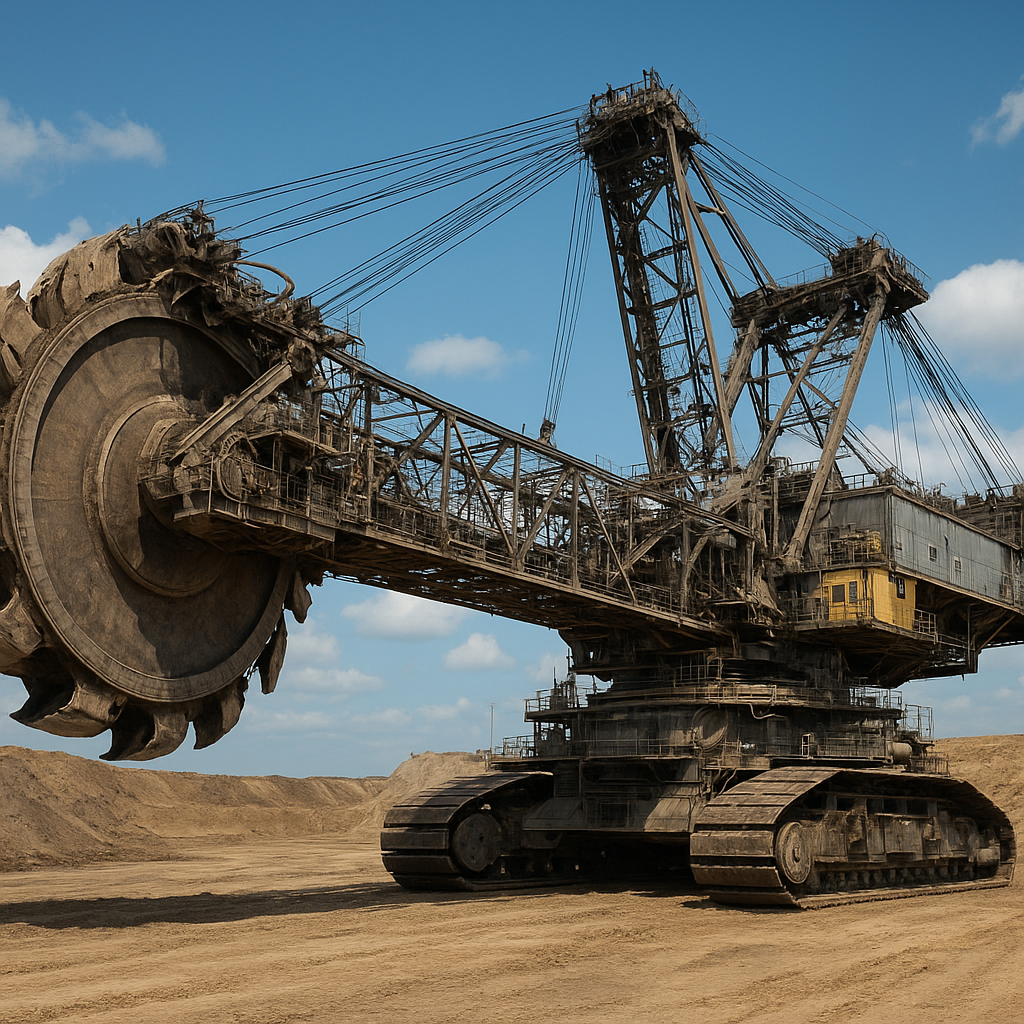
Mining operations around the globe have long relied on the relentless might of excavators to unearth valuable minerals and reshape landscapes. From the early mechanical steam shovels to today’s towering bucket-wheel giants, these machines demonstrate remarkable engineering feats and continue to push the boundaries of scale and performance. This article explores the development, record-breaking machines, cutting-edge innovations, and the challenges faced by the industry as it seeks greater efficiency and sustainability.
The Evolution of Mining Excavators
The history of excavating equipment dates back to the 19th century when steam-powered shovels first appeared on construction and mining sites. Over decades, designers replaced steam engines with diesel and electric power, leading to dramatic improvements in capacity and reliability. Early shovels could move only a few dozen cubic yards per hour. Today’s giants handle thousands, thanks to advances in hydraulics, control systems, and material science.
From Steam to Electric Power
- Steam Shovels: Introduced in the 1830s, these machines laid the groundwork for mechanical excavation.
- Diesel Hydraulic Excavators: In the mid-20th century, hydraulic systems revolutionized bucket control, increasing precision and digging depth.
- Electric Drives: Modern machines often use electrically powered bucket wheels and conveyor systems, reducing fuel consumption and emissions.
Key Milestones in Design
- Introduction of Continuous-Cut Bucket Wheels in the 1930s
- Hydraulic Excavator Boom Designs in the 1960s
- Digital Control Systems in the 1990s
Record-Breaking Giant Excavators
Some of the world’s biggest machines serve in open-pit coal and metal mines, where uninterrupted operation for years is essential. The most legendary giants are the German-built bucket-wheel excavators, capable of moving over 200,000 cubic meters of material daily.
Bagger 288: The Behemoth
Constructed by Krupp for Rheinbraun, the famous Bagger 288 weighs nearly 13,500 tonnes and stands 96 meters tall. Its massive bucket wheel measures 21.6 meters in diameter, boasting 18 buckets that scoop up 18 cubic meters of earth each rotation. This machine set the standard for powerful continuous excavation and remains an icon of industrial prowess.
Bagger 293: Even Bigger Ambitions
In 1995, Krupp surpassed its own record with the Bagger 293. At 227 meters in length and weighing 14,200 tonnes, it operates in the Hambach coal mine. Its superior torque motors and reinforced structural components enhance durability under the most demanding conditions, allowing it to operate 24/7 with minimal downtime.
Other Notable Giants
- LeTourneau L-2350 Wheel Loader: The world’s largest wheel loader, tipping the scales at 263 tonnes and moving 70 tonnes per bucket.
- P&H 4100XPC Electric Rope Shovel: Featuring a 90-cubic-yard bucket and advanced electronic controls for precise loading.
- Komatsu PC8000-6 Hydraulic Excavator: A 93-cubic-meter capacity model engineered for extreme productivity.
Technological Innovations Driving Performance
As mining companies demand greater output with lower operating costs, manufacturers develop new systems and materials to enhance machine efficiency and reliability. Recent decades have seen a surge in automation, remote monitoring, and digital integration.
Automation and Remote Operation
- Driverless Excavators: Autonomous machines rely on GPS, LIDAR, and advanced algorithms to carry out excavation tasks without human presence on-site.
- Tele-Remote Control: Operators can manage equipment from a central control room, reducing exposure to hazardous environments.
Structural and Mechanical Advances
- High-Strength Alloys: New metallurgical processes produce booms and buckets that resist wear and fatigue.
- Improved Hydraulic Fluids: Synthetic fluids lower friction losses, boosting both power transmission and precision.
- Modular Designs: Interchangeable components simplify maintenance, maximizing uptime and cutting costs.
Data Analytics and Predictive Maintenance
- Sensor Networks: Embedded sensors monitor temperature, vibration, and load in real time.
- Machine Learning Models: Pattern recognition identifies early signs of component failure, allowing for proactive servicing.
- Fleet Management Software: Cloud-based platforms track multiple machines, optimizing dispatch and reducing idle time.
Operational Challenges and Environmental Considerations
Despite technological progress, operating the largest excavators presents distinct challenges. Sites must manage fuel consumption, dust control, and noise, all while complying with increasingly stringent environmental regulations. Furthermore, the sheer size of these machines demands careful logistical planning.
Fuel Efficiency and Emissions
Modern engines must balance enormous power output with lower greenhouse gas emissions. Hybrid propulsion systems—combining diesel generators and electric drives—offer improved fuel economy and cut CO₂ output. Manufacturers are also exploring hydrogen fuel cells and battery-electric concepts for future zero-emission designs.
Dust, Noise, and Land Rehabilitation
- Dust Suppression: High-pressure water sprays and enclosed conveyor belts minimize airborne particulates.
- Noise Reduction: Acoustic shielding and vibration dampers help meet community noise standards near mine perimeters.
- Land Restoration: After excavation, reclaimed soil and native vegetation are reintroduced to restore ecosystems and comply with rehabilitation plans.
Safety and Workforce Training
Operating and maintaining super-sized excavators requires highly skilled technicians and operators. Virtual reality simulators offer immersive training scenarios, improving operator proficiency before real-world deployment. Advanced safety systems—automatic shutdowns, overload protection, and real-time hazard alerts—ensure that both personnel and equipment remain protected under all conditions.
Future Trends in Mining Excavation
Looking forward, the industry is poised to embrace even larger machines and more integrated ecosystems. Innovations in materials science may yield ultra-lightweight components, while artificial intelligence could orchestrate full mine site automation—with excavators, haulers, and crushers cooperating seamlessly. Emphasis on circular economy principles will drive gear designs that are easier to recycle and repurpose at the end of their service life.
From the pioneering steam shovels of the past to today’s record-setting behemoths, mining excavators exemplify human ingenuity at work. As the sector tackles the twin demands of rising resource needs and environmental stewardship, the machines themselves will continue to evolve, delivering greater productivity, reliability, and sustainability to power the industries of tomorrow.