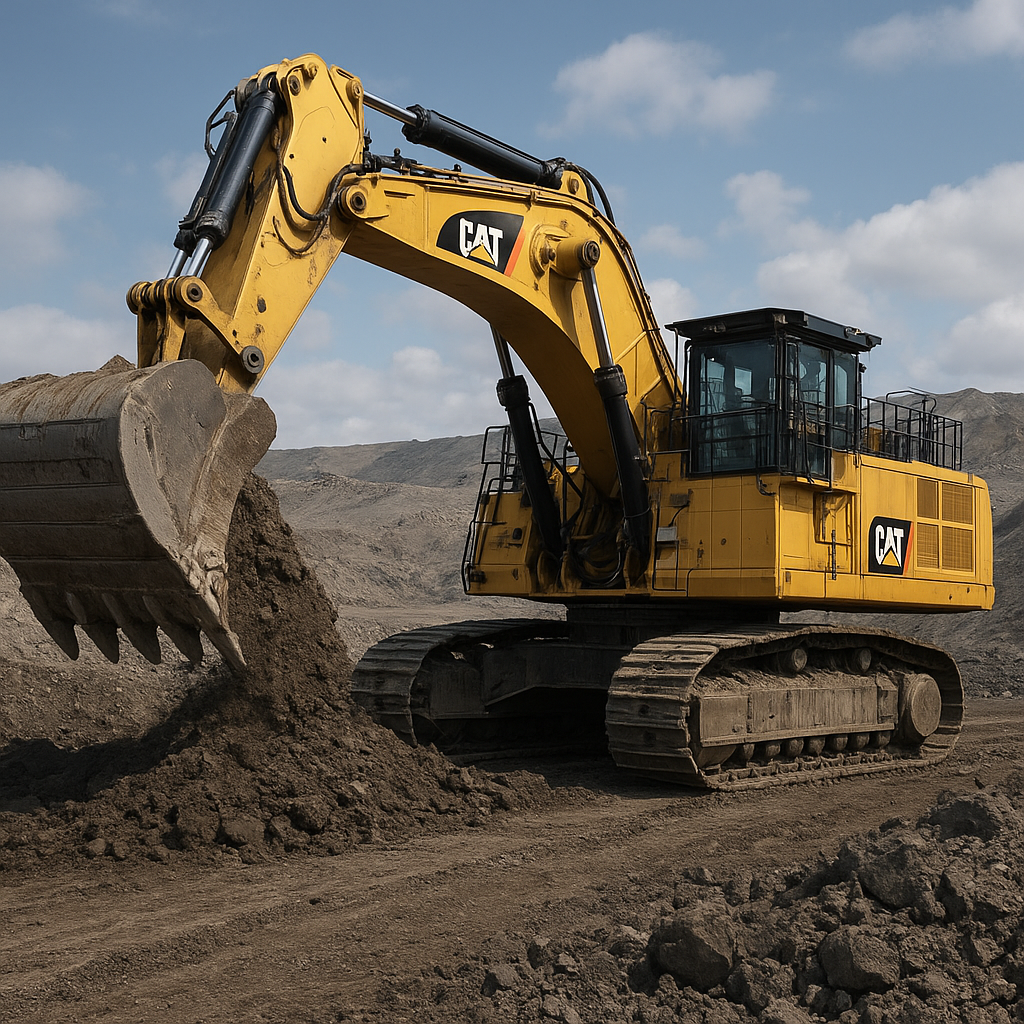
The CAT 6090 is a heavyweight contender in the world of surface mining machinery. Designed for large-scale open-pit operations, this excavator represents a blend of brute force and modern technology aimed at maximizing material-moving efficiency, reducing operating costs, and improving operator comfort and safety. In the following sections, we will examine the machine’s intended uses, key technical characteristics, operational advantages, maintenance considerations, and the broader role it plays in contemporary mining fleets.
Overview and role in modern mining
The CAT 6090 is a member of Caterpillar’s lineup of large hydraulic mining excavators intended for bulk material handling in demanding environments. Catering to mines that require high production rates—such as coal, copper, iron ore, and oil sands operations—the 6090 is engineered to remove vast volumes of overburden and ore efficiently. As with other machines in its class, the model balances raw digging capability with systems designed to optimize fuel use, operator productivity, and fleet integration.
The excavator is typically used alongside high-capacity haul trucks and ancillary equipment (dozers, graders, wheel loaders) to form an integrated production system. Depending on the mine layout and material characteristics, the CAT 6090 can operate in primary stripping, ore loading, stockpile reclaim, and waste removal roles.
Technical characteristics and performance
Key technical areas include powertrain, hydraulic system, structural components, and the bucket/arm configurations. The exact specification package may vary by build and optional equipment, but the machine is notable for several core traits:
- High operating weight and robust structure to withstand heavy cyclic loading and harsh mining conditions.
- Large bucket capacity options that enable a high mass-per-cycle and reduce total cycle count for a given tonnage target.
- Advanced hydraulic systems that deliver both the force and the controllability needed for efficient digging and precise loading.
- Powerful engines or integrated electric drive options in some factory or aftermarket configurations to provide continuous digging power.
Typical published performance ranges for machines in this class (as reported by manufacturers and industry references) include an operating weight in the approximate 500–700 metric tonne class and a bucket capacity that commonly ranges between 30 and 60 cubic meters depending on bucket style (e.g., general purpose, coal, rock). Power ratings for comparable large hydraulic excavators generally fall in the low thousands of kilowatts, often quoted in the neighborhood of 2,000–3,500 kW, but exact powertrain specifications can differ with model variants and options.
In practical operation, the CAT 6090 is designed to achieve high hourly production by combining large bucket payloads with cycle times optimized through hydraulic and electronic control systems. For example, in favorable loading conditions with matched haul trucks, a single machine can often move tens of thousands of tonnes per day; actual throughput depends on geology, operator technique, bucket fill, and fleet logistics.
Design features and innovations
Caterpillar incorporates several areas of engineering focus in machines like the 6090 to deliver sustained performance in mining environments:
- Structural durability — Reinforced booms, arms, and undercarriage components are engineered for long fatigue life in abrasive and high-stress operations.
- Modular components — Large-service items (hydraulic pumps, swing motors, and booms) are designed for more straightforward replacement and refurbishment to reduce downtime.
- Hydraulic efficiency — Load-sensing and electronically controlled hydraulic pumps tailor flow and pressure for the task, improving fuel economy and cycle performance.
- Operator ergonomics and controls — Modern cabs include climate control, adjustable seating, low-noise environments, and joystick interfaces that reduce fatigue and improve precision.
- Monitoring and diagnostics — Integrated telematics and onboard diagnostics provide real-time data on fuel usage, component health, and production metrics for fleet management.
These features combine to lower total cost of ownership through improved uptime, easier maintenance, and better fuel management. The integration of electronic controls also enables advanced features such as controlled digging profiles, automation-ready interfaces, and improved safety interlocks.
Applications and operational use cases
The CAT 6090 is optimized for several primary mining applications, including:
- Open-pit stripping — Removing overburden to expose ore bodies with high-volume excavation cycles.
- Primary ore loading — Filling large-capacity haul trucks quickly to keep cycle times low and fleet productivity high.
- Coal handling — Working with coal-specific buckets to manage friable material efficiently.
- Oil sands operations — Where very high material movement rates and frequent pass operations require machines with both capacity and reliability.
- Stockpile management and reclaim — Backup duties in facilities that need robust material handling and reclaim performance.
Selection of a CAT 6090 for a particular role depends on matching bucket type, arm length, and ground conditions to the required production target. Mines often conduct cycle-time studies and mass balance analyses to determine how many excavators and haul trucks are needed; when used correctly, the 6090 can reduce overall fleet requirements by increasing the per-machine throughput.
Maintenance, lifecycle, and cost considerations
For large mining excavators, maintenance strategy is as important as initial specification. The CAT 6090 is typically supported by the following maintenance and lifecycle practices:
- Preventive maintenance schedules based on operating hours and component hours to replace wear items before failure.
- Condition monitoring using oil analysis, vibration monitoring, and telematics to anticipate component wear and schedule repairs.
- Component refurbishment programs that extend life for major structures and drivetrain parts, lowering the lifetime capital cost.
- Parts availability and dealer support — One of Caterpillar’s strengths is a global service network which shortens downtime through rapid parts supply and field service.
When evaluating lifecycle costs, mines consider fuel consumption, wear part replacement (bucket teeth, cutting edges, pins and bushings), and the resale or trade-in value of the machine. Proper operator training, optimized cycle management, and scheduled maintenance can extend component life and reduce operating expenses per tonne moved.
Safety, operator environment, and automation readiness
The CAT 6090 includes numerous safety and operator-focused features. These often include access platforms and ladders designed to minimize fall risks, guarded service points, emergency egress systems, and visibility improvements through camera systems and sensor packages. The cab environment is tuned for long shifts—reducing operator fatigue through ergonomics, climate control, and reduced vibration.
Additionally, machines in this class are increasingly designed to be automation-ready. That means the electrical and control architectures facilitate the future addition of semi-autonomous or fully autonomous features such as repeatable dig cycles, remote operation, and integrated fleet automation—capabilities that some mines adopt to improve safety and allow continuous operation in hazardous conditions.
Environmental impact and fuel efficiency
Large mining excavators consume significant energy, so fuel efficiency and emissions are critical considerations. Manufacturers enhance environmental performance through more efficient hydraulic systems, engine control strategies, and after-treatment systems that meet regional emissions standards. Some mines also retrofit or specify electric-drive options where infrastructure permits, reducing local diesel emissions and enabling lower operational emissions when paired with low-carbon electricity.
Operational strategies to reduce environmental footprint include careful fleet sizing to avoid overcapacity, optimizing truck-excavator match to reduce idle time, and implementing idle-reduction technologies. Telematics data plays a crucial role in identifying fuel-saving opportunities and improving machine utilization.
Fleet integration and productivity optimization
Successful deployment of a CAT 6090 depends on proper integration into a mine’s fleet. Key considerations include:
- Truck match — Optimizing truck payloads to the excavator’s bucket capacity to prevent underloading or excessive truck queuing.
- Cycle-time analysis — Measuring and refining loading cycles, swing times, and truck dispatch to maximize hourly throughput.
- Telematics-driven decisions — Using real-time data for shift planning, predictive maintenance, and operator coaching.
- Support equipment — Ensuring dozers, graders and auxiliary machines are sized to maintain working areas and reduce delays.
When combined with digital fleet-management tools, the CAT 6090 can form the backbone of a high-capacity, efficient mining operation.
Real-world examples and statistical context
In mines where large hydraulic excavators are employed, a single machine like the 6090 is often reported to contribute significantly to daily material movement. Industry reports and case studies for machines in this segment typically show:
- Peak daily throughputs measured in the tens of thousands of tonnes for large open-pit operations.
- Uptime targets above 90% for well-supported fleets with robust maintenance programs.
- Fuel consumption rates that are heavily dependent on dig depth, material density, and operator technique; effective management of these variables can materially improve operating cost per tonne.
Exact statistics for a specific site depend on geology, bucket configuration, and support logistics. For that reason, mines usually run trial phases and productivity modeling before committing to large capital purchases to validate expected tonnage and cost assumptions.
Final considerations for buyers and operators
Choosing a CAT 6090 (or any large mining excavator) involves balancing capital cost, expected productivity, lifecycle operating costs, and local support infrastructure. Key steps include:
- Conducting a thorough duty-cycle analysis to size the machine correctly for the application.
- Evaluating total cost of ownership rather than just purchase price—consider fuel, parts, and refurbishment over the machine’s life.
- Planning for operator training and implementing telematics to improve performance and prolong component life.
- Considering future automation and electrification requirements to ensure the machine remains relevant as technology and regulations evolve.
The CAT 6090, with its combination of size, capability, and support from a major manufacturer, is positioned to serve the needs of high-production mines looking for reliable, high-throughput excavation. With correct implementation—matching bucket configuration to material, optimizing truck-excavator pairings, and maintaining disciplined maintenance regimes—the machine can be a central asset for efficient and safe mining operations.


)
)