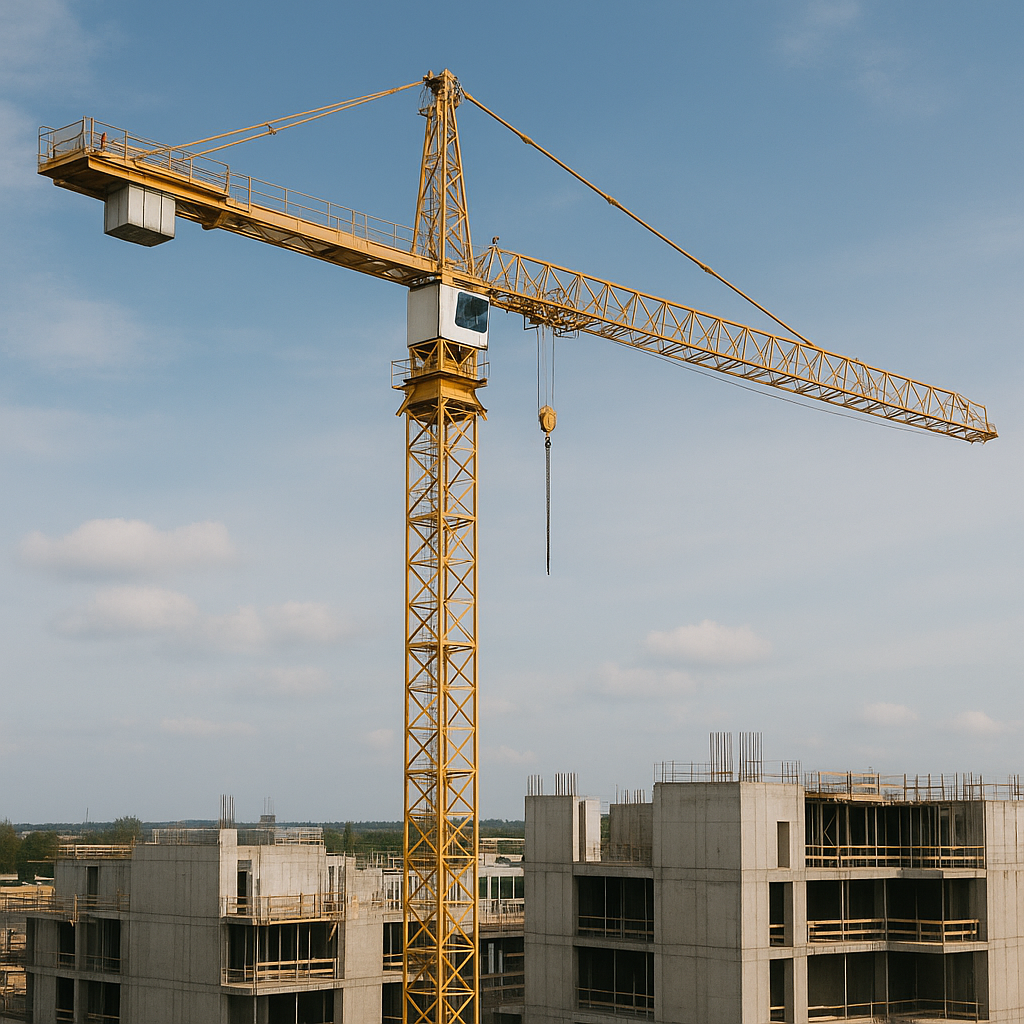
The Liebherr 357 HC-L is a specialist model within Liebherr’s tower crane lineup, designed to serve demanding construction environments where a balance of capacity, reach and operational flexibility is required. This article outlines the machine’s characteristics, typical applications, operational and safety features, maintenance and logistical considerations, and broader market and technological context. Wherever possible the discussion emphasizes practical aspects relevant to site managers, crane operators, rental companies and project planners. Exact figures and performance vary by configuration and local setup; always consult the manufacturer’s documentation or a certified Liebherr representative for precise specifications.
Technical overview and design features
The Liebherr 357 HC-L blends characteristics that make it suitable for medium-to-large construction projects, especially in urban and industrial settings. At its core the model focuses on delivering robust lifting capacity combined with long jib length options and modular mast configurations. The HC-L designation in Liebherr terminology commonly indicates a crane designed for higher load handling with an emphasis on load chart performance and flexibility in erection methods.
Structural components
- Mast and tower: Modular mast sections allow adjustment of mast height to match project needs. The crane can be configured for ground-mounted operation or integrated into building cores.
- Jib and counter-jib: The main jib is engineered to provide a long outreach while maintaining torsional rigidity. Counter-jib geometry and ballast options permit optimized balance for various load-radius scenarios.
- Slewing unit: A robust slewing ring and drive train deliver stable rotation, precise positioning and controlled slew speeds for safe material handling on busy sites.
- Hoisting gear: Multi-speed winches with high-duty lifelines support varied lifting tasks, from heavy component placement to repetitive load cycles for precast elements.
Power, controls and diagnostics
- Modern control systems feature intuitive operator consoles with clear load moment indicators and programmable limits. Integrated safety interlocks and anti-two-block devices are standard.
- Remote diagnostics and telematics options (where available) enable real-time monitoring of usage, alerts for preventive maintenance and remote troubleshooting by service teams.
- Energy-efficient drive components and optimized hydraulics reduce operating costs and support compliance with site environmental objectives.
Performance ranges (typical and configuration-dependent)
Performance varies by configuration (jib length, counterweight, mast height and ballast). Typical ranges for a crane in this class include:
- Maximum rated lifting capacity in the main radius band: commonly in the medium-tonnage bracket (configurations can extend capacities to meet project needs).
- Jib outreach: flexible options often ranging from medium to long reaches suitable for inner-city sites or large industrial yards.
- Maximum tip load: engineered to permit safe handling of moderate loads at full outreach; tip loads can vary substantially depending on ballast and mast configuration.
Applications and ideal use cases
The Liebherr 357 HC-L is targeted at projects that require a balance of reach, lifting power and erection flexibility. It is particularly well-suited for the following scenarios:
Urban building construction
- High-rise residential and office towers where site footprint is constrained and a crane must deliver materials across multiple floors with high positional accuracy.
- Inner-city refurbishment and redevelopment where traffic and space restrictions demand compact transport and modular erection procedures.
Industrial and infrastructure projects
- Power plants, manufacturing facilities and large warehouses needing precise placement of heavy equipment and modules.
- Bridge and civil works where repetitive heavy lifts and long reaches are beneficial.
Modular and precast construction
- Manufactured building segments, precast concrete elements and modular units benefit from the crane’s combination of repeatability and capacity.
- Quick cycle times and dependable hoisting make this model a strong candidate for projects focused on speed and repeatability.
Assembly, transport and site logistics
Successful deployment of a tower crane such as the Liebherr 357 HC-L depends as much on logistics and planning as on the machine’s raw capabilities. The design emphasizes modularity to simplify transport and erecting operations, but careful coordination is still required.
Transport considerations
- Major components are split into truck-transportable modules: mast sections, jib segments, counter-jib and ballast blocks. This modular approach facilitates delivery to sites with restricted access.
- Local transport regulations and route surveys must be arranged in advance to avoid oversized load issues for longer jib sections or heavy ballast deliveries.
Erection and climbing methods
- Options for crane erection include ground-up assembly or hydraulic climbing frames for internal building tying—this provides flexibility for projects that progress vertically over time.
- Connections and interfaces are engineered for predictable and safe assembly: standardized pins, guided bolting points and rated lifting gear reduce on-site time and complexity.
Site planning tips
- Plan crane position early in the project schedule to optimize reach, minimize interference with other trades and ensure efficient material flow.
- Coordinate with logistics for ballast delivery windows and dedicated crane operation zones to preserve site safety and minimize disruption to adjacent traffic.
Operation, safety systems and best practices
Safety and operational efficiency are priorities for both crane owners and contractors. The 357 HC-L incorporates systems and design features intended to protect personnel, equipment and the surrounding environment.
Core safety features
- Load moment indicators and rated capacity limiters prevent overloads at critical radii.
- Anti-collision systems and programmable slew limits can be integrated for sites operating multiple cranes.
- Emergency brakes, redundancy in critical drives and robust structural margins contribute to stability under varied environmental loads.
Operator and ground crew best practices
- Ensure operators are certified and familiar with the crane’s control systems, emergency procedures and local lifting regulations.
- Routine pre-shift inspections should cover wire ropes, hoist drums, sheaves, pins and electrical systems. Document findings and act on any wear or anomalies promptly.
- Communicate lift plans clearly; use standardized hand signals, radios and spotters for precision lifts in tight or congested zones.
Environmental and weather considerations
- Wind restrictions are critical—established site charts for operational wind limits must be followed, and lifts paused when gusts exceed safe thresholds.
- Rain, ice and low temperatures affect material handling and wire rope performance; appropriate de-icing and inspection protocols are essential to maintain safety and uptime.
Maintenance, lifecycle and total cost of ownership
A tower crane’s value is realized over years of service. Good maintenance strategies, predictive servicing and investment in operator training reduce downtime and lower the total cost of ownership (TCO).
Preventive and predictive maintenance
- Regular lubrication, scheduled replacement of wear components and periodic structural inspections extend service life.
- Integration of remote condition monitoring allows for predictive maintenance: monitoring hours of operation, winch cycles and component vibration helps schedule interventions before failures occur.
Parts, support and lifecycle planning
- Access to a regional parts network and manufacturer-certified technicians reduces machine off-hire times. Liebherr’s global service footprint typically supports fast parts delivery and technical support.
- Proper configuration management—keeping detailed records of ballast, hook blocks and mast arrangements—simplifies reconfiguration for future projects and supports safe re-certifications.
Market context, trends and economic considerations
Demand for tower cranes is closely tied to construction activity, urbanization, infrastructure investment and the adoption of prefabrication techniques. Several trends shape the environment in which cranes like the 357 HC-L compete:
- Growth in modular and prefabricated construction increases demand for cranes with reliable, repeatable performance and capable hoist cycles.
- Digitalization and the use of telematics for fleet optimization are standardizing equipment management, allowing fleet managers to monitor utilization and plan maintenance efficiently.
- Rental markets favor versatile cranes that can be reconfigured quickly between jobs—this supports higher utilization rates and quicker ROI for owners and rental companies.
While precise market statistics fluctuate year to year and region to region, the global tower crane sector has been supported by steady investments in housing and infrastructure in many regions. Operators increasingly value cranes that offer both robust mechanical design and integrated digital services.
Case studies, efficiency metrics and typical performance observations
Real-world performance and operator experience highlight a few consistent themes for cranes of this class:
- Cycle efficiency: For projects focused on repetitive lifts (precast panels, mechanical sets), a crane with optimized winch gearing and operator ergonomics can reduce lift cycle times by measurable margins versus older machines.
- Uptime: Remote diagnostics and proactive maintenance reduce unplanned downtime—sites leveraging telematics report faster fault isolation and reduced idle periods for equipment.
- Return on Investment: Rental houses report that cranes offering flexible jib and ballast configurations achieve higher utilization, particularly where mixed-use projects require different lift profiles throughout a program.
Example operational metric (illustrative): a well-managed site using a modern tower crane may achieve >90% availability during lift-critical phases if preventive maintenance and skilled operations are in place. Exact values vary by duty cycle, environment and maintenance practices.
Comparative positioning and selection guidance
When choosing a tower crane for a specific project, consider these selection criteria:
- Duty profile: Is the site dominated by frequent moderate lifts, or occasional heavy picks? Match the crane’s strength and winch longevity to the duty cycle.
- Reach vs capacity trade-off: Longer jibs reduce capacity at the tip; ensure the selected configuration meets the required tip and intermediate loads.
- Site constraints: Height restrictions, proximity to buildings and transport access determine mast choices and erection strategy.
- Support and lifecycle costs: Factor in parts availability, support networks and telematics options when evaluating TCO.
For many contractors and rental firms, a model like the Liebherr 357 HC-L strikes a practical balance between reach, lifting power and modularity. It is often selected where project complexity demands a crane with strong performance across multiple axes rather than an extreme-specialty machine.
Final notes on procurement and contacting the manufacturer
If you are considering the Liebherr 357 HC-L for a project, engage early with a certified Liebherr dealer or technical representative. They can:
- Provide the precise load charts for the planned configuration and confirm permitted radii and ballast arrangements.
- Advise on erection options, transport logistics and local regulatory compliance for crane operations.
- Offer training packages, maintenance contracts and telematics subscriptions tailored to your fleet and project needs.
Selecting the correct crane configuration and establishing robust operational and maintenance practices are the keys to maximizing safety, uptime and return on investment. The Liebherr 357 HC-L is designed to support demanding projects with a combination of structural robustness, operator-friendly systems and modular logistics, making it a reliable choice for many contemporary construction and industrial lifting tasks.


)
)