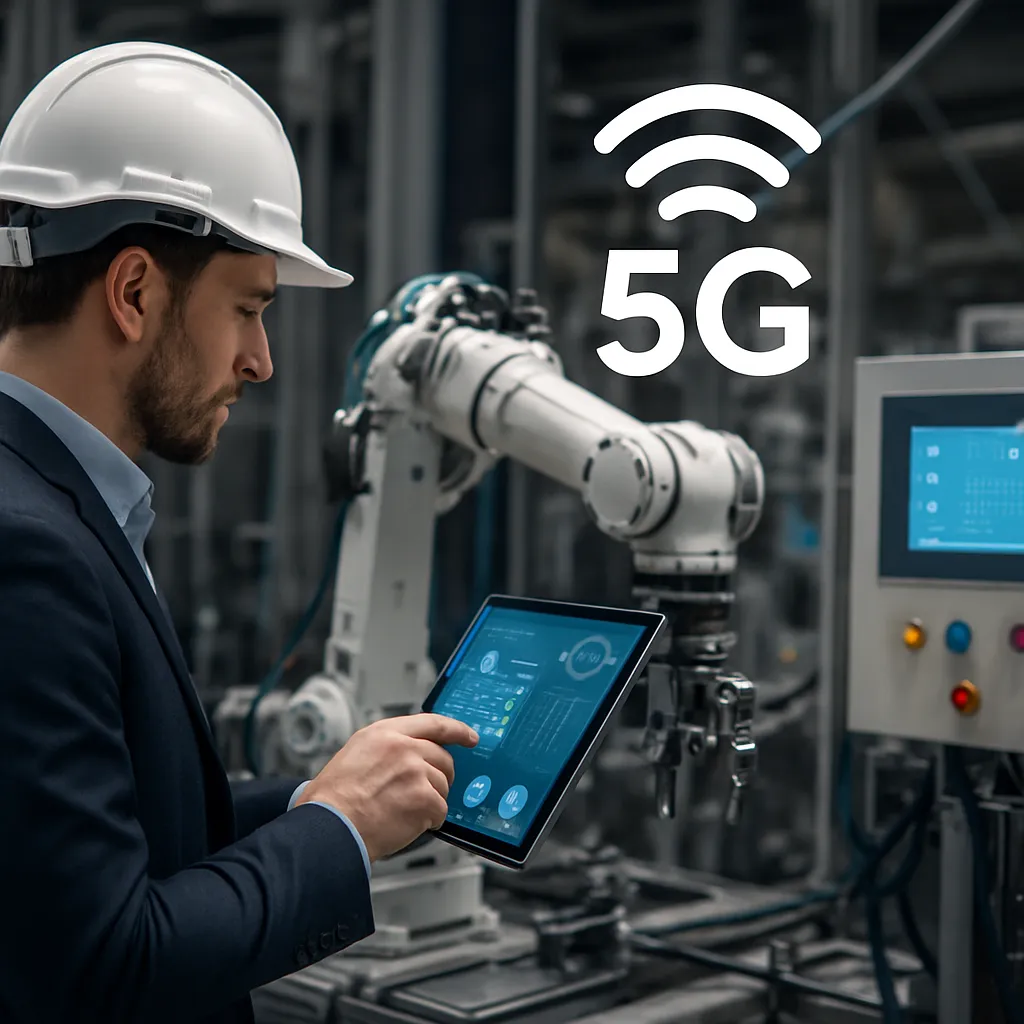
Across manufacturing floors and remote sensor farms, machines now communicate through ultra-fast networks that redefine industrial processes. The integration of 5G wireless technology has ushered in a new era of connectivity and innovation, enabling devices to work together with unparalleled precision. This article explores how 5G enhances machine-to-machine interactions, the role of edge computing, real-world applications, and the future landscape shaped by advanced networks.
Evolution of Machine Connectivity with 5G
From Wired to Wireless
Originally, industrial machines relied on wired fieldbuses or Ethernet connections to exchange data. While stable, these links imposed physical constraints on factory layouts and limited device mobility. The advent of 4G brought wireless flexibility but struggled with higher latency and inconsistent coverage. With the rollout of 5G, industries achieve:
- Ultra-low latency below one millisecond, supporting real-time feedback loops.
- Massive device density, accommodating thousands of sensors per square kilometer.
- Enhanced bandwidth for high-definition video streams used in quality inspection.
Key Features of 5G for Machinery
- Reliability: Service-level agreements (SLAs) guarantee stable connections for critical applications.
- Scalability: Networks adapt to growing fleets of autonomous vehicles, drones, and robotic arms.
- Network slicing allows partitioning of resources to isolate high-priority traffic from routine monitoring data.
Edge Computing and Intelligent Automation
Decentralizing Data Processing
Traditional cloud-centric models incurred unacceptable delays when transmitting raw data for analysis. By moving compute resources closer to the devices—at the network edge—manufacturers achieve rapid decision-making. 5G’s high bandwidth and low latency make edge deployments truly viable:
- Real-time anomaly detection in assembly lines, reducing waste and downtime.
- On-site AI inferencing for predictive maintenance, forecasting component failures before breakdowns occur.
- Augmented reality (AR) support for technicians, overlaying step-by-step guidance onto equipment with millisecond responsiveness.
Enhancing Automation Through AI Integration
Combining 5G and edge computing unleashes next-level automation:
- Collaborative robots (cobots) adjust their speed and trajectory based on live sensor feeds.
- Quality control cameras analyze products in real time, diverting defects without human intervention.
- Autonomous guided vehicles (AGVs) navigate dynamic warehouse environments, avoiding obstacles through continuous data exchange.
Industrial Use Cases and Applications
Smart Factories
Smart factories harness 5G networks to unify production processes under centralized dashboards. Key benefits include:
- Dynamic resource allocation optimizing energy usage according to production schedules.
- Instant feedback loops allowing rapid reconfiguration of assembly lines to accommodate new product variants.
- End-to-end traceability with RFID tags and 5G-enabled trackers monitoring component flow through each stage.
Remote Monitoring and Control
Manufacturing sites in harsh or hazardous environments benefit from remote operation:
- Oil rigs and chemical plants use 5G-linked sensors to track temperature, pressure, and chemical levels without exposing personnel to danger.
- Wind farms deploy drones for blade inspections, streaming 4K video directly to control centers for immediate analysis.
- Mining equipment receives over-the-air updates optimizing performance and safety parameters.
Automated Logistics and Warehousing
Warehouse management has evolved through interconnected systems coordinating vehicles, conveyors, and sorting machines:
- Predictive algorithms forecast order surges and pre-position goods to minimize picker travel time.
- Robotic palletizers adjust stacking patterns in real time based on incoming order priorities.
- Remote operators oversee fleets of AGVs, intervening only when exceptions occur.
Security, Reliability, and Future Prospects
Ensuring Safe Data Exchange
High-speed machine communication raises critical concerns about cybersecurity. Protecting industrial control systems from intrusion requires:
- End-to-end encryption of sensor data, preventing eavesdropping on operational metrics.
- Secure boot and hardware authentication for devices joining the network.
- Continuous threat monitoring leveraging AI to detect anomalous traffic patterns in real time.
Maintaining Efficiency and Uptime
Reliability is paramount when milliseconds of delay can halt production lines. Industry leaders implement:
- Redundant 5G paths and fallback connections to wired links for mission-critical applications.
- Proactive network diagnostics predicting coverage gaps and automatically reconfiguring cell resources.
- Service-level agreements that define minimum performance metrics for interoperability across multi-vendor ecosystems.
Looking Toward Next-Generation Innovations
As factories become more autonomous, 5G will serve as a springboard for new paradigms:
- Integration with 6G research exploring terahertz frequencies for even higher bandwidth and precision localization.
- Advanced digital twins running on edge clusters for virtual commissioning and scenario testing.
- Swarm robotics coordination where hundreds of micro-robots communicate in concert, assembling complex structures at nanoscale.
By combining ultra-responsive networks with intelligent edge platforms, industries unlock a future where machines collaborate effortlessly, delivering breakthroughs in productivity, safety, and sustainable growth.