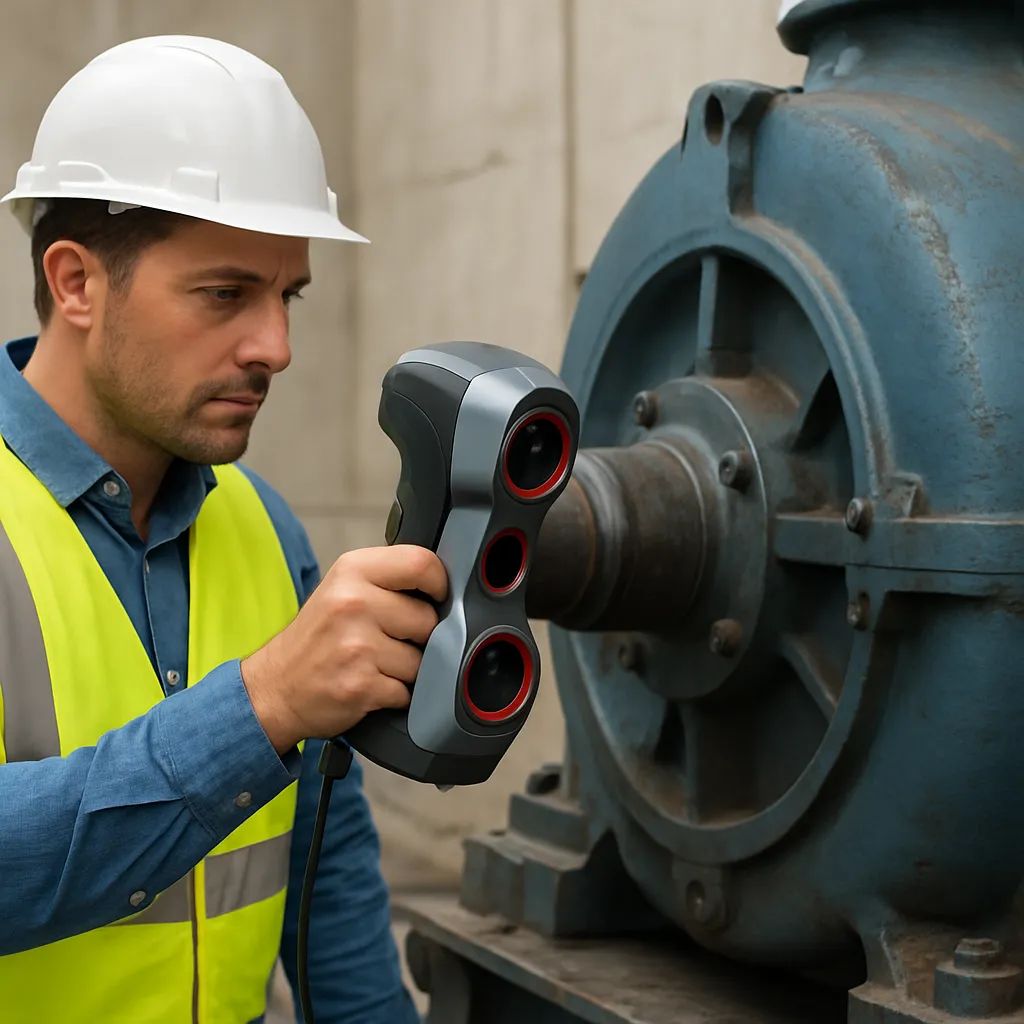
Rapid advancements in industrial technology have led to the widespread adoption of 3D scanning for improving the performance and longevity of construction sites and heavy equipment. Integrating these digital tools into the daily routine of engineers and technicians transforms how inspections, repairs, and upgrades are carried out. By capturing precise geometric data and converting it into actionable models, organizations can optimize workflows, reduce downtime, and enhance overall safety.
Advancements in 3D Scanning Technologies
Over the past decade, handheld and tripod-mounted scanners have evolved from bulky prototypes to compact, high-resolution devices. Modern systems use structured light, laser triangulation, and photogrammetry to collect millions of data points within seconds. These point clouds form the basis of complex digital twins—virtual replicas of physical assets that enable engineers to perform detailed analyses before any work begins on the shop floor or in the field.
Structured Light vs. Laser Triangulation
- Structured light scanners project a known pattern onto a surface and capture the deformation, calculating precise distances from the distortion.
- Laser triangulation uses a laser dot or line and a sensor to determine the angle and distance of that laser on the target object.
Choosing the right technology depends on the target’s material, surface finish, and accessibility. Reflective, transparent, or very dark surfaces pose challenges for both methods, often requiring specialized coatings or auxiliary illumination. Recent research focuses on improving sensor algorithms and combining multiple scanning modes to achieve the highest possible accuracy regardless of environmental conditions.
Application of 3D Scanning in Machine Maintenance
Implementing digital inspection protocols has proven especially valuable for large-scale manufacturing plants and maintenance facilities. By scanning rotating equipment, gear systems, and structural components, maintenance teams can detect wear patterns and defects that are invisible to the naked eye. This approach promotes non-destructive testing and helps prioritize repairs based on the severity of detected anomalies.
Preventive vs. Predictive Maintenance
- Preventive Maintenance: Scheduled service based on usage hours or time intervals.
- Predictive Maintenance: Condition-based service triggered by real-time data and analytics.
3D scanning integrates seamlessly with vibration analysis, thermal imaging, and ultrasound testing to offer a comprehensive view of machine health. For example, scanning a turbine blade before and after operation can reveal minute deviations in blade curvature, indicating localized erosion or fatigue. When scanned data is overlaid with original design models, engineers can calculate exact wear rates, enabling parts replacement precisely when needed instead of on a fixed schedule.
Reverse Engineering and Spare Parts Production
When legacy equipment lacks available blueprints or OEM support, reverse engineering becomes indispensable. Technicians use high-resolution scans to recreate faulty parts in CAD software, from complex pump housings to intricate gearbox assemblies. Additive manufacturing can then produce on-demand, custom-fit spare components, drastically reducing lead times and eliminating expensive shipping of replacement parts.
Integration with Workflow and Data Management
Seamless integration of scanned data into existing information systems is critical for unlocking maximum value. Cloud-based platforms allow maintenance teams to upload, annotate, and share 3D models across departments. When combined with enterprise resource planning (ERP) and computerized maintenance management systems (CMMS), these platforms enable real-time tracking of service requests, parts inventory, and compliance documentation.
Collaborative Platforms and Virtual Reality
Augmented and virtual reality (AR/VR) solutions overlay digital scans onto the physical environment, guiding technicians through complex repair steps. For instance, wearing AR glasses, an engineer can visualize hidden internal components of a gearbox, see color-coded stress zones, and follow step-by-step instructions without flipping through manuals. This immersive approach reduces human error and shortens training cycles for new staff members.
Standards and Data Security
- Adherence to ISO and ASME standards ensures consistency in scan resolution and reporting metrics.
- Encrypted data transmission and role-based access control maintain confidentiality of proprietary designs.
Implementing a robust data governance policy is essential for companies that handle sensitive designs or operate in regulated industries such as aerospace and defense. Regular audits and version control prevent unauthorized alterations and help maintain an accurate historical record of all maintenance activities.
Future Trends and Innovations
Emerging technologies promise to push the boundaries of what’s possible in machine maintenance. Ultra-portable scanners, equipped with AI-driven feature recognition, can automatically classify parts, detect anomalies, and suggest corrective actions. Coupled with edge computing, these devices will process data locally, reducing latency and enabling on-the-spot decision-making even in remote locations.
Robotics and Automated Scanning
Integrating scanners into robotic arms or autonomous drones allows for fully automated inspections of large structures like bridges, offshore platforms, and tall industrial chimneys. By programming predefined scanning paths, these robots collect consistent data with minimal human intervention, ensuring safety in hazardous environments.
Machine Learning for Predictive Analytics
Machine learning models trained on historical scan data and maintenance records can forecast potential failures before they occur. Early-stage micro-cracks, material fatigue signatures, and alignment deviations become predictive indicators, enabling a transition from reactive repairs to proactive lifecycle management. Over time, these models improve as they ingest more data, offering ever-greater efficiency and operational uptime.
By embracing 3D scanning and its complementary technologies, industries can transform maintenance from a cost center into a strategic asset. The combination of precise digital models, real-time analytics, and integrated workflows paves the way for safer, more sustainable, and more cost-effective operations.