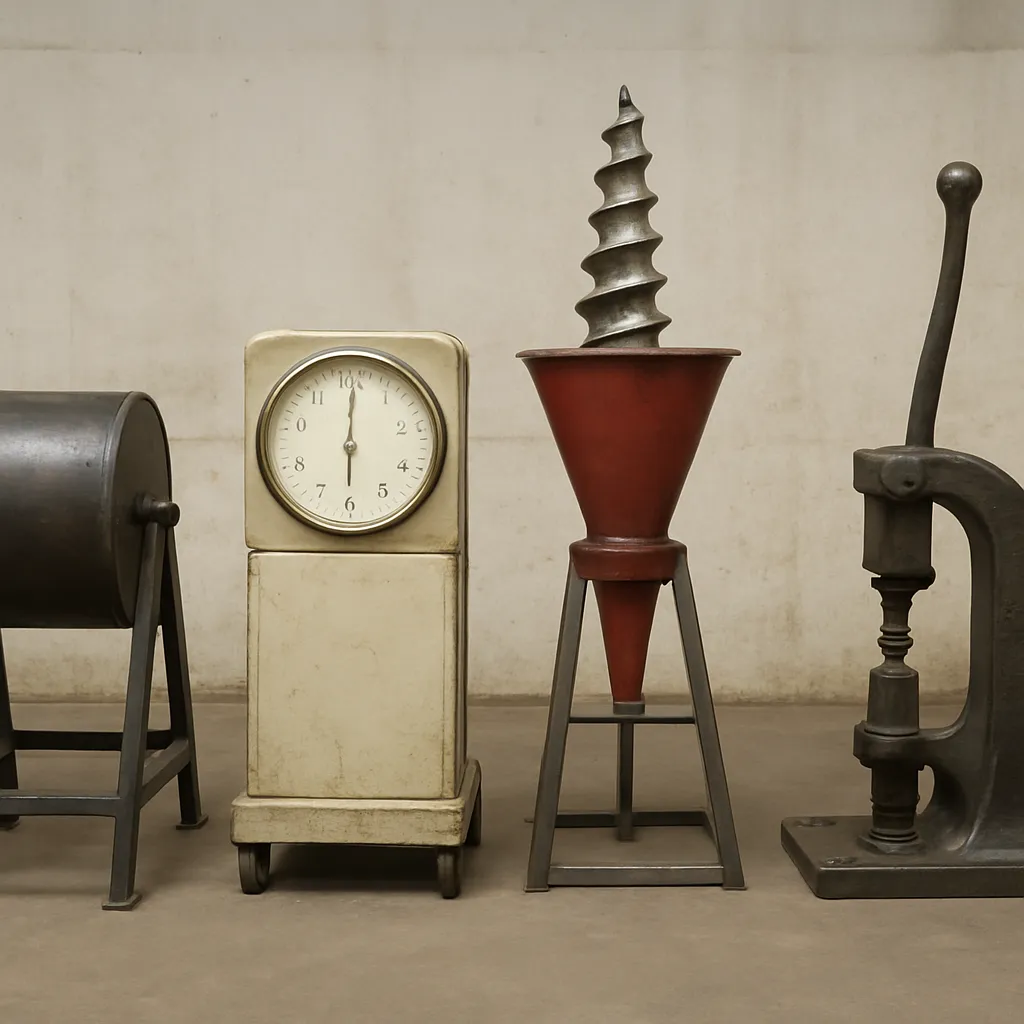
The world of industrial machinery is a testament to human ingenuity, where each creation serves a distinct function with **precision** and **efficiency**. From robust excavators that shape our skylines to delicate robotic arms assembling intricate electronics, specialized machines define the way we work and live. This exploration delves into the historical milestones, awe-inspiring single-purpose marvels, and the transformative impact these machines have on industries across the globe.
The Evolution of Specialized Machines
Manufacturing and engineering have always sought to improve **productivity** while reducing labor intensity. Early artisans relied on manual tools, but the onset of the Industrial Revolution sparked a wave of mechanization. As steam power gave way to electricity, inventors focused on crafting devices dedicated to single tasks, ensuring optimum performance and minimal downtime.
From Steam Engines to Electric Precision
Steam engines powered everything from locomotives to textile looms, yet they weren’t tailored for one narrow purpose. The shift toward electric motors enabled designers to create machines that could:
- Operate at **high** speeds without sacrificing reliability
- Be scaled down for compact environments
- Integrate with emerging **automation** systems
Customization and Automation
As industries diversified, so did the demand for customized machinery. The late 20th century saw the advent of computer-controlled devices, which unlocked unprecedented levels of **innovation**:
- Programmable Logic Controllers (PLCs) for assembly lines
- Computer Numerical Control (CNC) machines for metalworking
- Automated guided vehicles (AGVs) in warehouse logistics
These advances provided consistent quality, reduced human error, and paved the way for single-purpose machines that could be fine-tuned to the tiniest margin.
Remarkable Single-Purpose Designs
Some machines are born to perform a solitary function with **uncompromising** dedication. Their singularity often leads to astounding levels of performance, sometimes bordering on the bizarre.
Industrial Pioneers
Consider the glass fiber spinnerets: each small nozzle extrudes molten glass into hair-thin strands, later wound into spools for telecommunications. The entire machine is engineered around one goal: to draw glass at precise diameters without blemish or breakage.
- Precision mechanisms maintain uniform tension of the glass
- High-temperature-resistant alloys ensure longevity
- Optical sensors detect minute irregularities in real time
Modern Innovations
In recent years, designers have pushed boundaries with robots that weave structures from carbon fiber, or machines that 3D-print organ scaffolds layer by layer. These devices highlight the marriage of **versatility** and extreme specialization:
- A one-of-a-kind recycling unit that separates composite materials using targeted laser ablation
- A turbine blade polisher that synchronizes robotic arms to follow **complex** aerodynamic contours
- An autonomous drilling rig that aligns and bores holes in underwater pipelines with millimeter accuracy
Each breakthrough underscores how single-purpose design can yield unparalleled results in speed, quality, and resource savings.
Impacts on Industry and the Road Ahead
Specialized machines exert a profound influence on global production and economic growth. By allocating dedicated tools to high-volume or intricate tasks, factories achieve unmatched throughput and consistency. Yet, challenges remain: balancing **sustainability**, reducing energy consumption, and ensuring adaptability in a rapidly changing market.
Economic and Environmental Considerations
- Single-purpose machines often deliver the lowest unit cost in mass production, thanks to optimized cycles
- However, they can become obsolete if market demands shift, raising concerns about **waste** and component reuse
- Emerging green technologies aim to integrate renewable energy sources directly into specialized equipment, lowering carbon footprints
Toward Smarter, More Resilient Systems
The next generation of machines will leverage artificial intelligence and connected sensors, enabling predictive maintenance and seamless integration across diverse workflows. Innovations to watch include:
- Self-configuring robotic cells that swap end-effectors to tackle new tasks without human intervention
- Modular machines with plug-and-play components for rapid retooling
- Digital twins that simulate single-purpose operations for continuous **improvement** and risk mitigation
With these advances, industries can maintain the advantages of specialization while achieving **flexibility** and resilience in uncertain times.
Specialized machines remain at the heart of industrial evolution, pushing the boundaries of what is possible. Their single-minded focus drives **efficiency**, shapes entire sectors, and inspires the next wave of transformative technologies.