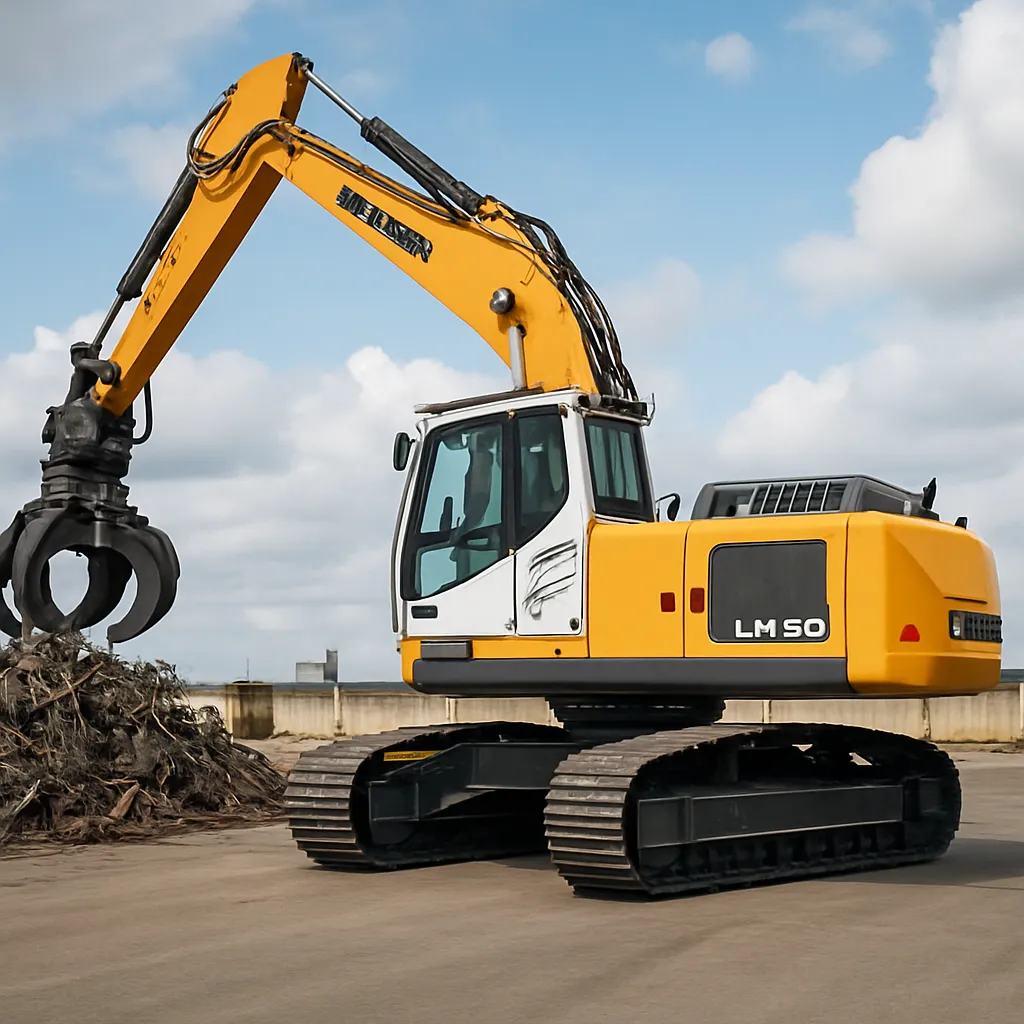
The Liebherr LH 50 is a purpose-built wheeled material handler designed for heavy-duty loading, sorting and handling tasks in ports, recycling yards, scrap processing facilities and timber yards. Combining a robust undercarriage, precise hydraulics and a comfortable operator environment, the LH 50 delivers dependable performance across a range of industrial applications. This article explores the machine’s design, typical technical data, most common uses, operational efficiency, safety and maintenance considerations, and real-world examples of how it performs on job sites.
Design and key technical features
The LH 50 reflects Liebherr’s approach to dedicated handling machines: a rigidly built base, high-flow hydraulic systems and a long reach boom that prioritizes visibility and control rather than excavating force. The architecture of the machine focuses on lifting and placing loose materials rather than digging, which leads to specialized components and optimized stability for tall loads.
Powertrain and hydraulics
The LH 50 is typically powered by a diesel engine in the medium-power segment, optimized for sustained torque at low-to-mid RPMs rather than peak horsepower. Engine outputs for machines in this class are usually in a range that balances fuel economy with the hydraulic demand of continuous handling operations. A high-capacity hydraulic pump suite supplies the slew, boom, and attachment functions, enabling smooth and coordinated movements that improve cycle times and reduce operator fatigue.
- Engine type: turbocharged diesel, designed for continuous operation and easy maintenance.
- Hydraulic system: high-flow, multi-circuit configuration with priority for boom and attachment functions.
- Control system: electro-hydraulic or fully hydraulic control packages with optional electronic assistance for precision.
Chassis, undercarriage and suspension
The LH 50 generally uses a rigid wheeled chassis with outriggers or stabilizers available as options for heavy lifts or stationary loading. The wheeled base provides mobility on paved surfaces and compacted yards and is often paired with a counterweight system tailored to the working equipment installed. Tire options and steering configurations are selected to match the intended use—port operations, recycling yards or timber handling.
- Operating weight: dependent on specification; units in this range typically weigh between 18 and 25 tonnes (approximate, depending on configuration).
- Counterweight: modular counterweight blocks allow ballast adjustment for different attachment setups.
Booms, sticks and attachments
A key strength of the LH 50 is its interchangeability of attachments and boom configurations. Liebherr and aftermarket suppliers offer a variety of booms and sticks to change reach and lifting geometry, and a wide selection of attachments increases versatility.
- Boons and sticks: combinations that extend reach for load/unload operations or shorten reach for heavier lifting.
- Attachments: grapples (demolition and scrap), clamshell buckets, magnet lifts, log grapples, sorting hooks and quick couplers.
- Attachment control: proportional hydraulic circuits and quick-coupler systems for rapid changeover.
Primary applications and industry uses
The LH 50 is a specialty machine whose strengths are best utilized in sectors that require repetitive handling and sorting of bulk materials. Its value emerges from the blend of reach, visibility and attachment compatibility that improves throughput and reduces cycle times compared to multipurpose excavators used with temporary handling tools.
Ports and bulk handling
In port terminals and bulk transfer stations, the LH 50 is used to move bulk commodities such as coal, grain (with special attachments), ores and aggregates. Its wheeled mobility allows it to travel between berths, conveyors and storage areas. Typical tasks include ship unloading, stockpile management and loading trucks or rail wagons.
- Strengths: fast material flow, long reach options, and low ground pressure configurations for softer surfaces.
- Attachments commonly used: clamshell buckets for bulk cargo, and magnets for scrap at multi-purpose terminals.
Scrap yards and metal recycling
Scrap handling is one of the most common roles for the LH 50. With heavy-duty grapples and magnet systems, the machine sorts and piles metal efficiently. The long reach and stable base allow operators to work safely at heights and quickly transfer sorted material to shredders, balers or loading areas.
- Performance focus: cycle time reduction, safe handling of awkward loads and improved visibility during sorting operations.
- Typical productivity: depends on material and attachment, but experienced operations often measure throughput in tens to hundreds of tonnes per hour for well-matched setups.
Recycling and waste processing
Recycling facilities benefit from the LH 50’s controlled hydraulic response and specialized grapples that reduce contamination between material streams. Whether handling paper, plastics, or mixed construction waste, the machine’s precision reduces downstream processing time.
Timber and forestry yards
For log yards, the LH 50 can be fitted with dedicated log grapples and bunks. The combination of reach and controlled slewing is ideal for stacking logs, loading trucks and arranging inventory for seasonal shipment.
Operational efficiency and productivity
Using the LH 50 in the right environment leads to measurable gains: reduced cycle times, lower fuel consumption per tonne moved, and improved sorting accuracy. These outcomes are driven by optimized hydraulics, operator ergonomics and appropriate attachments.
Cycle times and throughput
Cycle times on material handlers are shorter than on conventional excavators when performing above-the-side loading due to dedicated counterbalancing and boom geometry. In scrap or recycling operations, a well-configured LH 50 can outperform general-purpose machines by minimizing repositioning time and improving bite size with dedicated grapples.
- Typical productivity metrics: highly variable by material, but a mid-sized material handler can shift from dozens to several hundred tonnes per hour in favorable conditions.
- Influencing factors: attachment choice, operator skill, facility layout and maintenance state.
Fuel efficiency and operating costs
Fuel consumption for material handlers depends on hydraulic load and duty cycle. Operators who apply soft-start techniques and use eco modes available on modern controllers can reduce fuel use significantly. Predictive maintenance, correct attachment sizing and regular hydraulic filter changes also contribute to lower life-cycle costs.
- Fuel use: varies with duty cycle; continuous heavy lifting consumes more fuel than light sorting. Manufacturers typically provide consumption guidance during specification.
- Cost optimization: telematics, engine maps and operator training reduce operating expenses and improve return on investment.
Safety, operator ergonomics and controls
Safety is critical in handling operations where loads are often large, irregular and elevated. The LH 50 is engineered to give the operator excellent outward visibility, precise control and access to safety systems that protect both personnel and equipment.
Cab design and visibility
Liebherr’s cabins for material handlers focus on a panoramic view, vibration damping and seat ergonomics that reduce operator fatigue across long shifts. Joystick controls are typically positioned for intuitive input and proportional response. In many markets, climate control and adjustable seating are standard to enhance comfort.
Active and passive safety systems
- ROPS/FOPS-certified cabins to protect against rollovers and falling objects.
- Stability-assist features, such as load moment indicators (LMI) or overload warnings.
- Cameras and optional 360-degree vision packages to monitor blind spots when working in busy yards.
- Emergency stop circuits and hydraulic lockouts during maintenance.
Maintenance, lifecycle and total cost of ownership
Material handlers like the LH 50 are designed to minimize downtime and service intervals. Robust components, easy-access service points and modular replacement parts make scheduled maintenance predictable and manageable.
Scheduled maintenance and service intervals
Routine maintenance typically covers engine oil and filter changes, hydraulic fluid monitoring, greasing points on slewing rings and boom pins, and undercarriage inspections. Many operators follow manufacturer-specified intervals measured in hours of operation, with daily walkarounds to spot leaks or abnormal wear.
- Common intervals: daily visual checks, 250–500 hour minor service items, and larger servicing at 1,000+ hour intervals (manufacturer-dependent).
- Telematics: remote monitoring systems provide alerts for service needs, fuel use and operating patterns that impact upkeep.
Lifecycle considerations
The resale value of a well-maintained LH 50 remains higher in markets that demand specialist handlers, such as ports and recycling yards. Investment in proper attachments and operator training extends the machine’s productive life and speeds return on investment.
Case studies and real-world examples
Several facilities worldwide employ mid-sized Liebherr material handlers for their reliability and adaptability. Below are anonymized, representative examples illustrating typical outcomes.
Port terminal bulk handling
A mid-sized European port replaced a fleet of general-purpose excavators with purpose-built material handlers including LH 50 units. The result was a 15–30% increase in ship turnaround throughput and lower fuel consumption per tonne handled due to reduced repositioning and faster cycle times. The modular counterweight and clamshell combinations enabled quick switching between cargo types.
Recycling yard productivity gains
In a municipal recycling facility, an LH 50 equipped with a 360-degree camera package and hydraulic sorting grapple reduced contamination rates and improved sorting accuracy. Overall material throughput increased while labor required for manual sorting decreased appreciably.
Scrap metal processing
At a scrap yard, pairing an LH 50 with a high-capacity electromagnet improved metal recovery from mixed loads. The operator’s visibility and attachment control translated into lower scrap contamination and higher saleable metal percentage. Safety incidents declined after installing additional camera views and implementing regular operator refresher training.
Environmental considerations and emissions
Liebherr machines, including material handlers like the LH 50, are designed to meet contemporary emissions regulations applicable in their target markets. Engine calibration, selective catalytic reduction or diesel particulate filter systems (where required) help meet Tier and Stage emission limits.
- Emissions compliance: engines are available or configurable to meet local emission standards (e.g., EU Stage, EPA Tier equivalents).
- Noise reduction: acoustic insulation and muffler systems reduce operator and neighborhood noise where required.
Operators can further reduce environmental impact through optimized machine scheduling, reduced idling time and use of biodiesel or low-sulfur fuels where appropriate and permitted.
Market context, statistics and purchase considerations
Material handlers occupy a niche market between excavators and cranes. Their value proposition is specific: dedicated handling tasks with lower ground disturbance and higher cycle rates for above-the-side work. Buyers typically consider lifecycle costs, attachment versatility and local dealer support when selecting models like the LH 50.
- Typical acquisition considerations: configuration flexibility, warranty and service support, telematics capabilities, and attachment ecosystem.
- Depreciation and resale: specialist machines retain value in sectors with ongoing demand (ports, recycling, scrap).
While unit sales figures for specific models such as the LH 50 are not always publicly disclosed by manufacturers, industry reports indicate steady demand for material handlers in major port and recycling markets globally over the past decade. Growth drivers include increasing global trade volumes, stringent recycling targets in many countries, and shifts toward mechanized scrap processing.
Choosing the right configuration
Selecting the ideal LH 50 configuration begins with clarifying the primary application, expected daily throughput and the types of attachments required. A needs analysis should consider reach versus lifting capacity, mobility between sites, and the availability of dealer support for parts and service.
- For port operations: prioritize long-reach booms, clamshell buckets, and modular ballast options.
- For scrap yards: favor heavy-duty grapples, high slew torque and magnet options.
- For recycling centres: consider visibility packages, 360-degree cameras and attachment quick-change systems for fast swapping between grapples and buckets.
Operator training, telematics and a structured maintenance plan complete the purchase decision and help ensure the LH 50 delivers expected uptime and productivity gains.
Summary
The Liebherr LH 50 is a versatile and purpose-driven material handler that delivers a compelling mix of reach, control and attachment flexibility for industries requiring efficient bulk-handling solutions. Its design emphasizes stable lifting geometry, hydraulic precision and operator comfort, making it well suited to ports, scrap yards, recycling operations and timber handling. When configured correctly and supported by disciplined maintenance and training, an LH 50 helps operations increase throughput, reduce unit handling costs and improve workplace safety. Buyers should evaluate machine configuration, local emissions and maintenance support to match the LH 50 to the demands of their specific operations.


)
)