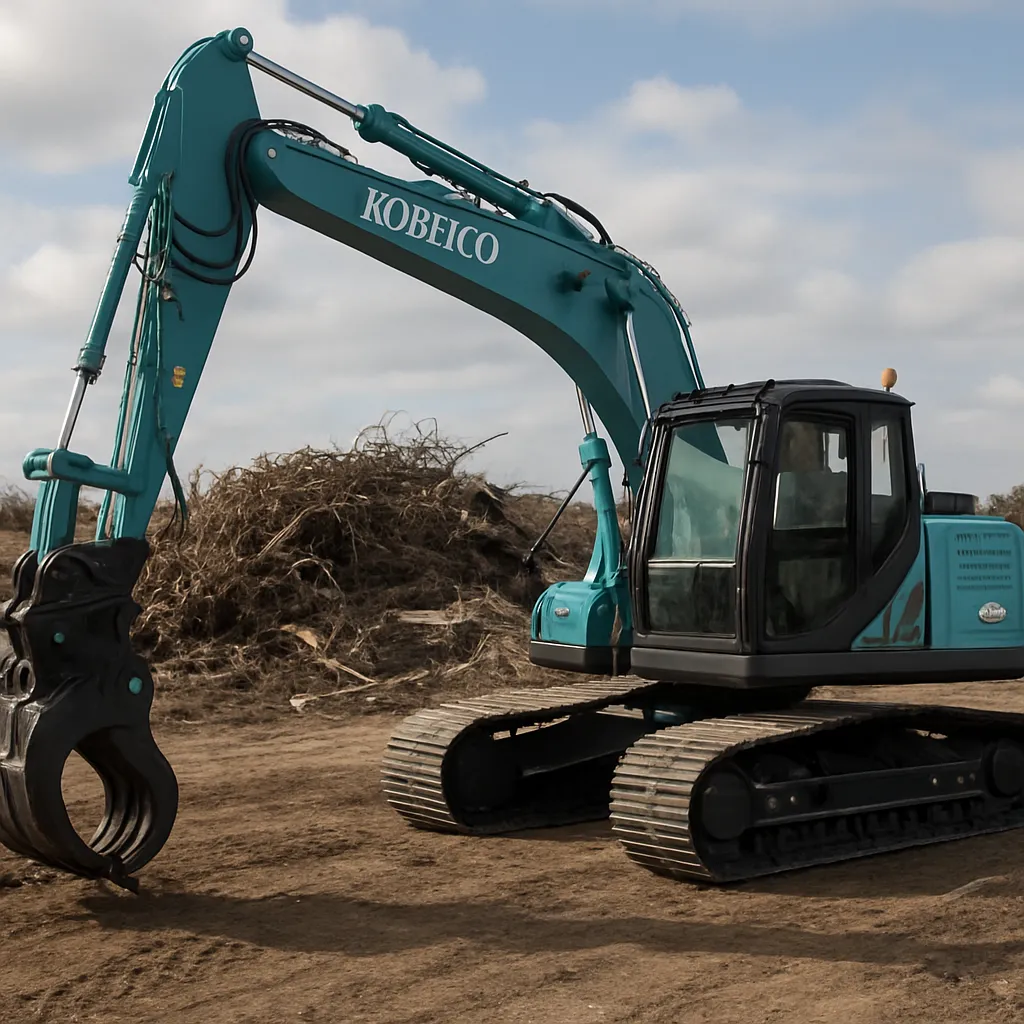
The Kobelco SK140D material handler is a versatile adaptation of Kobelco’s popular mid‑class excavator platform, optimized for heavy duty sorting, lifting and handling tasks across industries. Designed to combine the base machine’s proven undercarriage and hydraulic power with specialized booms, grapples and rotators, the SK140D material handler is widely used in ports, scrap yards, recycling centers and demolition sites. This article explores the machine’s design, typical applications, technical characteristics, operational advantages and maintenance considerations, offering useful information for buyers, fleet managers and operators.
Overview and key characteristics
The SK140D began life as a compact-to-mid-size excavator in Kobelco’s SK series and, when configured as a material handler, receives modifications that make it better suited for prolonged lifting, lifting at radius and repetitive cycle work. Typical modifications include a high‑structure or dedicated material handling boom, reinforced undercarriage or counterweight packages, an elevated or reinforced cab, and installation of hydraulic rotators and coupling systems for handling attachments.
Design highlights
- Purpose-built boom geometry for improved reach and visibility when working at height or at radius.
- Strengthened chassis and counterweight options to maintain stability during lifts.
- Hydraulic system tuning and increased oil flow to support high‑performance attachments such as rotators, grapples and magnets.
- Operator comfort and safety upgrades: ROPS/FOPS cab protection, ergonomic controls and better sight lines.
- Optional quick couplers and integrated electrical/hydraulic hookups to switch attachments rapidly for higher productivity.
Primary applications and industries
The SK140D configured as a material handler is valued for its adaptability. It is compact enough to operate in tighter yards than large dedicated handlers yet powerful enough for many industrial tasks.
Key sectors where the SK140D excels
- Scrap and metal recycling – sorting, feeding shears, loading trucks, and handling bundles of scrap metal.
- Ports and terminals – unitized cargo handling, breakbulk loading/unloading and stockpile management where reach and lifting control are essential.
- Construction and demolition – selective demolition, loading debris and supporting recycling of demolition materials.
- Forestry and biomass – log handling, biomass loading and working with specialized grapples or clamshells.
- Municipal and waste management – handling bulky waste, baled materials and municipal recycling streams.
- Industrial plants and fabricators – internal material movements, feeding presses and handling heavy components.
Attachments that expand capability
The versatility of the SK140D material handler is realized through a wide array of attachments. Common options include:
- Grapples (orange-peel, demolition and sorting grapples) for scrap and waste handling.
- Electro‑magnets for rapid separation and movement of ferrous materials in scrap yards and steel mills.
- Hydraulic rotators to provide full 360° rotation of the attachment for precise placement.
- Clamshell buckets and clamshell grabs for bulk material handling, such as sand, grain or biomass.
- Hydraulic shears and shearing thumbs for cutting and dismantling metal and structures.
- Specialized quick couplers and multi‑function coupler systems for fast attachment changes.
Technical specifications and performance (typical values)
Exact specifications for an SK140D conversion vary by year, region and the conversion house or dealer package. Below are representative figures and ranges commonly associated with SK140D material handler builds; always confirm exact values with the supplier for a specific machine.
- Operating weight (base excavator): approximately 13,000–15,500 kg (28,660–34,170 lb). Material handler conversions often add counterweights and protective structures, pushing operational weight higher.
- Engine power: typically in the neighborhood of 70–85 kW (95–115 hp) depending on emission tier and market specification.
- Hydraulic flow: many conversions increase flow and pressure; typical pump flows are around 200–280 L/min (53–74 gal/min) to reliably run rotators and large grapples.
- Maximum reach: with dedicated material handling booms, reach commonly ranges from 8 to 12 meters (26–39 ft), though longer reach packages exist for specialized tasks.
- Lifting capacity at ground level (approximate): 2–4 tonnes (depending on reach and counterweight), while at extended radii rated capacity declines substantially — as with all hydraulic handlers, safe lifting is a function of reach and machine stability.
- Fuel consumption: varies with duty cycle; efficient mid‑class handlers often average 10–25 L/h under working loads, influenced by attachment type and operator practice.
- Emission compliance: newer models and conversion packages meet local standards such as Tier 4 Final (US) or Stage V (EU) using diesel aftertreatment where required.
Performance considerations
Lifting performance is not only about engine horsepower but about hydraulic capacity, stability (counterweights, undercarriage width), boom geometry and control software. Material handler packages often reprogram hydraulic priority, add additional cooling, and fit heavy-duty pumps to maintain consistent performance during prolonged operation.
Operational advantages and productivity
When configured properly, the SK140D material handler offers a compelling balance between agility, cost and capability. Below are the principal advantages that fleet owners and operators commonly cite.
- Versatility: One base machine can be reconfigured for scrap, port work, demolition or forestry simply by changing attachments and boom configurations.
- Lower operating costs: Compared with larger dedicated material handlers, a converted SK140D typically has lower purchase price, lower fuel use and reduced transport/logistics costs.
- Improved operator visibility: Elevated or specially designed cabs improve sight lines for precise handling and reduce cycle times by improving operator confidence.
- Easy serviceability: The SK platform is known for accessible service points, making routine maintenance and daily checks quicker.
- Incremental upgrades: Owners can start with a basic conversion kit and upgrade hydraulics, cab or counterweight later as needs expand, managing capital expenditure.
Safety features and best practices
Material handling tasks present elevated safety risks due to lifted loads and rotating attachments. Common safety features and practices for SK140D handlers include:
- ROPS/FOPS certified cabs, optional front and top guards for debris protection.
- Load moment indicators (LMI) or on-board stability monitors to alert operators before unsafe lifts.
- Hydraulic locking systems to prevent uncontrolled attachment movement during maintenance.
- Use of taglines or remote restraining methods when handling irregular or swinging loads.
- Clear delineation of working zones and strict signaling protocols when working near people or vehicles.
Maintenance, lifecycle costs and resale
Proper maintenance is essential to maximize uptime and total cost of ownership. Material handler conversions alter the duty cycle significantly compared with standard digging operations, so service intervals and component stress need adjusting.
Maintenance priorities
- Hydraulic system: monitor temperatures, change filters and oil according to a more demanding schedule if running heavy attachments or extended cycles.
- Undercarriage and bearings: handling attachments often produce side loads and oscillatory loads; frequent inspections for track wear, rollers and final drives are important.
- Attachment interfaces: check pins, bushes, rotator seals and quick‑coupler locks daily for wear and play.
- Cooling and air intake: material handling work can be dusty; maintain cooling package cleanliness and air filters more frequently.
- Counterweight and structure: ensure welds and structural members remain intact; stress from repeated lifting can reveal fatigue points sooner.
Lifecycle costs and resale considerations
Operating costs will be driven by duty cycle, operator skill and maintenance discipline. Because the SK140D sits in a desirable mid‑weight class, well‑maintained units often retain value: buyers of used material handlers seek machines with documented service histories and OEM or reputable conversion records. Common resale advantages include portability (truck transportable), flexibility across applications and availability of parts for the core Kobelco platform.
Market context and industry trends
The material handling sector has been evolving quickly. Key trends that affect machines like the SK140D include emissions regulations, electrification, telematics and demand for greater fuel economy and operator comfort.
- Emission and fuel efficiency – Stricter emissions regulations have pushed OEMs and converters to fit cleaner diesel engines and optimized combustion control, which in turn influences machine selection in regulated markets.
- Telematics and remote diagnostics – Fleet managers increasingly demand real‑time machine health and utilization data. Integration of telematics allows for predictive maintenance and better allocation of machines across sites.
- Electrification and hybridization – While full electric material handlers are more common in stationary port cranes and yard equipment, hybrid or battery‑assist hybrid technologies are beginning to appear in excavator‑based handlers to cut fuel costs and emissions.
- Automation and assist features – Advanced control systems that dampen swing, smooth joystick response and assist with repetitive cycles improve productivity and reduce operator fatigue.
Real‑world examples and typical job scenarios
The following scenarios illustrate how an SK140D material handler can be used effectively in different settings.
Scrap yard: sorting and loading
- Task: Unloading mixed metal from delivery trucks, sorting ferrous from non‑ferrous, feeding shredder and loading processed bundles onto trucks.
- Configuration: High‑structure boom, orange‑peel grapple, electro‑magnet option and rotator for precise orientation.
- Result: Faster cycle times vs. manual sorting, reduced labor, and improved feed consistency for shredding operations.
Port terminal: breakbulk and general cargo
- Task: Handling palletized goods, bulk bags and steel sections in a confined berth area.
- Configuration: Long reach boom, clamshell bucket for bulk materials and lift attachments for discrete items; elevated cab for better visibility to quayside operations.
- Result: Improved berth turnaround times and ability to handle diverse cargo types without depending entirely on large cranes.
Demolition site: selective dismantling
- Task: Selective removal of building components and sorting for recycling.
- Configuration: Demolition grapple, shear for metal cutting and protective cab guard systems.
- Result: Lower jobsite disruption and faster segregation of recyclable materials, improving revenue from recovered materials.
Buying, retrofitting and specification tips
Purchasing a material handler based on the SK140D involves decisions about new versus used machines, choice of conversion house and attachment mix. The following tips help prospective buyers specify a machine that meets current and future requirements.
- Assess duty cycle carefully: heavy repetitive lifts require different hydraulic packages and counterweights than intermittent loading work.
- Prioritize hydraulic flow and cooling when selecting conversion options if the work involves continuous rotation and high‑flow attachments.
- Ask for documentation on conversion: welding procedures, structural calculations and any reinforcements applied to the boom or chassis.
- Consider cab options: elevated cabs improve sight lines but may change transport height; ensure transport logistics are planned.
- Specify telematics and optional monitoring systems: tracking utilization and fault codes can reduce downtime and inform future purchasing decisions.
- Arrange operator training with the supplier: material handling controls and safety procedures differ from standard digging operations.
Summary and outlook
The Kobelco SK140D configured as a material handler is a practical solution for businesses that need a balance of mobility, capability and cost efficiency. With the right attachments and uprated hydraulic systems, it can perform demanding tasks in scrap yards, ports, demolition sites and more. Its position in the mid‑size segment makes it attractive to operations that require flexibility without the footprint and expense of larger dedicated material handling machines. Emerging trends such as enhanced telematics, improved fuel efficiency and electrification are likely to influence future SK140D conversion packages, while proven attributes such as durability, serviceability and attachment versatility will keep it relevant for a wide array of material handling applications.
Key words: material handler, Kobelco SK140D, hydraulics, grapple, magnet, productivity, stability, safety, telematics, fuel efficiency.


)
)