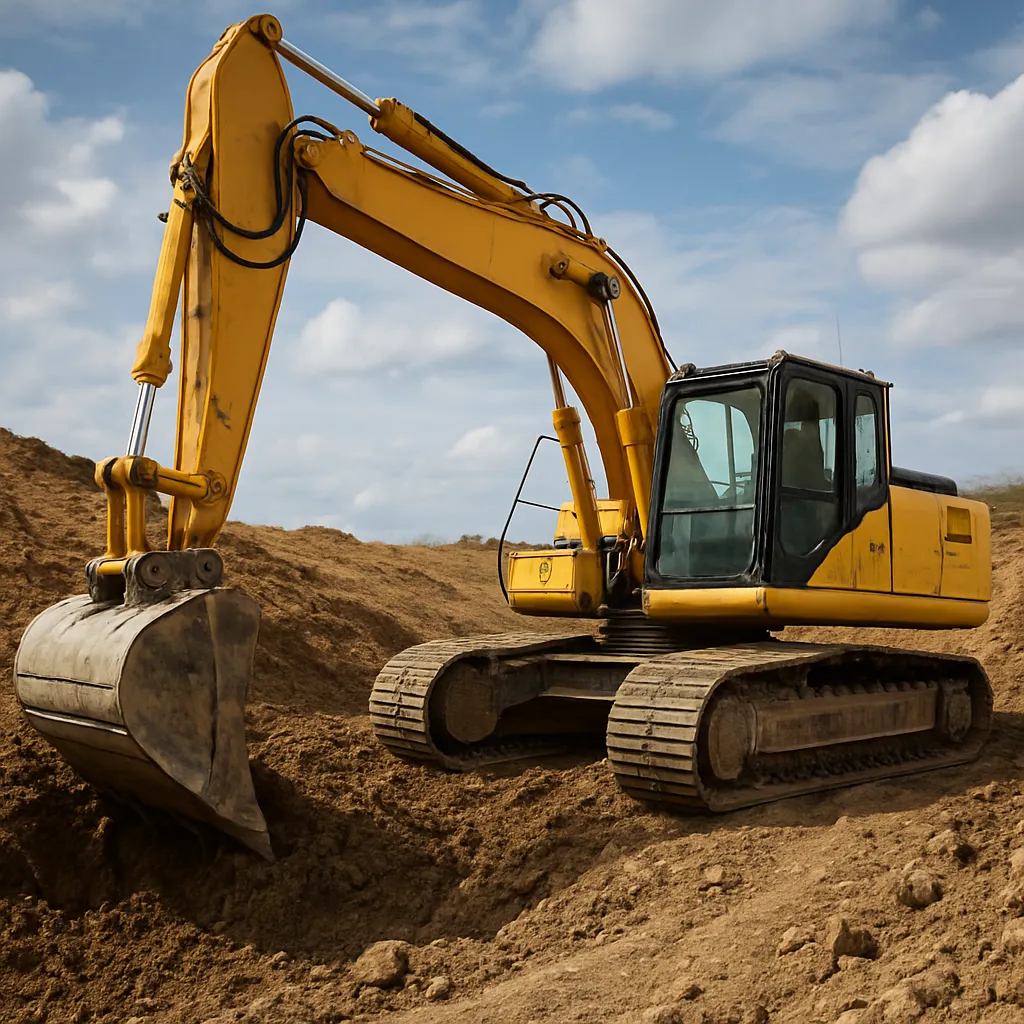
The Engineering Behind Machine Stability on Uneven Ground explores how modern heavy equipment adapts to complex worksite conditions. Focusing on design innovations, control strategies, and field applications, this article delves into the mechanical and electronic solutions that ensure machines maintain balance, reduce wear, and improve overall productivity in demanding environments.
Design Principles for Uneven Terrain Adaptation
A machine’s stability begins at the design phase, where engineers consider factors like center of gravity, chassis layout, and weight distribution. A low center of gravity helps prevent tipping, while a wide track width increases lateral support. Advanced modeling tools allow designers to simulate interactions with irregular surfaces, identifying potential weak points before physical prototypes are built. Incorporating flexibility into the chassis, through movable joints or segmented frames, enables the equipment to conform to uneven ground. This concept, often called articulated steering or multi-piece undercarriage, reduces stress on structural elements and maintains tire or track contact under varying angles.
Hydraulic suspension systems play a critical role. By adjusting pressure in real time, these systems absorb shocks, smooth out sudden jolts, and keep the machine level. The use of hydraulics combined with robust mechanical springs provides redundancy—if one component fails, the other compensates. Engineers select materials with high fatigue resistance to withstand cyclic loading typical on rough surfaces. Advanced alloys and composites minimize weight without sacrificing strength, improving both mobility and fuel efficiency.
Key Structural Features
- Articulated frames for independent wheel or track movement
- Low center of gravity achieved through engine placement and ballast
- Wide undercarriage for enhanced lateral support
- Reinforced cross-members and gussets at high-stress areas
Challenges Posed by Variable Ground Conditions
Uneven ground presents diverse challenges: loose soil, hidden obstacles, steep inclines, and slippery surfaces. Each scenario demands a different set of responses. Loose or granular soils reduce traction, forcing machines to sink or slip. Engineers analyze soil mechanics and adjust ground pressure by using wider tracks or low-pressure tires. This distributes the machine’s weight over a larger area, preventing excessive subsidence. In rock-filled or obstacle-laden terrain, durable track pads and reinforced rollers protect against impacts and embedded debris.
When working on slopes, the risk of side tipping increases dramatically. To mitigate this, onboard tilt sensors measure roll and pitch angles. Real-time data from these sensors feed into control algorithms that can limit travel speed, adjust steering sensitivity, or even lock certain joints to maintain balance. Traction control systems modulate power distribution between wheels or tracks, preventing wheel spin and optimizing grip. In icy or muddy conditions, specialized tread designs channel water and mud away from the contact patch, restoring friction.
Operational Strategies
- Pre-work ground surveys and digital terrain mapping
- Variable ground pressure adjustments via tire inflation systems
- Automatic traction control for differential wheel or track speeds
- Speed and tilt angle limits enforced by onboard software
Advanced Control Systems and Automation
Modern machines rely on integrated electronics and software to maintain balance. Inertial measurement units (IMUs) track acceleration and orientation, while GPS and LIDAR systems create 3D maps of the surrounding environment. Algorithms process this data, predicting potential instability and commanding corrective actions. For example, if the system detects an impending rollover, it can adjust hydraulic pressures, shift the boom, or alter travel direction.
Machine learning techniques are now being applied to adapt control strategies over time. By analyzing historical performance data, the system learns which maneuvers cause instability and which conditions lead to high wear. This feedback loop enables predictive maintenance schedules, reducing downtime and extending component life. Remote monitoring allows operators or service teams to oversee multiple units, receive alerts, and upload software updates that refine stability controls.
Benefits of Automation
- Real-time feedback loops for immediate corrective action
- Predictive analytics to foresee and prevent mechanical failures
- Remote diagnostics and over-the-air software upgrades
- Reduced operator fatigue through assisted control modes
Field Applications and Case Studies
Construction, mining, forestry, and agriculture all benefit from stability-focused engineering. In deep-pit mining, haul trucks navigate steep, winding ramps laden with loose material. Stability features ensure safe loading and unloading, even under heavy payloads. Forestry equipment uses extendable outriggers to level the machine on sloped terrain, enabling safe felling and extraction of timber. Agricultural sprayers employ sensor-guided boom leveling, ensuring uniform application on hilly fields.
A recent case study from a mountainous mining operation demonstrated a 30 percent reduction in spill incidents after retrofitting older loaders with adaptive suspension and tilt-control packages. Operators reported improved confidence when working on bench edges, and maintenance logs showed fewer hydraulic leaks thanks to shock-absorbing features. Another example in a vineyard used low-pressure track systems on tractors, reducing soil compaction by 20 percent and preserving root health.
Key Takeaways
- Customized solutions based on industry and terrain specifics
- Quantifiable improvements in safety, productivity, and maintenance costs
- Cross-industry innovations driving continuous enhancement
Emerging Trends and Future Directions
Looking ahead, research focuses on self-leveling platforms, where the chassis can adjust its angle independently in all axes. Integration of energy recovery systems—such as hydraulic accumulators—captures kinetic energy during stabilization maneuvers and reuses it for boom functions or propulsion. The rise of fully autonomous machines will push stability requirements further, demanding near-instantaneous responses and ultra-reliable sensor networks.
Innovations in material science promise lighter, stronger components, making it possible to design machines with greater payload-to-weight ratios while maintaining safety. 5G connectivity and edge computing will accelerate data processing, enabling predictive adjustments on the fly. As these technologies mature, the next generation of equipment will operate more efficiently, with less human intervention, and tackle ever more challenging environments.