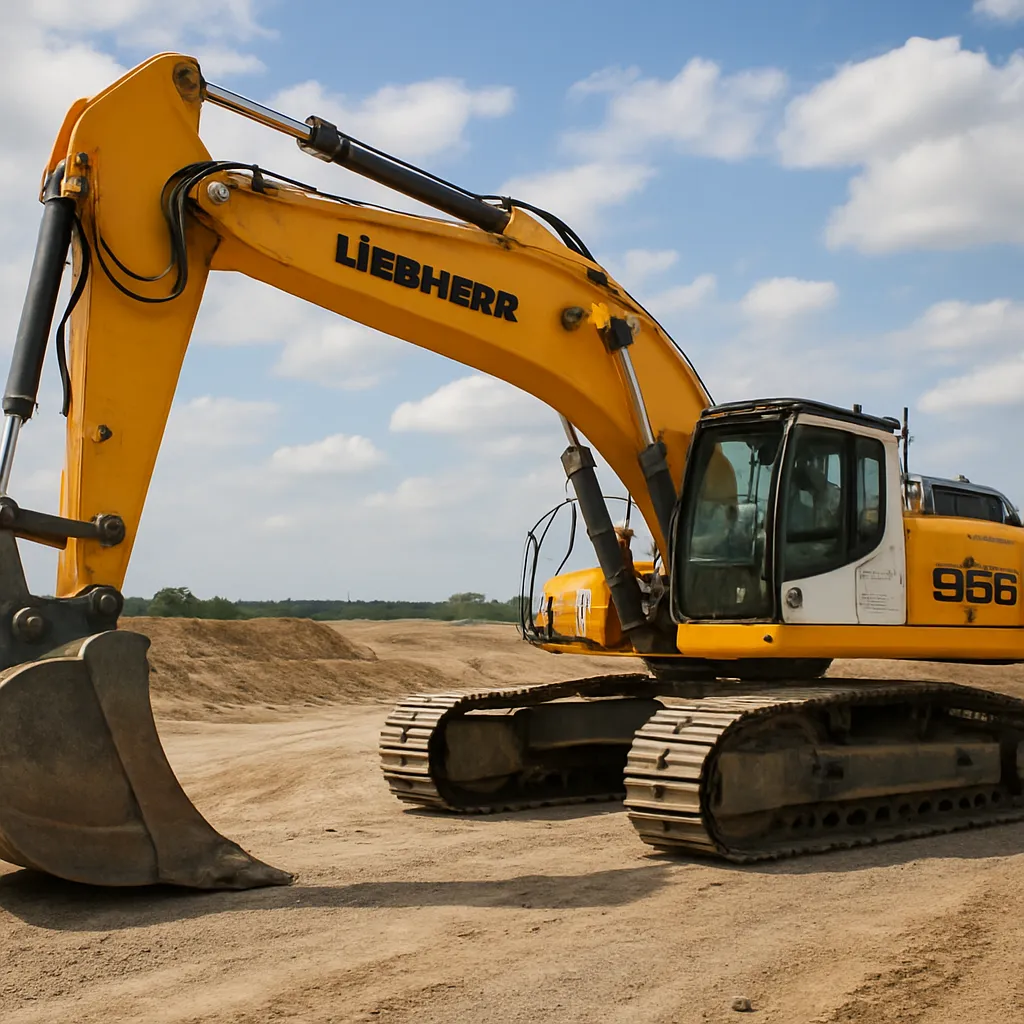
The Liebherr R 956 is a robust, medium-to-large class crawler excavator designed for heavy-duty earthmoving, quarrying, and construction tasks. Combining proven hydraulics, a resilient undercarriage and a spacious operator cabin, this machine is built to deliver consistent performance in demanding environments. In the following sections, you will find detailed information on design features, typical applications, technical characteristics (presented as representative ranges), operational advantages, and practical guidance on maintenance and attachments.
Design and technical overview
The Liebherr R 956 is engineered around a durable steel chassis and a hydraulically driven upper structure that provides stable rotation and accurate control. Key aspects of the design emphasize structural strength, hydraulic efficiency and operator ergonomics.
Powertrain and hydraulics
- The machine is powered by a diesel engine that typically delivers between 200 and 300 kW of gross power depending on model year and emission standard. Modern variants may include electronic engine management for better fuel efficiency and emissions control.
- An advanced hydraulic system supplies high flow and pressure to the boom, arm and attachments. Proportional control and pilot-operated joysticks provide smooth, precise movements, improving cycle times on repetitive tasks.
- Hydraulic circuits often include flow-sharing or load-sensing pumps to optimize power distribution between travel, swing and work hydraulics, contributing to productivity and energy-efficient operation.
Structure and undercarriage
- The heavy-duty undercarriage is built to withstand abrasive environments found in mining and quarrying. Track gauge and length can be configured for stability or transportability.
- The boom and arm are manufactured from high-strength steel and employ robust pin and bush arrangements to resist wear. Reinforced boom footings and additional weld reinforcements are common to extend service life.
- Careful weight distribution and counterweight design enhance lifting capacity and balance during long-reach digging or heavy lifting maneuvers.
Cabin and operator comfort
- The operator cabin is typically spacious with excellent visibility, climate control, and sound insulation to reduce fatigue during long shifts.
- Controls are ergonomically arranged with multiple programmable settings for hydraulic response curves and auto-idle features to limit unnecessary fuel consumption.
- Modern R 956 models may include integrated telematics for remote monitoring, service reminders and performance diagnostics, enabling fleet managers to track utilization and maintenance needs.
Applications and typical job sites
The versatility of the Liebherr R 956 makes it suitable for a wide range of sectors. Its combination of power and reach allow it to perform well in both heavy excavation and material handling roles.
Construction and civil engineering
- Large-scale earthmoving for foundations, cut-and-fill operations, and site preparation.
- Trenching for utilities where a deep, stable digging profile is required.
- Road construction projects for embankment shaping and drainage works.
Quarrying and mining
- Loading of haul trucks with hard rock, overburden removal and bench cleaning due to robust undercarriage and heavy-duty buckets.
- Secondary breaking and material sorting when fitted with hydraulic breakers or grapples.
Demolition and recycling
- Structural demolition using dedicated attachments such as pulverizers and shears.
- Sorting and handling recyclable materials with magnet and grapple setups.
Specialized civil works
- Pipeline trenching, riverbank stabilization and quay construction — tasks that require precision and endurance in challenging conditions.
- Land reclamation and dredging support when combined with long-reach booms and suitable buckets.
Performance, capacities and representative statistics
Exact technical data varies by production year and configuration. The figures below are representative ranges commonly associated with the R 956 family and are intended to give a realistic expectation of capabilities. For precise specifications, consult the machine’s data sheet or manufacturer.
- Operating weight: approximately 45 to 58 tonnes depending on undercarriage, counterweight and attachments.
- Engine power: roughly 200–300 kW (270–400 hp), varying by emission stage and model year.
- Bucket capacity: commonly between 1.5 and 3.5 cubic meters for standard digging buckets; heavy-duty rock buckets are typically smaller in volume but higher in material density.
- Maximum digging depth: approximately 7 to 9 meters with standard boom/arm configurations; long-reach versions can extend well beyond this.
- Maximum reach at ground level: generally between 11 and 13 meters, again depending on boom/arm choice.
- Swing speed: designed to offer a balance between torque and speed to optimize cycle times — typical swing speeds are in the 8–10 rpm range.
- Fuel consumption: varies widely with duty cycle, but typical operational fuel use for heavy continuous digging might range from 15–35 liters per hour; eco modes and auto-idle can lower average consumption in mixed operations.
These values are offered as directional guidance. Machines configured for heavy lifting, rock work or specialized attachments will show different operating weights and hydraulic requirements.
Attachments and adaptability
One of the R 956’s strengths is its adaptability through a wide array of attachments, allowing a single machine to perform many tasks.
- Buckets: General purpose, rock, heavy-duty and multi-purpose buckets enable excavation in different materials.
- Hydraulic breakers: For fragmentation of hard rock and concrete; suited for quarry and demolition work.
- Grapples and sorting arms: Employed in recycling, timber handling and demolition for selective material separation.
- Thumbs and quick couplers: For fast switching between tools and improved material handling capability.
- Compaction wheels and rakes: For finishing and site preparation tasks.
Well-chosen attachments not only increase versatility but can significantly improve cycle times and reduce the need for additional machines on site, improving overall cost-effectiveness.
Maintenance, serviceability and lifecycle costs
Cost control over the lifespan of an excavator is strongly influenced by maintenance practices, parts availability and the design for serviceability. The R 956 incorporates several design choices to facilitate upkeep.
- Service points are typically grouped for easy access, including centralized grease points and ground-level filters for oil and fuel. This reduces service time and downtime.
- Robust pin and bushing design paired with available wear packages extend intervals between major rebuilds.
- Onboard diagnostics and telematics (in modern variants) allow predictive maintenance and reduce unexpected failures by flagging abnormal parameters early.
- Using recommended lubricants and implementing a proactive track-tension and undercarriage inspection regimen can reduce premature wear and extend component life.
When budgeting for operation, factor in fuel, routine consumables (filters, lubricants, wear parts), periodic track and hydraulic component replacement, and scheduled engine servicing. Fleet operators that implement condition-based maintenance often achieve lower total cost of ownership over the machine’s service life.
Safety, ergonomics and operator aids
Safety is central to heavy equipment operation. The R 956 provides several features to protect operators and nearby workers:
- Rigid ROPS/FOPS-certified cabin structures, seat belts and optional protective glazing for demolition tasks.
- Visibility aids such as wide glazing, mirrors and optional camera systems to reduce blind spots around the machine.
- Stability-enhancing features including counterweights and electronically limited lifting envelopes with optional load-sensing aids.
- Operator assistance technologies such as grade guidance, operating modes and auto-idle features help prevent operator fatigue and reduce the risk of human error.
Training for operators and ground personnel remains essential; the best machine safety features are complemented by a competent workforce and well-managed site procedures.
Environmental and regulatory considerations
Modern iterations of the R 956 aim to meet increasingly stringent emissions standards while improving efficiency. Strategies implemented by manufacturers include:
- Engine upgrades to comply with Tier/Stage emission regulations, often incorporating exhaust aftertreatment systems such as DOC, DPF and selective catalytic reduction (SCR).
- Hydraulic efficiency improvements and intelligent engine control to lower fuel burn and reduce CO2 output per operating hour.
- Design choices that facilitate recycling of materials and extension of component lifetimes, reducing the environmental impact over the machine’s lifecycle.
For environmentally sensitive projects, options like low-noise packages, bio-degradable hydraulic fluids and special undercarriage configurations can support compliance with local regulations and community requirements.
Operational tips and best practices
- Match bucket and attachment sizes to job demands to avoid overloading the machine or wasting cycle time with undersized tools.
- Schedule daily walk-arounds and pre-start checks to identify loose fittings, fluid leaks and track issues before they escalate.
- Use telematics where available to monitor fuel patterns, idle time and engine faults — targeted operator coaching can yield notable fuel savings.
- Keep spare wear parts on-site if operating in remote or highly abrasive environments to reduce downtime when replacements are needed.
- When hauling the machine between sites, adhere to recommended transport weights and secure the machine according to local transport regulations.
Real-world examples and case studies
Across industries, the R 956 has been used in varied roles that illustrate its adaptability:
- In a gravel quarry, R 956 units equipped with rock buckets and reinforced undercarriages are commonly used to load articulated haulers, delivering high hourly payloads while maintaining wear life through planned rotations.
- On highway projects, the machine has proven effective in cutting and filling operations, trench preparation and bank grading due to its combination of digging depth and stability.
- Demolition contractors value the R 956 for secondary breaking and sorting, where hydraulically powered shears and crushers attached to the boom allow for selective dismantling of reinforced concrete structures.
Conclusion
The Liebherr R 956 is a versatile and powerful excavator suited to heavy construction, quarrying and demolition tasks. Its blend of hydraulic performance, structural durability and operator-focused design make it a common choice where reliability and productivity are priorities. While exact specifications vary by model year and optional equipment, the machine typically offers a competitive operating weight range, strong hydraulic force and adaptable attachment support. Proper matching of attachments, diligent maintenance and the use of modern telematics dramatically enhance the machine’s effectiveness and reduce lifecycle costs, making the R 956 a solid investment for contractors and fleet managers tackling demanding earthmoving and material-handling operations.


)
)