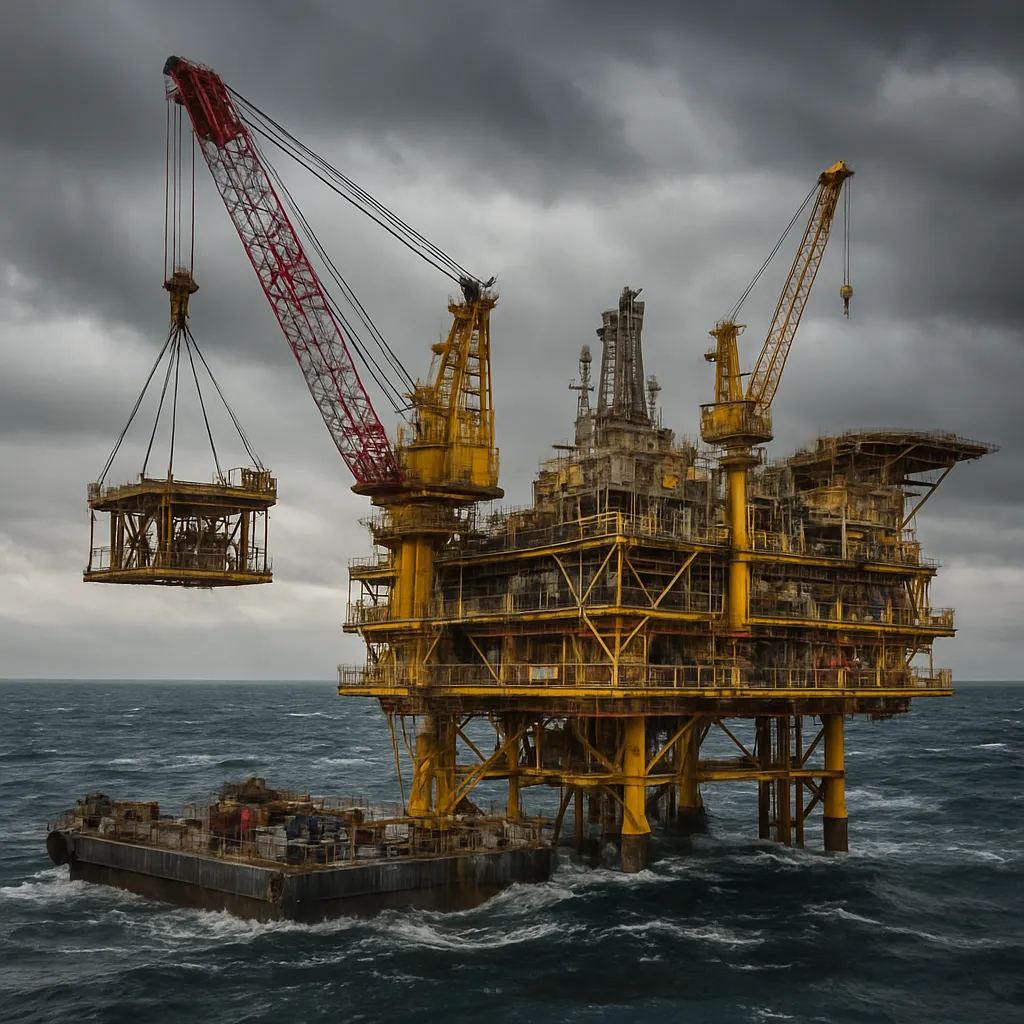
Offshore platform construction merges cutting-edge machinery with challenging environmental conditions. Large-scale rigs and specialized equipment work in tandem to erect structures that withstand corrosive saltwater, powerful waves, and extreme weather. By integrating advanced technologies, engineers ensure platforms are built with unmatched durability and precision, meeting strict safety and performance requirements.
Engineering Marvels for Offshore Construction
Constructing a platform miles from shore demands robust machinery capable of handling immense loads and unpredictable sea behavior. Heavy-lift vessels employ massive cranes with load capacities exceeding 3,000 tons, enabling them to position structural modules with accuracy measured in mere centimeters. These cranes rely on dynamic positioning systems that stabilize the vessel against strong currents and wind, ensuring the continuous operation of critical lifts.
Subsea installation vehicles, such as remotely operated vehicles (ROVs) and autonomous underwater vehicles (AUVs), play pivotal roles at depths surpassing 3,000 meters. Equipped with imaging sonar, manipulators, and cutting tools, ROVs perform tasks like pipeline connections, welding inspections, and bolt tightening. Their resilience under high pressure and low temperature conditions makes them indispensable for deepwater assignments.
Foundation Installation
- Drag embedment anchors: Grouted or driven into seabed for station-keeping.
- Monopiles and jacket structures: Piled foundations set using hydraulic hammers.
- Suction caissons: Lowered to seabed and suctioned to create stable support.
Each foundation type requires specialized equipment. For example, hydraulic pile hammers impact steel piles at controlled frequencies to minimize noise and vibration. Engineers monitor the penetration rate in real time, adjusting hydraulic pressures for optimal installation.
Technological Innovations Driving Efficiency
Advanced automation systems are transforming offshore construction by reducing manual intervention and enhancing consistency. Programmable Logic Controllers (PLCs) coordinate complex tasks such as module lifting and piping integration. By leveraging closed-loop feedback from sensors, the system maintains precise alignment even amidst fluctuating sea states.
Digital twins—virtual replicas of physical assets—allow engineers to simulate entire construction sequences before boots hit the deck. Through these simulations, potential interferences between cranes, decks, and personnel are identified and resolved. This leads to shorter project timelines and lower risk of costly rework.
Robotics and Artificial Intelligence
Underwater welding robots now achieve higher-quality welds compared to traditional manual techniques. Using adaptive welding heads, they adjust parameters in real time based on measured joint thickness and environmental variables. AI-driven vision systems identify weld defects with over 95% accuracy, ensuring compliance with rigorous industry standards.
- Automated pipe-laying machines: Control tension and curvature during layback.
- Inspection drones: Aerial and subsea drones equipped with high-resolution cameras.
- Smart sensors: Measure stress, strain, and temperature on structural elements.
Integration of Internet of Things (IoT) devices enables continuous monitoring of machine health. Vibration sensors, acoustic emission detectors, and thermal cameras feed data to a central analytics platform, predicting component failures before they occur. This predictive maintenance model minimizes unplanned downtime and extends equipment performance.
Environmental and Safety Considerations
Offshore platforms operate in fragile marine ecosystems. Machinery is designed to meet stringent regulations aimed at reducing environmental impact. Noise-reducing pile-driving techniques, such as bubble curtains and vibro-hammers, mitigate disturbances to marine life. Additionally, biodegradable hydraulic fluids minimize the risk of toxic spills.
Worker safety is paramount. Specialized gangways and motion-compensated access bridges facilitate safe transfer between vessels and platforms, even when waves exceed two meters in height. Personal survival suits, self-inflating liferafts, and emergency evacuation systems are tested regularly to ensure rapid response in calamities.
Energy Efficiency and Emissions Control
Many construction vessels now utilize dual-fuel engines capable of burning both LNG and low-sulfur diesel. This flexibility reduces greenhouse gas emissions by up to 25%, aligning offshore construction with global sustainability goals. Hybrid power systems combine battery storage with diesel generators, enabling silent operation during delicate tasks like subsea installation.
- Exhaust gas scrubbers: Remove sulfur oxides before release.
- Selective catalytic reduction: Lowers nitrogen oxide emissions.
- Energy recovery systems: Convert waste heat into useful power.
Beyond emissions, offshore contractors adopt policies for waste management and ballast water treatment. Strict protocols govern the disposal of cuttings, produced water, and debris, ensuring compliance with international maritime conventions.
Future Outlook
The next frontier involves further innovation in robotics, AI-guided assembly, and modular construction. Emerging materials like advanced composites promise lighter, more corrosion-resistant structures. As global energy demand evolves, machines will adapt to build not only oil and gas platforms but also offshore wind farms and floating solar arrays, heralding a new era of marine infrastructure development.