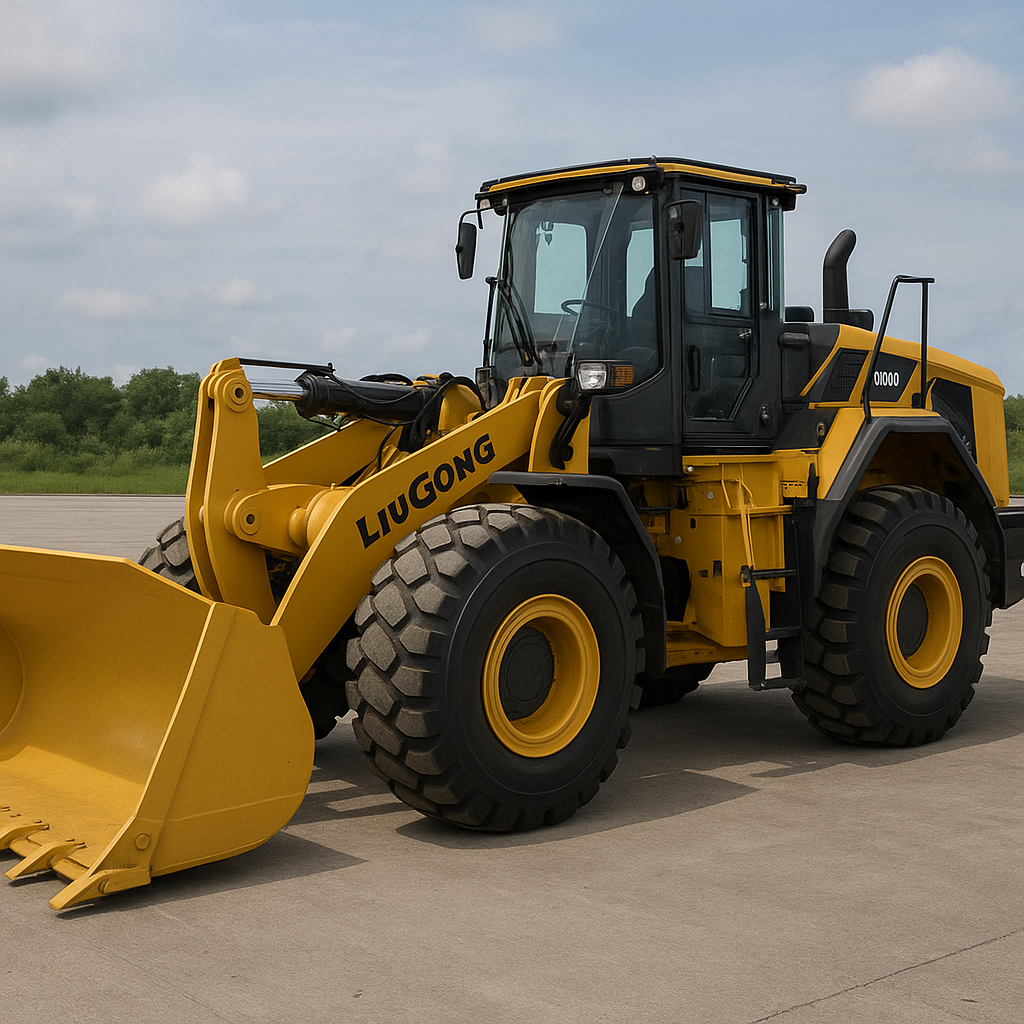
The LiuGong 888H wheel loader is a robust machine positioned to handle demanding material‑handling tasks across construction, mining, quarrying and port operations. Designed with a focus on durability, serviceability and operator productivity, the 888H combines heavy‑duty chassis components, a responsive hydraulic system and a choice of powertrains to deliver consistent performance in tough environments. This article examines the machine’s capabilities, typical technical characteristics, areas of application, and other practical information useful for owners, operators and fleet managers.
Overview and key characteristics
The LiuGong 888H is marketed as a high‑capacity wheel loader intended for large‑scale loading and hauling tasks. It sits in the upper segment of LiuGong’s loader range and emphasizes a balance between raw lifting capability and operational efficiency. Core design goals are durability, productivity and ease of maintenance. Typical hallmark features include a reinforced frame, heavy‑duty axles, an efficient hydraulic system and a spacious operator cabin.
- Heavy‑duty structure: The machine is built with welded steel frames and reinforced linkage to withstand repeated impact and high breakout forces.
- Powertrain options: Engines are selected to meet regional emissions standards and tuned for torque and fuel economy in heavy‑duty cycles.
- Hydraulics: Load‑sensing or variable‑displacement systems are commonly used to optimize hydraulic power and reduce fuel consumption.
- Attachments: A range of buckets (general‑purpose, rock, high‑dump), forks, and special tools make the 888H versatile for many tasks.
- Serviceability: Ground‑level service points, grouped filters and modular components aim to reduce downtime and simplify maintenance.
Typical technical specifications and performance (indicative)
Exact specifications for the LiuGong 888H can vary by market, configuration and optional packages. The figures below are intended as representative ranges to help understand the machine’s class and capability. Operators should always consult the manufacturer’s official data sheet for the precise specification of any unit.
- Operating weight: approximately 20,000–30,000 kg (varies with bucket size and counterweight)
- Engine power (net): typically in the range of 200–300 kW (roughly 270–400 hp), depending on engine calibration and emissions level
- Bucket capacity: commonly between 3.5 and 7.5 m³ for standard configurations; high‑capacity or rock buckets may differ
- Breakout force: robust boom and linkage design providing competitive breakout capability in its class
- Transmission: powershift or torque‑converter transmissions with multiple gears for travel and work ranges
- Hydraulic flow: high‑flow hydraulic pumps to support fast cycle times and auxiliary attachment needs
- Top travel speed: optimized for site productivity, typically in the range of 30–40 km/h depending on gearing
The combination of a powerful engine and efficient hydraulics delivers strong breakout and lift performance, enabling the 888H to fill haul trucks, load hoppers and handle heavy rock or aggregate loads efficiently. Fuel consumption and productivity are strongly influenced by application, operator technique and load profile; operators can maximize efficiency by matching bucket size to material density and using automatic or economy modes where available.
Applications and industries
The LiuGong 888H is suitable for a wide variety of heavy‑duty applications. Its design makes it particularly useful where high payloads, frequent loading cycles and rugged terrain are routine.
- Quarrying and aggregates – Loading of dump trucks, feeding crushers, stockpiling of aggregate and raw stone handling are primary uses. The 888H’s strong breakout force and large bucket options make it efficient for coarse material.
- Mining (surface mining) – For secondary loading, stockpile management and material transfer around site. In mining applications the machine can be fitted with rock buckets and heavy‑duty undercarriage options.
- Ports and bulk terminals – Handling bulk commodities like coal, ore, sand and grains where high throughput and robust bucket cycles are valued.
- Large infrastructure and earthworks – Moving large volumes of earth, road‑building aggregates, and other heavy construction materials.
- Recycling and waste handling – With specialized attachments (grapples, forks), the 888H can support demolition and recycling yards.
Where continuous heavy loading is required, fleet managers often pair the 888H with appropriately sized haul trucks or articulated trucks to maintain a balanced fleet. The machine’s ability to operate with different bucket types and quick‑coupler systems increases its utility across job sites.
Design details: operator comfort and safety
Modern wheel loaders must balance raw mechanical performance with operator ergonomics and safety systems that preserve productivity over long shifts. The LiuGong 888H integrates a number of design elements aimed at this balance.
- Cabin ergonomics: A wide, climate‑controlled cabin with good visibility, adjustable seat and intuitive control layout reduces operator fatigue and enhances cycle times.
- Visibility: Large glazing areas and optional camera systems (rear and side cameras) improve site safety and maneuverability in congested areas.
- Noise and vibration control: Engine mounts, insulation and cab suspension decrease NVH (noise, vibration and harshness), making long shifts less stressful.
- Safety features: ROPS/FOPS certification, emergency exits, alarm systems, and optional fire suppression packages for high‑risk environments.
- Control systems: Electronic controls with monitoring displays provide diagnostics, fault alerts and fuel/economy data. Some variants may offer telematics connectivity for remote monitoring.
These features are important not only for operator welfare but also for operational efficiency: a comfortable, well‑protected operator is more productive and less likely to make costly errors.
Maintenance, serviceability and lifecycle considerations
For heavy equipment like the 888H, lifecycle cost is often more important than initial purchase price. LiuGong has focused on features that aim to reduce downtime and simplify routine service.
- Accessible service points: Ground‑level access to daily checks (fuel, engine oil, coolant, hydraulic oil) and grouped filter locations save time during routine maintenance.
- Modular components: Standardized parts and modular assemblies reduce repair complexity and lower parts inventory needs.
- Durable wear parts: Reinforced bucket edges, wear plates and heavy pins/bushings in linkage areas keep operating costs manageable in abrasive environments.
- Telematics and diagnostics: Optional remote monitoring systems allow fleet managers to track utilization, fuel consumption and scheduled maintenance, enabling predictive service and minimizing unplanned downtime.
- Warranty and dealer network: Availability of regional dealer support, warranties and parts supply is a critical factor in total cost of ownership.
Regular preventive maintenance—greasing of pins, timely filter changes, inspections of hydraulic hoses and cooling system upkeep—will extend component life and maintain machine availability. For high‑hour environments, establishing a parts and service agreement with authorized dealers is recommended to control costs.
Attachments and versatility
One of the strengths of large wheel loaders is their ability to perform many tasks through the use of attachments. The 888H can be equipped with a broad set of tools to adapt to changing job requirements.
- Buckets: General‑purpose, rock, coal, light‑material, and high‑capacity buckets increase flexibility for different materials.
- Forks and pallet attachments: Enable handling of packaged goods in ports and terminals.
- Grapples: Useful in recycling, demolition and handling irregular loads.
- Snow and ice tools: Blades and blowers adapt the loader for winter clearance operations.
- Quick couplers: Speed up attachment changes and improve site versatility.
Choosing the correct attachment is essential to achieving optimal cycle times and fuel efficiency. Oversized buckets may reduce cycle frequency but lower productivity per hour if the machine’s breakout force or hydraulic response cannot handle them efficiently. Fleet planners should match attachments to both the material density and the available truck capacity.
Operational best practices and productivity tips
Getting the most out of a machine like the LiuGong 888H requires attention to operation as well as machine configuration.
- Match bucket to material: Use smaller buckets for dense materials (rock, ore) and larger buckets for light materials (coal, wood chips) to optimize payloads and fill factors.
- Train operators: Operator technique (smooth hydraulic control, correct throttle use, minimizing unnecessary idling) has a major effect on fuel consumption and cycle time.
- Use automatic modes: Where available, automatic transmission and economy modes can moderate fuel use without sacrificing overall productivity.
- Schedule maintenance: Adhering to maintenance intervals prevents small issues from becoming costly failures.
- Leverage telematics: Monitor hours, idle time and fuel usage across the fleet to identify inefficiencies and coaching opportunities.
Applying these measures typically reduces fuel costs, lowers wear‑part consumption and increases the effective availability of the machine over its service life.
Environmental considerations and emissions
Modern LiuGong wheel loaders, including the 888H family in many markets, are equipped with engines that meet regional emissions requirements (such as Tier or Stage regulations). Key points regarding environmental performance include:
- Emissions control: Aftertreatment systems (DOC, DPF, SCR) may be used depending on the target emissions tier, affecting service intervals and fuel additives (e.g., DEF/AdBlue for SCR systems).
- Fuel efficiency: Variable‑flow hydraulics, engine governors and optimized gearing help reduce fuel consumption per tonne moved.
- Noise reduction: Cab insulation and engine compartment design reduce site noise levels, improving site compliance and operator comfort.
Operators should be aware that emissions systems require specific maintenance practices (e.g., regeneration cycles for DPFs) and occasional consumables (e.g., DEF), which affect operating procedures and costs.
Purchasing considerations and resale
When evaluating a LiuGong 888H for purchase, consider the following factors to align the investment with operational needs:
- Application fit: Ensure the machine’s lifting, breakout and bucket capacity match the material and truck interface at your site.
- Dealer support: Local parts availability and service capabilities are essential, especially for large machines operating in remote locations.
- Warranty and service contracts: Extended warranties and service agreements can reduce unexpected costs and protect uptime.
- Resale value: Brand reputation, hours, maintenance history and regional demand influence the machine’s resale price.
- Financing and total cost of ownership: Calculate not just acquisition cost but also fuel, maintenance, parts and expected residual value.
Used 888H machines, if maintained properly, can retain value due to the robust nature of heavy loader components. For fleet expansion, standardized fleets often simplify maintenance and parts stocking.
Conclusion
The LiuGong 888H wheel loader represents a capable solution for demanding material‑handling environments where a combination of power, reliability and versatility is required. Its heavy‑duty construction, broad attachment options and emphasis on serviceability make it suitable for quarries, mines, ports and large infrastructure projects. While exact specifications vary by market and configuration, the machine typically sits in the high‑capacity wheel loader class with a focus on sustained performance under heavy workloads.
Fleet owners should evaluate machine configuration, dealer support and lifecycle costs when selecting a loader for their operation. Proper matching of bucket size to material, consistent operator training and scheduled maintenance are practical ways to maximize the value of an 888H in daily operations. For precise technical data and available options in your region, consult an authorized LiuGong dealer or the official product documentation.
Highlighted terms in the text include durability, productivity, powertrain, bucket capacity, fuel efficiency, operator comfort, hydraulics, maintenance, attachments and safety.


)
)