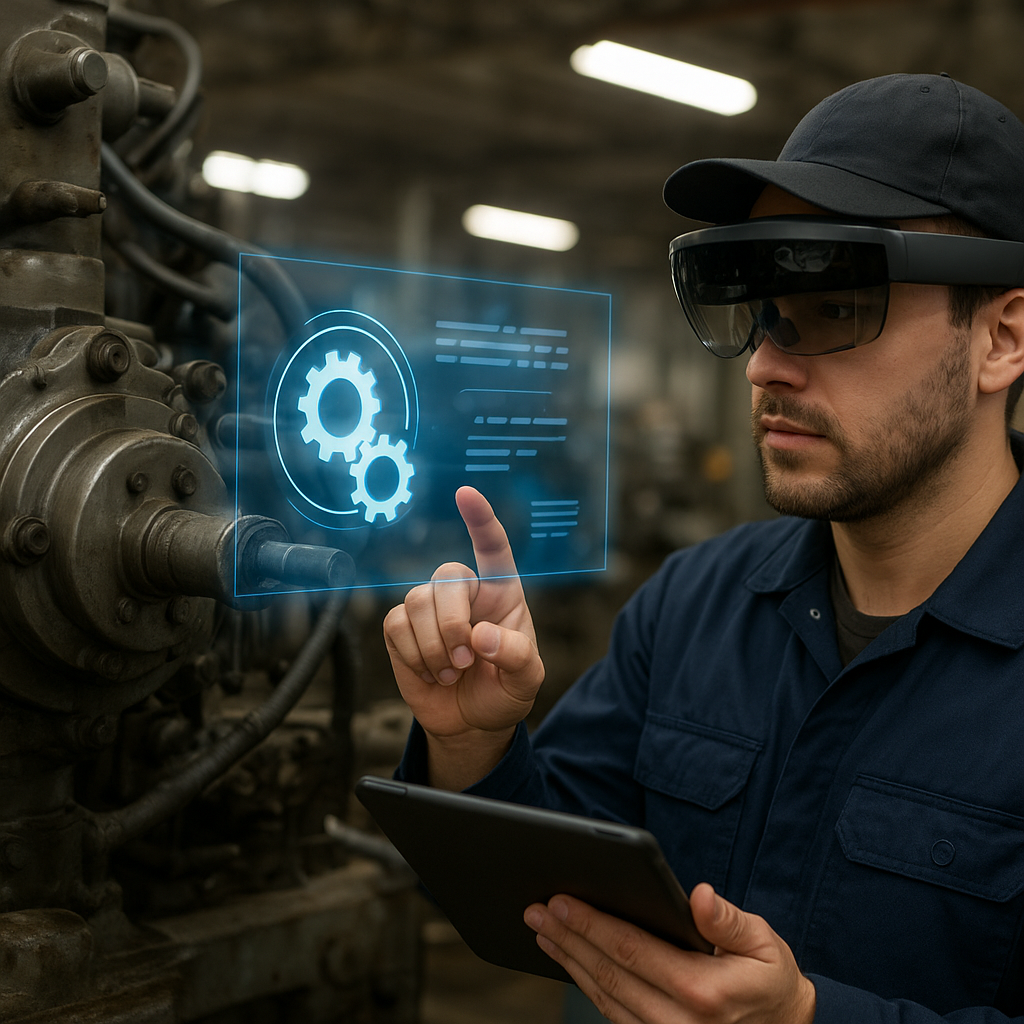
Machines have shaped modern industry by driving unprecedented levels of efficiency and transforming the way tasks are performed on factory floors, construction sites, and service centers. From the humble conveyor belt to advanced robotic arms, automated systems continue to evolve alongside emerging technologies. Among these innovations, Augmented Reality (AR) stands out as a game-changer in the realm of machine maintenance. By merging digital information with physical equipment, AR tools empower technicians and operators to tackle complex challenges with enhanced precision and speed, significantly reducing downtime and boosting overall productivity.
Machine Evolution and Industrial Applications
The industrial revolution ushered in the era of mechanization, replacing manual labor with steam engines and later electric motors. Over decades, devices grew more sophisticated, culminating in the era of computer-controlled machinery and fully automated production lines. Modern factories rely heavily on Programmable Logic Controllers (PLCs), IoT-connected sensors, and AI-driven analytics to monitor performance and predict failures.
Key Components of Modern Machinery
- Actuators and motors enabling precise motion control
- Sensors for temperature, vibration, and pressure detection
- Control units that execute real-time commands
- HMI (Human-Machine Interface) panels for operator interaction
Integration of these elements creates a seamless workflow where machines can self-adjust and alert teams when anomalies arise. However, the complexity of such systems poses unique maintenance challenges.
Common Maintenance Challenges
Preventive strategies, while valuable, cannot address every potential breakdown. Aging equipment often hides internal wear until a component fails catastrophically. Maintenance teams face hurdles such as:
- Difficulty in diagnosing root causes without halting production lines
- Limited access to specialized manuals and outdated schematics
- Safety risks when troubleshooting in confined or hazardous areas
- Need for highly trained technicians to interpret complex data
Unplanned stoppages erode profitability and can damage a company’s reputation. Addressing these issues demands solutions that deliver real-time insights, intuitive guidance, and remote assistance, all while ensuring operator safety.
Augmented Reality: Revolutionizing Maintenance
By overlaying digital annotations, 3D models, and step-by-step instructions onto physical machines through AR headsets or tablet devices, technicians can perform maintenance tasks more effectively. Key benefits include:
- Real-time diagnostics: AR applications pull live data from IoT sensors, displaying temperature curves or vibration trends directly in the technician’s view.
- Guided repair workflows: Interactive overlays indicate fastener locations, torque values, and assembly sequences.
- Remote expert support: Field engineers broadcast their AR view to specialists, who can annotate the scene and provide instant advice.
- Efficient training: New employees learn procedures in situ, reducing training costs and accelerating skill acquisition.
Case Study: Automotive Assembly Line
An auto manufacturer implemented AR glasses for routine maintenance on drivetrain testing rigs. Technicians reported a 40% reduction in repair times, attributing the improvement to on-head guidance and instant access to digital manuals. Faulty components were identified in under five minutes, compared to the previous average of twenty minutes. Overall, unplanned downtime decreased by nearly 25%, translating into substantial cost savings.
Furthermore, AR facilitates compliance by ensuring every maintenance step is logged and time-stamped, bolstering quality control and audit readiness.
Integration with Other Technologies
AR’s true potential unfolds when combined with complementary systems. Examples include:
- Digital twins: Virtual replicas of machines updated continuously via IoT data feed enable predictive maintenance simulations before executing physical repairs.
- AI-driven analytics: Machine learning algorithms analyze AR-gathered data to forecast component lifespans and recommend replacement intervals.
- Cloud platforms: Central repositories store maintenance records, AR session logs, and performance metrics for enterprise-wide access.
- 5G connectivity: High-bandwidth, low-latency networks allow seamless streaming of high-definition AR content to remote sites.
Such integration enhances machine reliability and facilitates collaborative operations across multiple facilities, regardless of geographic separation.
Future Prospects and Emerging Trends
The next wave of AR in industrial settings will focus on wearable devices that combine eye tracking, voice commands, and haptic feedback to create truly immersive maintenance experiences. Innovations on the horizon include:
- Gesture-controlled overlays enabling hands-free navigation through repair protocols
- Context-aware AR that automatically recognizes machine components using computer vision
- Enhanced cybersecurity measures to protect sensitive operational data transmitted during AR sessions
- Scalable AR platforms offering plug-and-play modules for diverse machine types
As organizations continue to prioritize digital transformation, the synergy between AR and machine maintenance will drive deeper levels of integration and operational excellence. Technicians will evolve from reactive responders into proactive guardians of uptime, leveraging augmented insights to extend equipment life and maximize asset utilization. The future of maintenance is not just about fixing what’s broken—it’s about preventing breakdowns before they occur through intelligent, immersive technologies that redefine the boundaries of possibility.