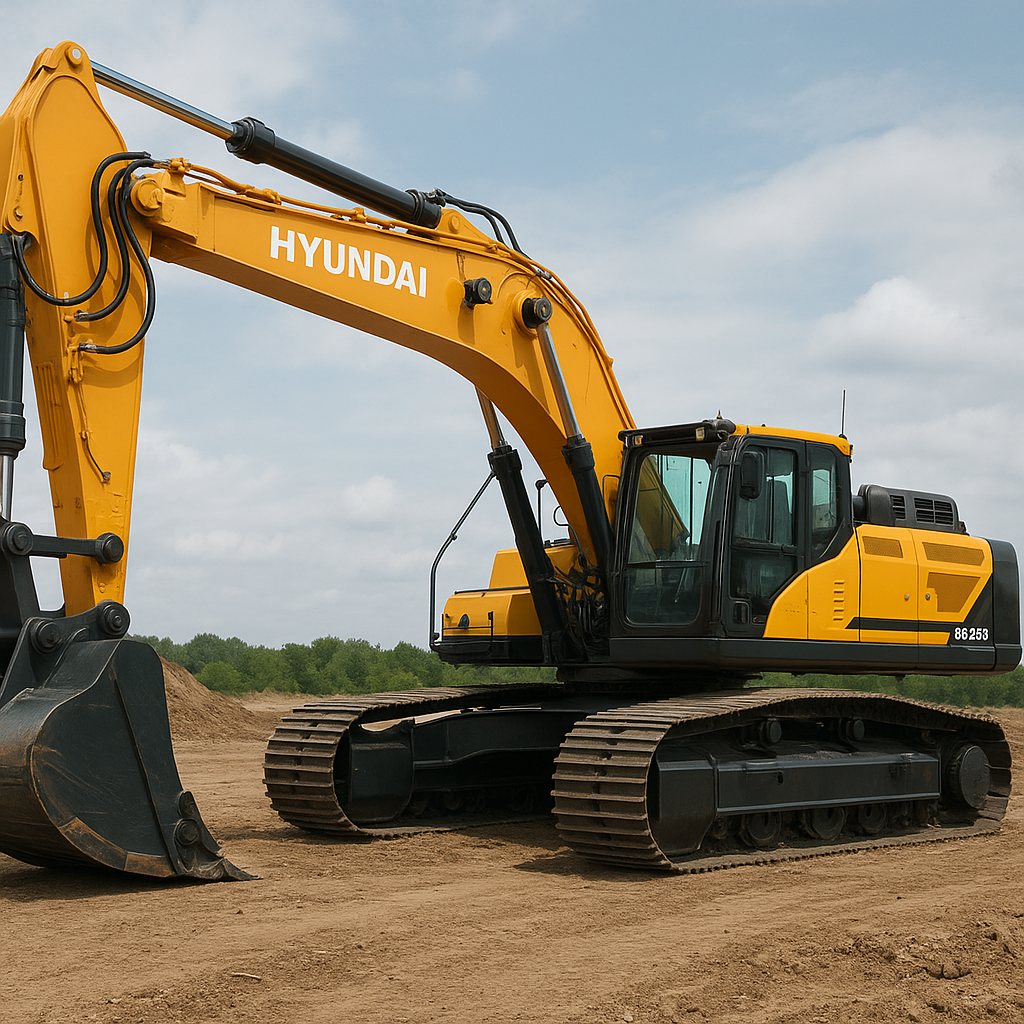
The Hyundai HX520A represents a class of heavy-duty construction machinery designed to meet the demands of large-scale excavation, mining, and infrastructure projects. Combining modern hydraulics, operator comfort, and robust components, this model aims to deliver consistent productivity across tough working conditions. Below you will find a detailed overview of its uses, key features, technical characteristics (approximate where necessary), operational considerations, and market context that help explain why contractors and equipment managers choose this type of machine for demanding jobs.
Overview and key features
The Hyundai HX520A is a heavy crawler excavator positioned for high-output tasks. It is part of Hyundai’s HX series, which emphasizes advanced hydraulic systems and reinforced structural design to handle high loads and continuous operation. The machine is commonly selected for situations where both reach and power are required, such as deep trenching, mass excavation, quarry loading, and heavy foundation work.
- Hydraulic system designed for smooth and responsive control, prioritizing cycle times and energy efficiency.
- Reinforced undercarriage and chassis to extend service life under abrasive and high-impact conditions.
- Cab and control ergonomics focused on operator comfort and visibility to reduce fatigue and increase accuracy.
- Multiple working modes and optional attachments for maximum jobsite flexibility.
- Service access and modular component layout to simplify maintenance and lower downtime.
Applications and industry sectors
This model is a common choice for sectors that demand continuous heavy excavation and material handling. Typical applications include:
- Large-scale civil engineering projects: highway construction, bridge foundations, and large drainage works.
- Quarrying and mining: loading trucks, bench cutting, and primary excavation where robustness is crucial.
- Ports and bulk-handling facilities: moving aggregates and loading/unloading bulk materials.
- Heavy landscaping and earthmoving: site leveling, pond construction, and high-volume soil relocation.
- Infrastructure projects: pipeline trenches, utility corridors, and dam construction.
The HX520A performs especially well in scenarios that require a combination of reach, lift capacity, and continuous cycle performance. Its design supports heavy-duty buckets and specialized attachments, making it adaptable from digging to demolition and material handling roles.
Technical characteristics and performance (approximate)
Below are typical technical characteristics and performance metrics for a machine in this class. Exact values depend on factory configuration, regional emission stage, and optional equipment.
- Operating weight: approximately 50,000–55,000 kg (110,000–121,000 lb). This weight class places the excavator in the large, heavy-duty segment suitable for substantial earthworks.
- Engine power: roughly 250–300 kW (340–400 hp) depending on tuning and emissions package. Modern variants aim to balance power with fuel efficiency and emissions compliance.
- Bucket capacity: typically ranges from 1.8 to 3.5 m3 for standard buckets; specialized buckets (rock or heavy-duty) will differ in geometry and capacity.
- Hydraulic system: high-flow main pumps supporting simultaneous movements (boom, arm, swing) with optimized flow sharing to minimize cycle times.
- Arm and boom break-out force: designed to deliver significant digging and loading power; exact figures vary by arm geometry and hydraulic configuration.
- Travel speed and swing torque: engineered for robust travel on rough ground and strong swing performance for rapid loading cycles.
- Fuel consumption: highly dependent on task and operator behavior; operational averages for this class often fall in a range that can vary from 15 to 40 liters/hour under light-to-heavy duty cycles.
These approximate values reflect the typical performance envelope of a 50-ton class excavator. For procurement or fleet planning, confirm exact specifications with a dealer using the serial/model-specific data sheet.
Design elements and durability
The longevity of a heavy excavator hinges on structural design, material selection, and component protection. The HX520A emphasizes several areas:
- Reinforced boom and arm sections with high-tensile steel in stress zones to resist fatigue and cracking during repetitive heavy loads.
- Heavy-duty undercarriage with robust track rollers, idlers, and sprockets to withstand abrasive environments and reduce replacement frequency.
- Protected hydraulic lines and quick-fit guards for hoses and cylinders in high-wear areas to prevent damage from debris and rock.
- Modular service points (filters, drains, sample ports) placed for quick access, shortening routine maintenance tasks.
Robustness and ease of maintenance are critical for minimizing total cost of ownership (TCO) in continuous operations like quarries and major civil works.
Attachments and versatility
One of the major strengths of the HX520A is the capacity to accept a wide range of attachments, expanding its role beyond simple digging:
- Standard and heavy-duty buckets for general excavation and rock handling.
- Hydraulic breakers and hammers for rock breaking, demolition, and secondary breaking in quarries.
- Grapples and clamshells for sorting, demolition debris handling, and bulk material management.
- Compaction plates and rippers for site preparation and earthworks conditioning.
- Quick couplers (mechanical or hydraulic) to speed attachment changes and increase on-site flexibility.
Attachment choice influences hydraulic settings, cycle times, and fuel consumption, so integration and hydraulic compatibility are key considerations when specifying an excavator for a particular application.
Operator comfort, controls, and safety
Modern heavy excavators incorporate ergonomics and safety features to protect operators and reduce fatigue:
- Spacious cabins with wide visibility, optimized window sizing, and reduced blind spots for safer operation around people and machinery.
- Comfort features such as adjustable seating, climate control, reduced-noise insulation, and low-vibration mounting to improve concentration during long shifts.
- Advanced joystick controls with throttle and mode selection allow precise work and reduced operator strain.
- Integrated safety systems—rearview cameras, proximity sensors, and audible alarms—support site safety protocols.
- Operator-assist features and telematics that allow remote monitoring of machine health, geofencing, and productivity metrics.
Good operator training combined with the right cabin features improves productivity and reduces wear associated with improper machine use.
Maintenance, serviceability, and lifecycle costs
Managing lifecycle costs for a machine like the HX520A requires a structured maintenance program. Key practices include:
- Routine checks: daily inspections of tracks, hydraulic hoses, fluid levels, and filters to identify wear early.
- Scheduled servicing: adhering to OEM service intervals for oil changes, hydraulic fluid sampling, and track adjustment to avoid premature failures.
- Component remanufacturing and parts availability: utilizing factory reman parts and well-stocked dealer support reduces downtime and costs over the life of the machine.
- Data-driven maintenance: telematics-based alerts can preemptively identify issues with the engine, hydraulics, or electrical systems, reducing unplanned downtime.
When calculating TCO, consider fuel, scheduled maintenance, parts, operator training, resale value, and the cost benefits of uptime. Machines operating in harsh environments require tighter maintenance schedules and can justify investments in protective packages (e.g., heavy-duty undercarriage kits).
Environmental compliance and fuel efficiency
Excavators in this category must meet evolving emissions standards in different markets. Manufacturers often provide engines that conform to regional regulations (Tier/Stage standards). Features that help reduce environmental impact include:
- Modern engine management systems optimized for fuel efficiency and lower emissions across varied load conditions.
- Hydraulic systems with load-sensing and variable-flow pumps to reduce energy waste during partial-load operations.
- Idle shutdown and eco modes to limit unnecessary fuel consumption during non-productive periods.
- Options for selective catalytic reduction (SCR) and diesel particulate filters (DPF) where required by local regulations.
While heavier machines inherently consume more fuel than smaller counterparts, operational strategies, such as matching bucket size to truck capacity and training operators in fuel-efficient techniques, significantly mitigate fuel costs and emissions per unit of material moved.
Procurement, resale, and market considerations
Key factors to consider when procuring or replacing a heavy excavator include:
- Application fit: ensure the machine’s working envelope, breakout force, and lifting capacity match project requirements.
- Dealer network and parts availability: strong regional support shortens repair lead times and protects uptime.
- Resale value: heavy machines retain value when well-maintained, and popular models with broad aftermarket support tend to have better resale trajectories.
- Financing and total project economics: weigh rental vs. purchase, considering expected utilization, maintenance costs, and project duration.
Operators commonly compare alternatives from other major manufacturers in the same class to ensure best value for their specific workload, including transport logistics for moving a large excavator between sites.
Operational best practices and tips
To maximize the lifespan and productivity of a heavy excavator like the HX520A, follow these practical recommendations:
- Match bucket capacity to truck bodies and material density to avoid underloading or excessive cycle times.
- Train operators on controlled digging techniques that optimize swing and dump cycles instead of brute force digging that stresses components.
- Implement a preventive maintenance schedule and use condition monitoring (oil analysis, vibration checks) to predict failures.
- Use appropriate undercarriage configurations and ground protection for soft or rocky terrain to reduce wear.
- Plan logistics to minimize movements between sites and maximize productive hours on site.
Case examples and real-world contexts
In quarry operations, a 50-ton class excavator is frequently deployed as a primary loading unit, paired with 30–60 tonne payload trucks. Its advantages include high breakout force for tough rock, the ability to cycle quickly for rapid truck loading, and the flexibility to switch between buckets and breakers for multi-role functionality. In civil engineering, the same machine is valuable for deep foundation work where reach and power reduce reliance on multiple smaller machines and improve schedule efficiency.
Another common use case is in port aggregate handling where the excavator’s reach and lift capacity enable precise loading of barges and bulk carriers. Here, the machine’s ability to handle larger attachments like clamshells and grapples enhances throughput while reducing manual labor.
Summary
The Hyundai HX520A is a representative example of a modern heavy crawler excavator tailored for high-productivity environments. With a focus on robust structure, advanced hydraulic performance, operator comfort, and serviceability, machines in this class deliver the power and endurance needed for demanding tasks. Key decision points when selecting such equipment include matching machine capabilities to job requirements, evaluating dealer and parts support, and planning maintenance and operator training to optimize efficiency and reduce total cost of ownership.
Approximate figures recap
- Operating weight: ~50,000–55,000 kg
- Engine power: ~250–300 kW (approx. 340–400 hp)
- Bucket capacity: ~1.8–3.5 m3 (varies by bucket type)
- Typical fuel consumption: highly workload-dependent; operational averages may range broadly from ~15–40 L/h
For any specific procurement, project planning, or operational optimization, consult the manufacturer’s datasheet or a certified dealer to obtain machine-specific configuration data, certified performance figures, and regional compliance details.


)
)