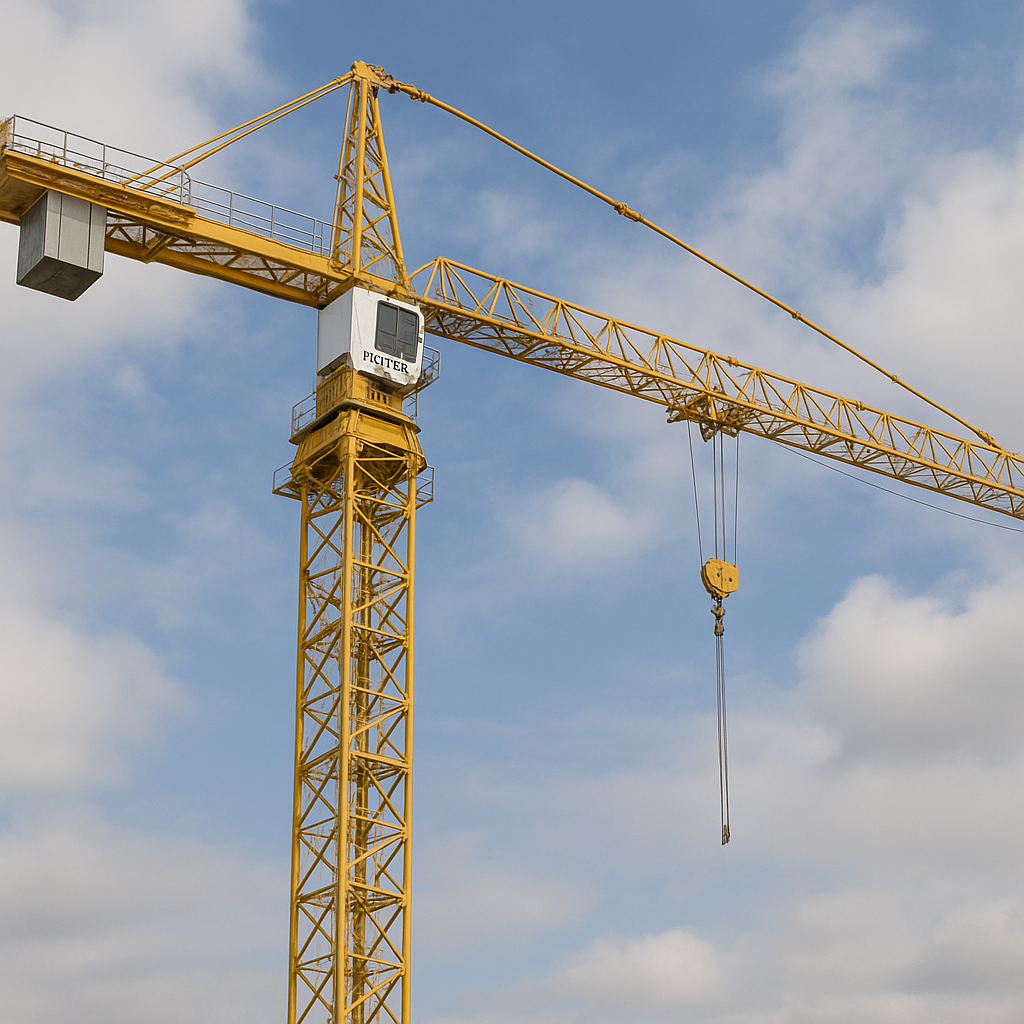
The FazTek FT850 is a modern tower crane concept designed for demanding construction environments where a balance of height, reach, and lifting capacity is essential. This article explores the machine’s design philosophy, typical applications, operational best practices, maintenance needs, economic implications, and comparative position in the marketplace. Where specific manufacturer data for the FT850 is not publicly available, the discussion includes representative technical ranges and practical guidance based on industry standards for cranes in this class. The aim is to provide a comprehensive resource for engineers, site managers, procurement professionals, and construction enthusiasts interested in how a tower crane like the FazTek FT850 performs in real-world projects.
Design and Technical Features
The FazTek FT850 is engineered around a modular mast and robust slewing assembly that prioritize structural integrity and site adaptability. While exact factory specifications may vary depending on configuration, cranes of this family typically share several core design attributes.
Core structural components
- Mast sections: Modular sections that allow the crane to be erected to variable heights; sections are bolted or pinned together and can be increased with a climbing frame for progressive high-rise installations.
- Jib (working arm): A horizontal or slightly inclined jib providing reach; lengths for similar models often range from 40 m to over 70 m depending on site needs and counterweight configuration.
- Counter-jib: Holds counterweights, power packs, and electronic control modules; designed to balance long-reach loads.
- Slewing unit: Heavy-duty slewing ring and gearbox enabling 360° rotation; critical for efficient material placement and load handling around the jobsite.
- Hoist and trolley: Electrically driven hoist winch with controlled variable speed; motorized trolley for horizontal positioning of loads along the jib.
Powertrain, controls and electronics
- Electric drive systems are typical on modern tower cranes for consistent torque and better integration with site electrical supply. The FT850 concept supports both AC variable frequency drives (VFD) and regenerative capabilities to improve energy efficiency.
- Advanced operator controls with load moment indicators (LMI), anti-collision systems, wind speed sensors, and remote diagnostics help reduce operator workload and improve safety margins.
- Optional remote-control and cabin-less operation packages reduce weight and improve transportability, while ergonomic cabs with clear sightlines remain available for complex lift tasks.
Stability and safety features
- Counterweights are sized to match jib length and maximum lifts; modular counterweight blocks allow field adjustments.
- Load moment limiting systems prevent lifts beyond rated capacity at any radius, using real-time data from angle encoders and load cells.
- Wind and sway compensation—automated functions that lock or limit trolley motion when wind thresholds are exceeded—are common on cranes designed to operate at significant heights.
- Redundant braking systems, emergency descent controls, and anti-collision beacons are standard for cranes operating in dense urban sites.
Applications and Typical Use Cases
Tower cranes like the FazTek FT850 are purpose-built for situations where continuous access to vertical and horizontal lifting capacity is required over an extended period. Their deployment is shaped by the crane’s height, reach, and load capacity.
High-rise construction
- Multi-story residential and commercial towers frequently rely on tower cranes to lift prefabricated panels, formwork, reinforcement cages, concrete buckets, and mechanical equipment to upper floors. Height and reach are critical in these applications, and modular mast sections allow the FT850 to climb with the building.
Infrastructure and bridge works
- Long-span bridges and viaducts benefit from a tower crane’s ability to place large segments and heavy girders precisely. The combination of lifting power and lateral reach supports sequential assembly operations.
Industrial plants and power generation
- Installation of heavy process equipment, boilers, and structural components in industrial facilities relies on accurate positioning and steady lifts; tower cranes are used in tandem with mobile cranes to optimize access in congested or constrained yards.
Modular and prefabricated construction
- As modular construction grows, the need to lift large volumetric modules increases. Tower cranes like the FT850 can be set up to handle heavy prefabricated modules and place them with precise alignment, accelerating build schedules.
Ports, shipyards and specialized sites
- While mobile harbor cranes dominate container handling, tower cranes support ship-repair docks and onshore fabrication yards by lifting heavy assemblies and components.
Typical Performance Metrics and Representative Specifications
Manufacturers publish load charts for each configured setup of a crane model. For users evaluating a FazTek FT850-like crane, the following representative ranges reflect common performance levels for mid-to-large tower cranes. These are indicative values intended to guide comparison and planning rather than definitive manufacturer data.
- Maximum rated load: Often between 6 t and 16 t at short radii for similar classes; actual maximum depends on counterweight and jib configuration.
- Working radius: Jib lengths typically 40–70 m; rated capacity reduces with increased radius according to load charts.
- Maximum tip load: At full jib extension tip loads may be between 1 t and 2.5 t depending on model specifics.
- Maximum freestanding height: Depending on mast section count, freestanding heights often range from 40 m to over 80 m; climbing frames can extend reach vertically when attached to buildings.
- Hoisting speed: Variable, often 40–120 m/min unloaded depending on motor and gearbox; reduced under load to maintain safe lifting dynamics.
- Trolley travel speed: Typical speeds in the 60–120 m/min range to permit rapid positioning across long jibs.
- Power supply: 400–690 V three-phase electrical supply is common for onsite operation; diesel generator options exist for remote or temporary sites.
- Operational temperature range: Designed to operate safely across typical temperate climate ranges; cold weather packages are available for arctic or alpine projects.
Site Planning, Assembly and Logistics
Effective use of a tower crane depends heavily on pre-construction planning—determining crane locations, lift plans, and logistics for assembly and disassembly. The FT850’s modularity simplifies many logistics but does not eliminate the need for precise planning.
Selection and siting
- Site planners consider reach, obstruction envelopes (nearby structures, powerlines), delivery routes for long jib sections, and the crane’s foundation needs. A well-sited crane minimizes repositioning and improves cycle times.
- For congested urban sites, top-slewing tower cranes with luffing jibs or a luffing jib configuration of the FT850 family can reduce swing clearance and risk to surrounding property.
Foundations and anchoring
- Concrete tower crane bases are engineered to distribute loads to the soil and resist overturning moments. Soil reports and geotechnical analysis inform foundation design. In some projects, cranes are anchored to the structure under construction via tie-ins at regular intervals.
Transport and erection
- Modularity means most parts fit standard heavy-transport trailers. Assembly uses mobile cranes or self-erecting attachments when feasible. Lift plans for each assembly phase are essential and must be coordinated with local authorities and site safety officers.
Safety, Regulations and Best Practices
Safety on tower crane operations is non-negotiable. Stringent regulations and industry standards govern certification, inspection, operator training, and site procedures. The following best practices reflect current industry expectations for cranes comparable to the FT850.
Operator qualification and training
- Certified crane operators with specific training on the model and control systems reduce human error. Simulator training and supervised on-the-job practice for complex lifts are recommended.
Lift planning and rigging
- Every lift should have a documented lift plan detailing weight, rigging configuration, center of gravity, path, exclusion zones, and contingency procedures. Riggers and signalers must be trained and coordinated.
Weather and environmental monitoring
- Wind, lightning, and severe weather dictate operational limits. The crane’s LMI and wind sensors provide real-time input to suspend operations when thresholds are exceeded. Salt spray in coastal environments requires corrosion management.
Inspections and statutory compliance
- Daily pre-shift checks, periodic certified inspections, and maintenance logs ensure regulatory compliance. Components such as wire ropes, brakes, slewing rings, and structural welds need scheduled examination by qualified inspectors.
Maintenance, Lifecycle and Reliability
Longevity and reliability of a tower crane depend on preventive maintenance, condition monitoring, and timely replacement of wear items. Maintaining an FT850-class crane to high standards yields better uptime and lower total cost of ownership.
Preventive maintenance schedule
- Daily: Visual inspections, lubrication points, and basic instrument checks.
- Monthly: Detailed checks of electrical systems, load cells, and safety circuits.
- Annual or per-hours: Full mechanical inspection including slew bearings, gearbox oil analysis, hoist drum integrity, and non-destructive testing of critical welds.
Common wear items and repair considerations
- Wire ropes, sheaves, bearings, brake linings, and gearboxes are typical wear items. Regular lubrication and condition-based monitoring can extend their useful life.
- Refurbishment and part replacement extend service life; structural fatigue assessments guide decisions on major overhauls.
Economic Considerations: Purchase vs Rental
Deciding whether to buy or rent a tower crane like the FT850 involves capital costs, utilization rates, transport and assembly expenses, and maintenance commitments.
- High-utilization contractors often justify purchase by amortizing cost over multiple projects; lower-frequency users frequently prefer rental to avoid storage, maintenance, and depreciation liabilities.
- Rental pools often supply modern cranes with warranties and service agreements, simplifying lifecycle management for short-term projects.
- Insurance, permits, and operator availability are additional cost drivers that influence total project economics.
Environmental Impact and Energy Efficiency
Modern tower cranes increasingly incorporate energy-saving technologies and materials that reduce their environmental footprint.
- Electric drives tied to site power reduce on-site emissions compared with diesel-dependent systems. Regenerative braking and VFDs recover energy during lowering operations.
- Noise mitigation—through quieter gearbox design and acoustic enclosures for power units—helps compliance with urban noise ordinances.
- Materials selection and modular design support component re-use and easier recycling at end of life.
Comparisons and Alternatives
Understanding when to use a tower crane like the FazTek FT850 versus alternatives helps project managers choose the most cost-effective lifting strategy.
Tower crane vs mobile crane
- Tower cranes provide sustained lifting over long durations and high vertical reach without frequent repositioning; mobile cranes offer flexibility and faster setup for isolated lifts but may be limited by reach and site congestion.
Tower crane types
- Top-slewing tower cranes: Offer good combination of reach and height; common in high-rise settings.
- Luffing-jib cranes: Ideal in dense urban environments—reduced swing radius and ability to work in confined spaces.
- Self-erecting tower cranes: Suited for smaller projects with frequent relocation needs, but usually have lower capacities and heights than larger modular cranes.
Industry Context and Market Notes
While exact sales and operational statistics for the FazTek FT850 are not universally available in public databases, several general industry trends help contextualize its position:
- The global demand for tower cranes correlates strongly with urban construction and infrastructure investment; regions experiencing rapid urbanization and high-rise development tend to show higher crane utilization.
- Modernization of crane fleets emphasizes digitalization (telemetry, remote diagnostics), electrification, and safety technology—areas where the FT850 family would be expected to compete.
- Lifecycle cost and uptime are critical procurement metrics; cranes that reduce downtime through predictive maintenance capabilities tend to be favored by large contractors.
Practical Examples and Use Scenarios
To illustrate, here are several hypothetical but realistic scenarios where a FazTek FT850-style crane would be well-suited:
- Urban high-rise: A 30-story mixed-use building where the crane is installed on a climbing frame to grow with the structure. The far-reaching jib enables delivery of façade panels and MEP racks to the top floors while material staging occurs at ground level.
- Bridge segment placement: A long-reach jib and high-capacity hoist are used to place pre-cast concrete segments for a new bridge span. Precision placement reduces the need for temporary supports and speeds construction.
- Modular housing project: Large volumetric units are delivered and lifted straight into position, dramatically shrinking on-site assembly time and allowing parallel interior fit-out.
Conclusion
The FazTek FT850 represents a class of tower crane optimized for flexibility, safety, and sustained performance on mid-to-large construction projects. Whether supporting high-rise construction, infrastructure assembly, or heavy industrial installations, such a crane is a core enabler of modern building techniques. Key considerations for successful deployment include careful site planning, rigorous lift and maintenance protocols, and alignment between crane configuration and project lift requirements. Although specific manufacturer statistics for the FT850 may require direct consultation with FazTek or authorized dealers, the technical themes and operational practices described here are broadly applicable to cranes in this performance envelope.
Key terms
- load capacity
- maximum height
- jib length
- counterweights
- slewing ring
- stability
- safety systems
- maintenance
- assembly
- productivity


)
)