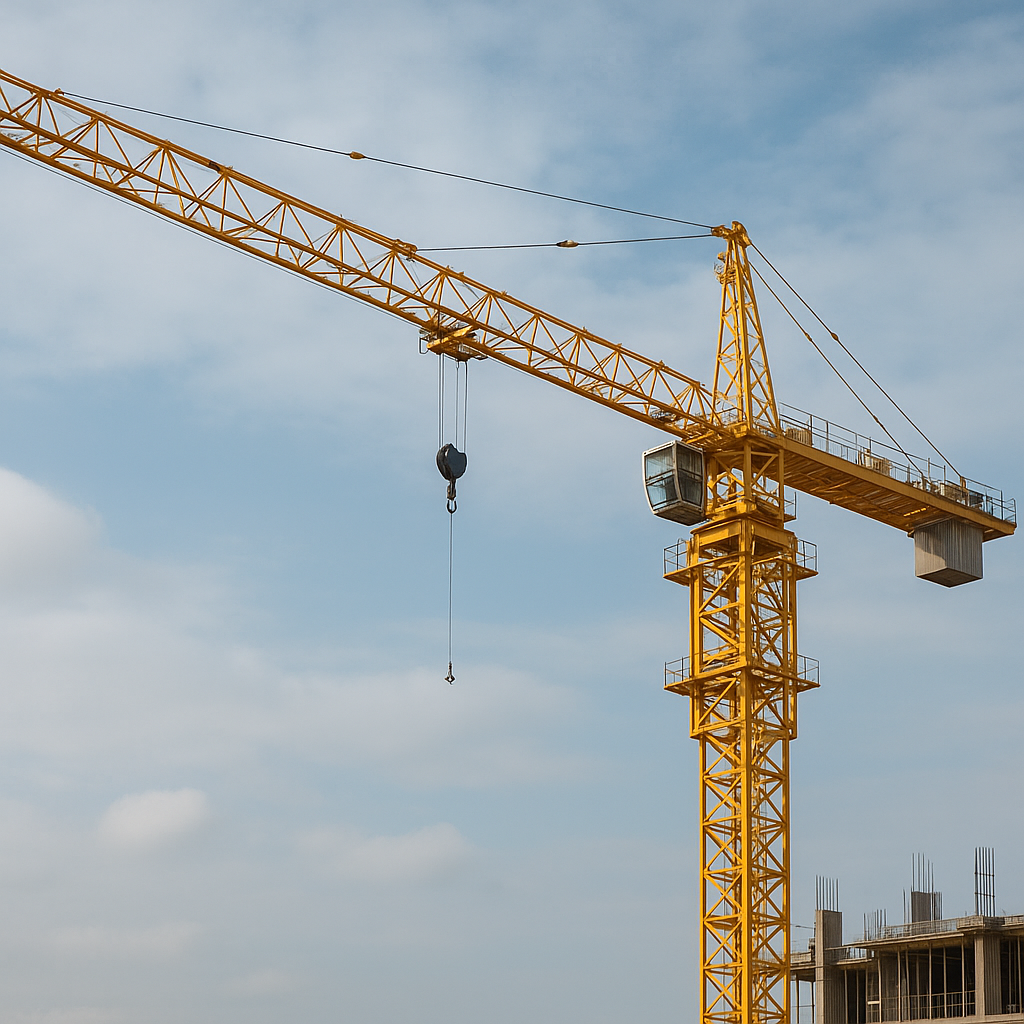
The Zoomlion T300-25 is a heavy-duty tower crane designed for demanding construction and industrial lifting tasks. Combining robust structural design with modern control and safety technologies, this model targets projects that require reliable high-capacity hoisting, long outreach and flexible installation options. In the following sections we explore the machine’s design philosophy, typical technical characteristics, common applications, installation and operation procedures, safety and maintenance considerations, and market context. The aim is to provide a practical and detailed picture for contractors, site managers and equipment specifiers considering the T300-25 for their projects.
Overview and design philosophy
Design intent
The Zoomlion T300-25 is engineered to deliver a balance of lifting capacity, reach and site adaptability. As with many modern tower cranes, the T300-25 emphasizes modular construction to ease transport and assembly, while offering options for different jib length configurations and mast heights. Its design reflects the demands of urban high-rise construction, heavy civil engineering works and industrial installations where both capacity and precision are required.
Key structural elements
- Modular mast sections that allow variable free-standing height and simple tie-in to building structures.
- A lattice or box-section jib available in multiple lengths to optimize outreach and load charts for different radii.
- Counterweight system designed for quick adjustment to suit different lifting moment requirements.
- Hoist and trolley systems built for durability and smooth load handling, often with multiple speed ranges and frequency-controlled drives.
- An ergonomically arranged operator cabin or optional remote-control interface for safe and comfortable operation.
The combination of these elements allows the T300-25 to be configured to the specific needs of a project, optimizing performance for either maximum capacity at short radius or longer outreach with reduced load.
Technical characteristics and performance
Typical specifications
Exact specifications for the Zoomlion T300-25 may vary by factory configuration and regional variant. The following figures represent commonly cited or typical values for this family of cranes and are useful for preliminary planning and comparison:
- Rated lifting capacity: commonly 25 tonnes (at minimum safe radius).
- Rated moment: typically in the range around 300 t·m (this can vary depending on jib and counterweight configuration).
- Maximum jib length: often available in multiple options up to approximately 70–80 meters.
- Maximum free-standing height: depends on mast sections and tie-in; practical installations frequently exceed 60–100 meters with staged mast assembly and building ties.
- Hoist speeds: variable with multi-step or variable-frequency drives; designed to offer both high-speed light-load travel and low-speed high-load lifting.
- Power supply: typically electric drive (on-site mains) or generator-fed where mains are unavailable; modern variants may include energy-saving inverter systems.
- Transport and erection: modular segments sized for standard road transport, with dedicated erection accessories and optional mobile derrick or derrick frame for on-site assembly.
Performance considerations
Performance charts are heavily dependent on the selected jib length and counterweight configuration. At short radii the T300-25 is able to lift near its rated capacity, while at long outreach the permitted capacity decreases according to the load chart to maintain structural safety. The crane’s operational envelope is also affected by wind speed limits, foundation stiffness, and the presence and spacing of building ties.
Common applications
Urban high-rise construction
The T300-25 is particularly well-suited to urban tower construction due to its modular mast and flexible jib options. Builders use it to lift concrete panels, precast elements, mechanical equipment, façade units and other materials to high elevations. Its combination of reach and load capacity makes it a common choice where both height and heavy lifts are required.
Civil and infrastructure projects
On bridge works, rail projects and large civil structures the T300-25 can handle heavy structural components, formwork, and segmental elements. Its stable lifting characteristics allow safe placement of awkward or heavy components in constrained spaces, a frequent requirement on infrastructure worksites.
Industrial installations and plant maintenance
In petrochemical, power generation and heavy industry sites the crane is used for installation of large process equipment, generators, transformers and piping modules. The crane’s capacity and precision are important when placing heavy items into skids or onto foundations with limited tolerances.
Specialty projects
- Wind-turbine component installation at construction stage (tower sections and nacelles) where suitable outreach and torque are necessary.
- Port and shipyard applications for construction of heavy quayside structures or assembly of large prefabricated elements.
Installation, erection and site logistics
Site planning
Proper planning is critical for a T300-25 installation. Key considerations include:
- Transport routes and lifting clearances for modules and counterweights.
- Foundation design sized for overturning moments and point loads; may require cast-in anchor cages or temporary block foundations.
- Assembly crane requirements for initial erection—often a mobile crane of sufficient capacity is needed to lift the slewing unit and first mast sections.
- Placement relative to the building to minimize blind spots and optimize material flows and the crane’s working radius.
Erection sequence
Typical erection uses a staged approach: install base and foundation, mount slewing unit, fit jib and counter-jib, stack mast sections, and then add counterweights and hoisting equipment. For very tall jobs, climbing frames or tie-in points allow the crane to be jacked up as the building rises. Manufacturers provide detailed erection manuals and certified staff may supervise complex installations.
Transport and modularity
The T300-25 is engineered for sectional transport: mast sections, jib segments and counterweights are sized to fit legal road transport limits in most markets. This modularity reduces on-site lifting requirements and supports more rapid mobilization across multiple projects.
Operation, control systems and ergonomics
Control and drive systems
Modern T300-25 units typically use variable-frequency drive systems for hoist, trolley and slewing functions. This allows smooth acceleration and deceleration, energy efficiency, and precise positioning control. Some variants include electronic load monitoring, anti-two-block protection, and programmable motion limits.
Operator interface
Operator cabins are designed for visibility and comfort, with panoramic glazing and adjustable seating. Controls are logically laid out and may include touchscreen displays showing load charts, wind warnings and diagnostic data. Where site preference or safety considerations dictate, remote-control operation is an option that reduces the need for elevated cabins.
Digital features and telematics
Increasingly, Zoomlion equips cranes with telematics for remote monitoring of usage, predictive maintenance alerts, and compliance logging. These systems can record hours of operation, load cycles, abnormal events, and assist fleet managers in optimizing utilization and maintenance planning.
Safety systems and maintenance
Built-in safety features
Safety is paramount for tower cranes. The T300-25 incorporates several proven systems:
- Overload protection to prevent lifting above rated capacities or unsafe combinations of radius and load.
- Anti-two-block devices to prevent the hook block from hitting the jib tip or blocking the hoist drum.
- Load moment indicators that continually evaluate moment versus set limits, alerting the operator and cutting power where necessary.
- Wind-speed monitoring and alarms; cranes are restricted from certain operations when wind thresholds are exceeded.
- Emergency braking and fail-safe mechanisms on slewing and hoisting systems.
Routine maintenance
Scheduled maintenance prolongs service life and preserves safety. Typical tasks include lubrication of slewing bearings and hoist mechanisms, inspection of structural welds and bolts, electrical diagnostics, and periodic non-destructive testing of critical components. Manufacturers recommend maintenance intervals based on operating hours and lifting cycles, and modern telematics can help optimize these intervals by flagging wear patterns.
Economic and environmental considerations
Lifecycle costs
When selecting a crane, purchase price is only one part of total cost of ownership. Other factors include transport and erection costs, fuel or electricity consumption, maintenance and spare parts, operator training, and downtime risk. The T300-25’s modularity and robust design aim to reduce mobilization time and maintenance frequency, improving overall lifecycle economy for longer-term contracts.
Energy efficiency and emissions
Electric drive systems are common in tower cranes and, when fed from low-carbon electricity, can offer reduced operational emissions compared to diesel-powered alternatives. In many jurisdictions, improved inverter drives and regenerative systems reduce peak power draw and smooth energy use on site. Properly configured, the T300-25 can be part of a lower-carbon construction strategy when paired with green power sources.
Market context and statistics
Zoomlion in the crane market
Zoomlion is a major global manufacturer of construction equipment, including tower cranes. The company has expanded its presence across Asia, the Middle East, Africa and increasingly in Europe and the Americas. While precise global market shares fluctuate year to year, Zoomlion is frequently listed among the leading producers of tower cranes worldwide, competing with other major OEMs on features, price and after-sales support.
Reported figures and usage statistics
Publicly available data for specific units such as the T300-25 can be limited because configurations and spread sheets differ by region. However, some practical figures often referenced by industry practitioners include:
- Common rated capacity: 25 tonnes at minimum safe radius.
- Jib length options typically offered up to 70–80 m, allowing typical working radii suited for urban and industrial sites.
- Rated moment class in the general range of 300 t·m (this is a nominal reference and varies by exact equipment spec and counterweight arrangement).
For precise project planning, contractors should request the official manufacturer load charts for the exact configuration being procured; those charts will show permitted capacities at each radius and the constraints for given mast heights and counterweight setups.
Case examples and practical insights
Typical project workflows
On a high-rise residential project, a T300-25 may be positioned centrally to service multiple façades and floor levels. The crane would lift prefabricated façade units, concrete pumps and MEP bundles to set points across successive floors. For multi-crane sites, careful sequencing and exclusion zones are required to avoid interferences between jibs and load paths.
Logistics lessons
Operators and site managers consistently emphasize the value of early planning for counterweight delivery and temporary storage once modules arrive on site. Missteps in counterweight sequencing can delay pinning of jib elements and increase erection costs. Another common recommendation is to engage manufacturer or certified service technicians during the first lifts to validate settings and calibrate safety systems before heavy or critical lifts begin.
Summary and procurement guidance
The Zoomlion T300-25 presents a capable option for contractors needing a robust tower crane with meaningful lifting capacity and flexible outreach. Its modular design supports a range of site conditions, and modern drive and control technologies increase precision and safety. When evaluating the T300-25 for a project, consider these points:
- Obtain the specific load charts for the exact configuration (jib length, counterweight and mast height) to confirm suitability for planned lifts.
- Plan foundation and tie-in arrangements early—these determine whether the crane can reach required heights and radii safely.
- Factor in transport and erection costs: modular cranes reduce those costs but still require coordination and suitable on-site lifting equipment during assembly.
- Use telematics and preventive maintenance programs to maximize uptime and manage lifecycle costs.
- Ensure operator training on the specific variant and adherence to regional safety regulations and wind limits.
With careful specification and planning, the T300-25 can be a reliable workhorse for heavy-lift demands in construction and industrial settings, offering a mix of power, reach and modern safety features that suit complex project requirements.


)
)