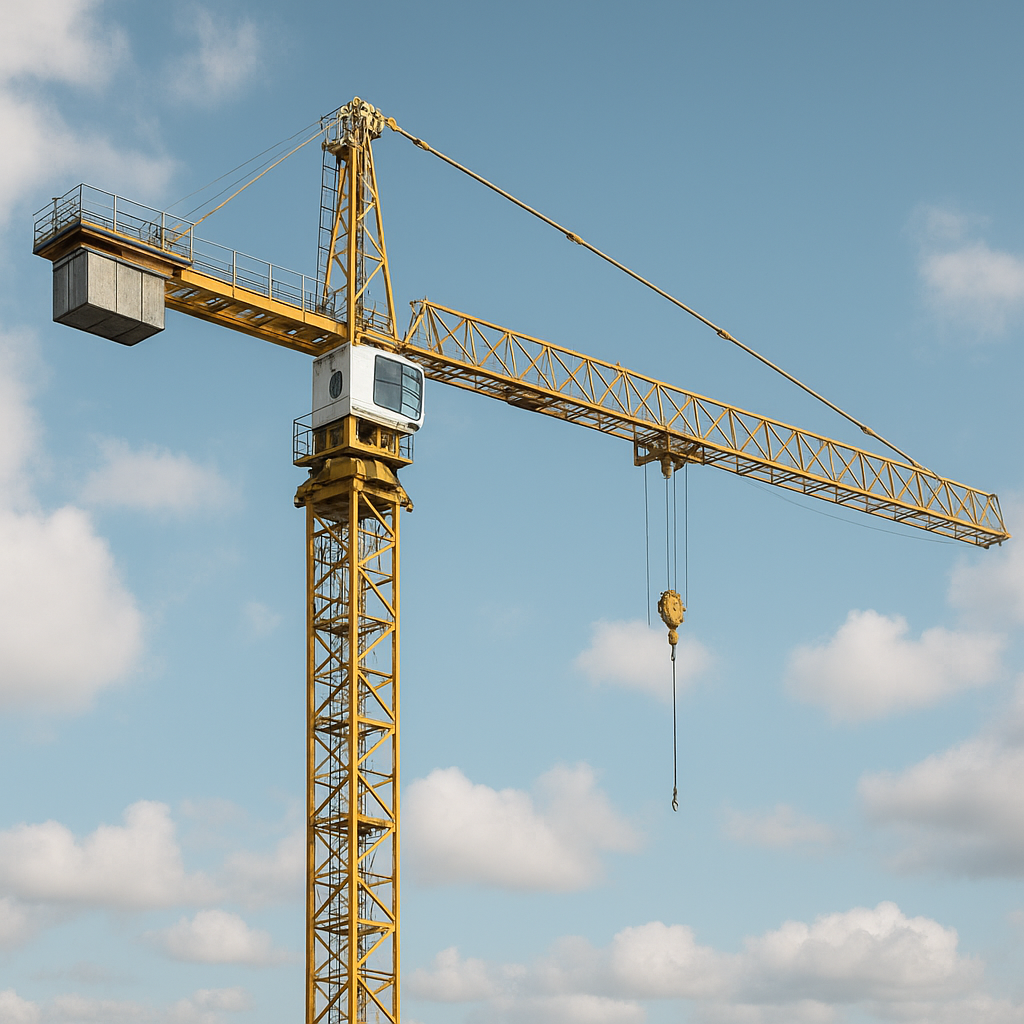
The Jaso J1800 is a powerful example of modern tower crane engineering, designed to meet the demands of heavy construction and industrial lifting. Built with a focus on modularity, safety and adaptability, the J1800 finds its place on large urban projects, infrastructure works, industrial plants and any site where reliable vertical reach and lifting capacity are required. This article examines the machine’s technical characteristics, typical applications, installation and operation considerations, maintenance best practices and the broader market context in which such cranes operate. Emphasis is given to practical information that owners, contractors and equipment managers will find useful when evaluating the Jaso J1800 for their projects.
Technical overview and design features
The Jaso J1800 is a representation of what modern tower cranes deliver: a combination of reach, capacity and control systems designed to increase productivity while maintaining safety. Although exact technical specifications vary depending on the variant, configuration and customer options, the platform characteristics common to this class include modular mast sections, a long jib or luffing option, and advanced control electronics.
Basic structural elements
- Mast and modularity: The crane uses standardized mast sections that allow the machine to be climbed as a building grows or to be configured for transport. These modular sections simplify logistics and on-site assembly.
- Jib and trolley: Depending on the site needs, the J1800 can be fitted with a horizontal jib (hammerhead) or a luffing jib. The jib length is selected to balance reach and capacity, and the trolley system provides fine positioning of loads along the jib.
- Slewing unit: The slewing ring enables 360-degree rotation with smooth control for accurate placement of materials across the site footprint.
- Hoist and winches: Hoisting equipment is designed for both high-capacity lifts and speed control. Multiple speed ranges and electronic control give operators precise handling.
Powertrain, controls and safety systems
Modern Jaso cranes integrate the following elements to meet regulatory and operational demands:
- Electric drive systems with variable frequency drives (VFDs) for hoist, trolley and slewing motors. This improves energy efficiency and enables smooth starting and stopping.
- Load moment indicators (LMI) and overload protection that prevent lifts outside safe parameters. These systems may include visual and audible warnings plus automatic cutouts.
- Operator cabins with ergonomic controls, or remote-control options that allow safe operation from a distance while maintaining precision.
- Optional anti-collision and positioning systems for sites with multiple cranes to ensure coordinated operations and reduce risk.
Performance parameters (typical ranges)
Exact numbers for the Jaso J1800 vary by configuration, but typical performance figures for cranes in this class include:
- Maximum rated capacity in the range of several tonnes at short radius, tapering down toward the maximum jib length;
- Jib length options commonly spanning tens of meters to suit large construction footprints;
- Hoisting speeds and trolley travel speeds that are adjustable via frequency drives to match lift size and cycle times;
- Designed wind speed operating limits and survival wind ratings consistent with industry standards.
Always consult the manufacturer’s documentation for the exact load charts and machine data corresponding to your crane configuration—lifting capacity is a function of jib length, counterweight, mast height, and the selected hoist block, and must be verified for each setup.
Applications and use cases
The Jaso J1800 is suitable for a wide array of projects where vertical reach and accurate load positioning are essential. Its strengths lie in versatility, making it a preferred solution in many construction and industrial scenarios.
Building construction and high-rise projects
- Residential and commercial towers: The modular mast system allows the crane to be climbed progressively as a building rises, providing consistent lifting capacity throughout the construction cycle.
- Concrete pumping and formwork placement: Precise load placement reduces rework and improves cycle times for repetitive tasks such as placing formwork or precast panels.
Infrastructure and civil engineering
- Bridge construction and overpass assembly often require cranes with both reach and the ability to operate in constrained sites. The J1800’s configurations suit these tasks.
- Road, rail and metro projects use tower cranes for assembling heavy prefabricated elements and station canopies.
Industrial plants, ports and energy sector
- Industrial assembly: Erection of steel structures, tanks and process modules for petrochemical and industrial plants benefit from the J1800’s stable lifting characteristics.
- Renewable energy: While specialized mobile cranes typically handle large turbine components, tower cranes are used for foundation works and assembly areas in wind farm infrastructure projects where appropriate.
- Port handling support: For onshore port installations and adjacent construction, tower cranes assist in handling equipment and buildings.
Specialized and urban sites
In dense urban environments where ground space is limited, the crane’s ability to deliver materials over tall structures with minimal footprint makes it a go-to choice for builders. Luffing jib variants are particularly useful to minimize swing radius and reduce interference with nearby structures and sensitive zones.
Installation, logistics and site planning
Deploying a Jaso J1800 requires careful planning across transport, foundation, assembly and commissioning stages. Efficient logistics and a detailed erection plan reduce downtime and increase safety.
Transport and prefabrication
- The modular mast sections, jib segments and counterweights are sized for transport on standard heavy goods trailers. Transport planning should account for route restrictions, permits and weight/height limits.
- Onsite preassembly areas allow jib and counterweight layout before erecting the mast. This reduces time under the lifting hook and speeds up commissioning.
Foundations and anchoring
A secure foundation is essential for tower crane performance. Typical foundation options include:
- Concrete base pads sized per the crane’s forces and site geotechnical conditions;
- Temporary ballast systems when ground conditions or schedule constraints preclude deep concrete foundations;
- Building tie-ins or anchors when the crane must be tied to the structure for additional height and stability.
Erection and climbers
Erection is performed by specialist teams with lifting equipment (mobile cranes or self-erecting devices) and trained riggers. For projects that require increasing mast height, hydraulic or mechanical climbing frames are used to add mast sections while maintaining continuous crane operation in many cases.
Operation, safety and productivity
Safe and efficient operation of the Jaso J1800 depends on trained personnel, adherence to load charts, and the use of integrated safety systems. Emphasis on human factors and systems integration reduces accidents and improves cycle times.
Operator training and ergonomics
- Operators must be certified according to local regulations. Familiarity with the crane’s specific controls, LMI behavior and emergency procedures is essential.
- Operator cabins are designed for comfort and visibility, with ergonomic controls that reduce fatigue and support precise placement of loads.
Safety systems and monitoring
- Load moment indicators monitor lifting conditions in real time and lock out unsafe movements.
- Wind sensors and alarms inform operators of hazardous environmental conditions. Many sites use automatic restrictions when wind thresholds are exceeded.
- Anti-collision systems and GPS-based positioning are used on congested sites with multiple lifting devices to prevent clashes.
Productivity considerations
Cycle times are influenced by hoist and trolley speeds, operator skill and site logistics. Typical methods to maximize productivity include:
- Task sequencing to minimize dead travel (moving the hook without load);
- Using the appropriate hoist block size for the load to keep lifts within the most efficient speed ranges;
- Clear material staging areas to reduce time spent retrieving and re-rigging loads.
Maintenance, lifecycle and total cost of ownership
Maintaining a Jaso J1800 in top condition prolongs life, reduces downtime and ensures predictable operating costs. Preventive maintenance, documented inspections and parts management are central to an effective lifecycle strategy.
Preventive maintenance
- Scheduled inspections of structural elements, bolts and welds;
- Routine checks and servicing of mechanical components—winches, gearboxes, slewing bearings;
- Electrical diagnostics for drives, sensors and control systems;
- Corrosion protection and painting cycles adapted to the environment (coastal, industrial, etc.).
Spare parts and service network
Access to genuine parts and trained service technicians shortens repair times. Many manufacturers—including global firms with a regional presence—offer service contracts tailored to uptime targets and site-specific needs. Extended warranties and condition-monitoring subscriptions can reduce long-term operational risk.
Residual value and replacement planning
Crane resale value is affected by hours of operation, maintenance history and market demand. Well-maintained units with documented service records retain higher residual values. Replacement planning should factor in technological upgrades (e.g., telematics) and changes in site requirements.
Market context and statistics
Tower cranes like the Jaso J1800 operate within a construction equipment market shaped by urban growth, public infrastructure spending and industrial investment. While specific sales figures for individual crane models are not always publicly disclosed, several broad trends and considerations are relevant:
- The tower crane market has shown steady demand in regions experiencing rapid urbanization and high-rise construction activity, particularly in several parts of Asia and the Middle East.
- Investment in infrastructure in developed markets also supports demand for large-capacity tower cranes, especially for long-term public transport, energy and civil works projects.
- Technological advancements—such as integrated telematics, energy-efficient drives and safety automation—are increasingly influencing purchase decisions and lifecycle costs.
For asset managers and fleet operators, evaluating total cost of ownership (TCO) is often more important than purchase price. TCO calculations typically account for acquisition cost, financing, transport and erection, maintenance, downtime, and residual value at replacement time. Many construction companies use fleet utilization metrics to decide between owning and renting cranes; high utilization rates favor ownership, whereas short-duration projects or fluctuating demand make renting more economical.
Case studies and practical examples
While individual project details vary, several typical scenarios illustrate how a Jaso J1800 or a crane of similar class can be applied effectively:
High-rise residential tower in a dense city center
- Requirement: Frequent delivery of precast concrete panels and façade elements to upper floors with minimal ground footprint.
- Solution: A hammerhead or luffing jib configuration tied to the structure as the building rises, combined with a remote-control option to place loads precisely between adjacent buildings.
- Outcome: Reduced material handling times and minimized interference with street-level activities.
Industrial module installation in a processing plant
- Requirement: Accurate placement of heavy process modules and steelwork in a constrained plant area.
- Solution: A crane with high-capacity hoisting capability at short radius supported by a robust foundation and well-planned staging areas.
- Outcome: Efficient assembly sequence and minimized use of multiple crane types, saving on coordination costs.
Selecting the Jaso J1800: procurement checklist
When considering the Jaso J1800, project teams should evaluate the following factors to ensure the crane meets site requirements and budget constraints:
- Load charts: Verify lifting capacities at the radii and heights required for the project.
- Configuration options: Choose between hammerhead and luffing jib, mast section types, and cabin or remote-control packages.
- Site logistics: Assess access, transport constraints and foundation options.
- Service and support: Confirm local service network, spare parts availability and training provisions.
- Total cost of ownership: Model acquisition vs rental, maintenance plans, and expected utilization.
Outlook and final considerations
The Jaso J1800 represents a class of tower cranes that combine modularity, safety and operational flexibility—qualities that remain central to modern construction productivity. As jobsite demands evolve, manufacturers continue to invest in energy efficiency, connectivity and automation to improve safety and lower operating costs. For contractors and owners, the decision to select a J1800-style crane should be grounded in careful analysis of project-specific lifting requirements, site logistics and lifecycle costs. When properly specified, installed and maintained, such cranes deliver strong value across a wide range of construction and industrial applications.
)
)