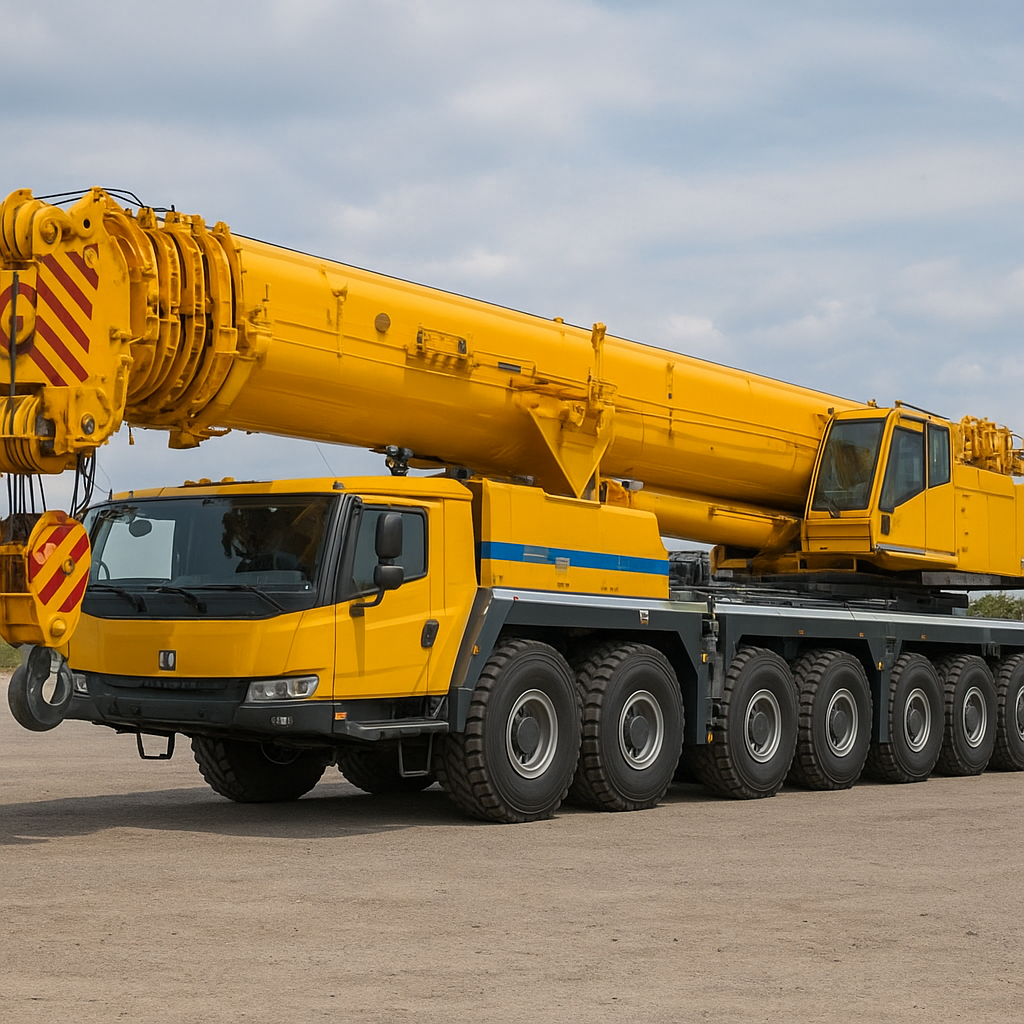
The XCMG XCA1800 represents a modern approach to heavy lifting in demanding environments. Produced by one of the world’s largest construction machinery manufacturers, the XCA1800 is designed to combine on-road travel capability with robust off-road performance, allowing contractors and operators to move quickly between jobs while delivering the lifting power required on large-scale construction, infrastructure and industrial projects. This article explores the machine’s design, typical technical characteristics, main applications, operational considerations, and the broader market and safety context. The discussion highlights why this model is valued by fleet managers and crane operators for its combination of power, adaptability and transportability.
Design and technical characteristics
At the heart of the XCMG offering is an emphasis on integrated design: the carrier and upperworks are engineered as a matched system to deliver predictable, reliable performance. The XCA1800 is an example of a modern XCMG all-terrain crane that balances lifting capability with highway mobility and site access. Key design features include a telescopic boom system, multi-axle carrier chassis, hydraulic outriggers, and an operator cab with advanced controls and diagnostics.
Core structural elements
- XCA1800 configuration: The crane is typically built on a multi-axle carrier to provide road-legal travel and high ground-bearing capacity. The exact number of axles and suspension details vary by market and customer specification.
- Boom design: A multi-section telescopic main boom provides the bulk of the lifting height and reach. In many all-terrain designs comparable to the XCA1800 the main boom is engineered for both strength and minimal deflection under load, often complemented by a lattice or telescopic jib for additional height and duty-cycle flexibility.
- Upperworks and superstructure: The turntable, counterweight system and upper cab are positioned to ensure optimal load distribution and operator visibility. Modular counterweight systems allow the machine to be configured for different lifting envelopes.
Powertrain, hydraulics and mechanics
A powerful diesel engine on the carrier provides road mobility while an auxiliary drive powers hydraulic systems for hoisting, slewing and telescoping. The XCA1800 leverages advanced hydrostatic and hydraulic circuits to deliver smooth control and high lifting speeds when required. Hydraulic systems are protected with filtration and cooling to maintain performance in high-use applications.
- Engine and drive: Carrier engine and transmission designed for highway travel, with enough torque for steep gradients and site maneuvers.
- Hoist and winch system: Multiple winches with high-line speeds and heavy-duty wire rope capacity for demanding lifts.
- Outriggers: Fully hydraulic telescopic outriggers with variable extension settings to stabilize the crane on variable ground conditions.
Operator environment and controls
Modern all-terrain cranes emphasize ergonomics and control precision. The XCA1800 commonly features a climate-controlled operator cab with multi-axis joysticks, digital displays for load moment indicators, and camera systems for blind-spot awareness. Onboard diagnostics communicate maintenance alerts and provide performance data for fleet management.
Performance parameters and typical specifications
Exact factory specifications can vary with production year and customer options, but the XCA1800 is usually positioned in the 160–200 tonne class of all-terrain cranes. Typical performance parameters include gross vehicle weight, rated lifting capacity at various radii, boom and jib length combinations, travel speeds, and outrigger spans. Below are representative figures and performance characteristics that illustrate the crane’s capabilities. Where specific figures are not universally standardized across all configurations, they are described as typical or approximate.
Representative technical data (typical)
- Rated lifting capacity: approximately capacity 160–180 tonnes at close radius (model-dependent).
- Main boom length: common telescopic reach in the range of 40–60 metres depending on the number of sections and optional extensions.
- Maximum tip height (with luffing or telescopic jib): up to 80–100 metres in some configurations when combined with a lattice or telescopic jib.
- Counterweight: modular systems allowing adjustment to suit travel, lifting weight and stability needs.
- Travel speed: road-legal speeds that vary by region; typical top speeds on highway may be 60–80 km/h depending on axle count and local regulations.
- Axles and wheelbase: multi-axle carrier (commonly 5 to 7 axles for cranes in this class), designed for weight distribution and road regulations.
These representative numbers should be treated as broad indicators. Exact numbers for lifting charts, line pull, hoist speeds and outrigger footprint must be taken from the manufacturer’s load charts and configuration-specific documentation for safe operation.
Primary applications and industries
The versatility of an all-terrain crane like the XCA1800 makes it suitable across a wide range of industries and applications. Its ability to travel on public roads between sites while retaining strong off-road capabilities reduces the need for disassembly and transport by heavy haulage, lowering mobilization time and costs. Typical applications include:
- Construction of high-rise and commercial buildings: lifting prefabricated structural elements, heavy equipment and mechanical systems into position.
- Wind turbine erection and maintenance: transporting to remote wind farm sites and lifting nacelles, hubs and tower sections where reach and stability are essential.
- Industrial plant installation and overhaul: work in petrochemical, power generation and heavy industry for lifting boilers, generators, heat exchangers and piping modules.
- Bridge and infrastructure projects: placing large bridge segments, girders and precast concrete elements over highways, waterways and rail corridors.
- Transport and logistics hubs: loading and unloading oversized cargo and facilitating heavy-lift movements at ports and rail facilities.
In each of these sectors, the XCA1800’s combination of mobility, modular counterweight options and boom/jib configurations help contractors adapt to a wide spectrum of lift profiles and site constraints.
Operational considerations and site planning
Successful use of an XCA1800 requires careful lift planning, understanding of load charts, and coordination with site planners. Key operational considerations include ground conditions, transport and access, lift sequencing, and regulatory compliance. Cranes of this class demand adequate staging for outriggers, careful management of traffic when operating near public ways, and comprehensive communication among rigging crews and signalers.
Site preparation and ground support
- Outrigger pads and cribbing: essential to distribute loads and prevent differential settlement. The selection of pad size and materials depends on soil bearing capacity.
- Access roads and turning radii: multi-axle carriers require clearance for travel and maneuvering. Temporary road reinforcement may be needed for soft ground or steep grades.
- Weather and wind: high winds can significantly reduce allowable lifts, especially at high radii or with large surface-area loads. Manufacturers provide wind-speed limits in load charts.
Rigging and lift management
Certified rigging gear, regular inspection of wire ropes and slings, and the use of taglines and guide personnel are standard practice. For complex lifts, a dedicated lift director and certified signalperson coordinate crane, hoist and rigging teams to ensure safe execution. Load moment indicators, anti-two block devices and overload protection systems in the crane help prevent accidents when properly used and maintained.
Safety systems, controls and technology
Safety is central to modern crane design. The XCA1800 integrates electronic and mechanical systems to minimize human error and protect both the machine and personnel on site. Typical safety and assistive technologies include an onboard load moment indicator (LMI), anti-collision systems for multi-crane sites, remote monitoring and diagnostics, and fail-safe hydraulic components.
- Safety devices: load-limiting systems, moment-based cutoffs and emergency stop functions reduce the risk of overload.
- Operator aids: cameras, proximity sensors and large-format displays that present load charts, radius and angle information in real time.
- Telematics and fleet management: data on engine hours, fuel consumption and maintenance alerts that help fleet managers optimize utilization and scheduling.
Compliance and standards
Cranes must be operated in accordance with regional and international standards such as ISO, EN and local occupational safety regulations. Routine inspections, certified periodic testing and operator qualification are mandatory in many jurisdictions. The XCA1800 typically ships with documentation to support compliance, including load charts and recommended maintenance intervals.
Maintenance, lifecycle and operating costs
A robust maintenance program is essential to preserve the performance and residual value of a heavy crane. Preventive maintenance for the XCA1800 focuses on engine servicing, hydraulic fluid and filter changes, wire rope inspection and replacement, boom and winch checks, and electronic system updates. Planned maintenance and prompt repair of wear items reduce downtime and extend lifecycle.
- Typical maintenance tasks: daily pre-start checks, scheduled oil and filter changes, periodic non-destructive testing of critical structural members.
- Consumables: hydraulic oil, brake fluids, wire ropes and sheaves are recurring costs that need to be forecasted in lifecycle budgeting.
- Depreciation and resale: well-maintained cranes from recognized manufacturers tend to retain value and attract strong demand on the secondary market.
Operating cost drivers
Major cost drivers include fuel consumption, operator labor, periodic overhauls, transport between jobs (if not road-travelled), and replacement of high-wear parts. Use of telematics and monitoring reduces unexpected failures by enabling condition-based maintenance and better parts forecasting.
Economic and market context
XCMG has grown rapidly as a global manufacturer of construction equipment. The demand for versatile, high-capacity all-terrain cranes has increased with global infrastructure investments, renewable energy projects and industrial modernization. The XCA1800 is typically positioned to compete on price-performance metrics against legacy European and Japanese manufacturers by offering attractive purchase prices, good payload-to-cost ratios, and an expanding service network.
Market trends influencing the deployment of machines like the XCA1800 include the growth of wind and solar projects in remote areas, the need for rapid deployment cranes for modular construction, and an emphasis on total cost of ownership rather than initial purchase price alone. Fleet owners increasingly evaluate lift productivity per hour, time-to-mobilize and resale value when selecting cranes.
Environmental considerations
As with all heavy diesel machines, emissions and noise are areas of regulatory focus. Newer XCMG models often incorporate engines that meet contemporary emission standards, use of selective catalytic reduction (SCR) and particulate filtration as required by local legislation. Noise-damping cabs and engine enclosures, plus optimized hydraulic systems, help reduce onsite disturbance.
- Fuel efficiency: advances in engine and hydraulic control systems reduce idle times and improve fuel consumption per lift.
- Eco-driving practices: operator training and telematics can reduce fuel use by optimizing travel speeds and reducing unnecessary engine hours.
- End-of-life management: recycling of metal components and responsible disposal of fluids and batteries are part of sustainable fleet practices.
Comparative strengths and limitations
Compared with similar-capacity cranes, the XCA1800’s strengths include cost-competitiveness, modular counterweight options and an emphasis on straightforward serviceability. It is well-suited for customers who require a balance of road mobility and lifting power without the premium price associated with some long-established brands.
Limitations may derive from regional parts availability in some markets, differences in operator familiarity versus more entrenched brands, and the need to verify local support for advanced electronics and telematics. Buying through reputable dealers and ensuring operator and maintenance training can mitigate many of these concerns.
Practical tips for buyers and operators
- Request configuration-specific load charts and confirm boom/jib combinations for the most common lifts in your pipeline.
- Verify dealer support and spare parts availability in your operating region to minimize downtime.
- Invest in operator training and a preventive maintenance program to protect asset value and safety performance.
- Use telematics for utilization tracking and cost-per-hour analysis to make informed fleet decisions.
Concluding overview
The XCMG XCA1800 occupies a practical niche in the all-terrain crane market: it offers a capable lifting platform, adaptability across a wide range of industries, and the mobility to move between sites without complex transport logistics. For owners focused on maximizing uptime and minimizing mobilization costs, this class of machine can deliver strong productivity when paired with experienced operators and rigorous site planning. When considering an acquisition, it is important to specify the intended duty cycle, typical lift profiles and regional support expectations to ensure the chosen configuration meets both immediate project needs and long-term fleet strategies.


)
)