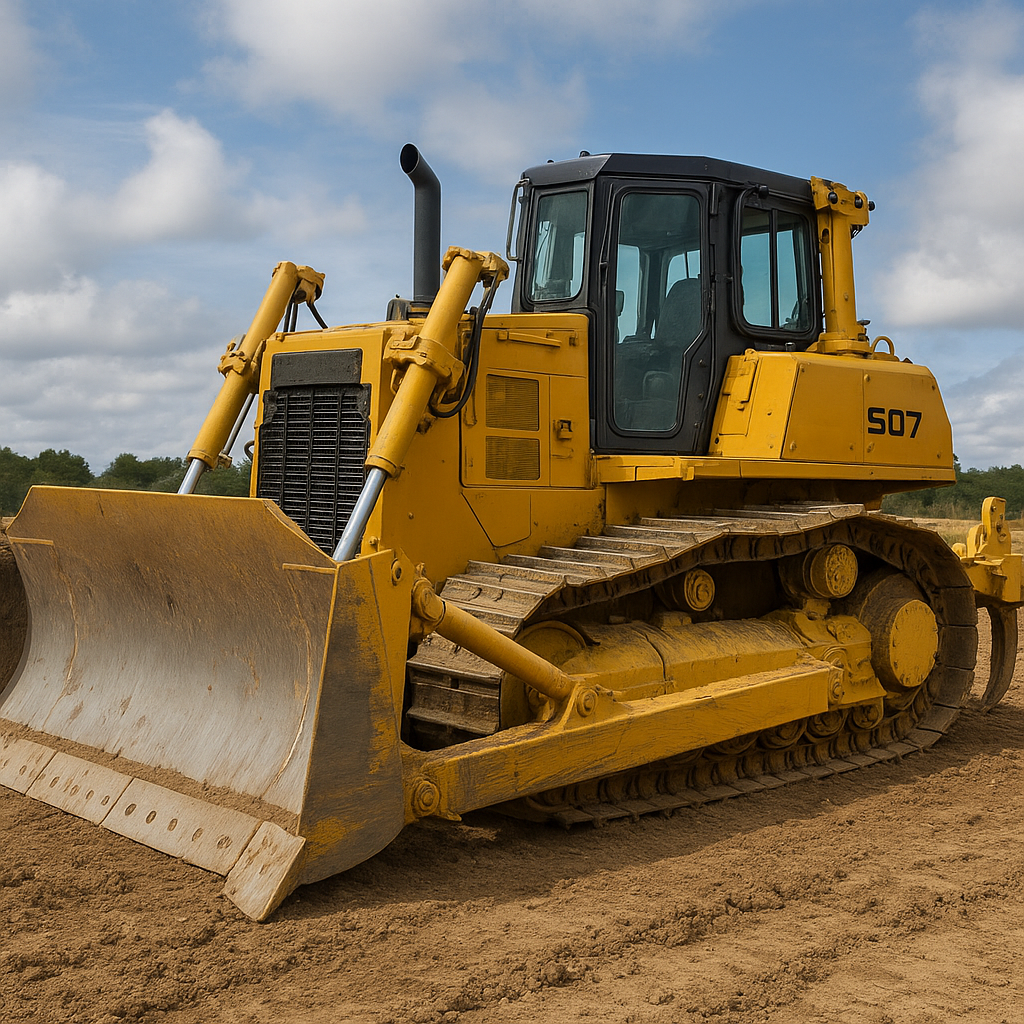
The HBXG SD7 is a medium-to-heavy duty track-type **bulldozer** produced by Shandong Heavy Industry’s HBXG line of construction equipment. Designed primarily for earthmoving, site preparation, and heavy-duty material handling, the SD7 combines a robust chassis, versatile blade options, and operator-focused features. This article explores the machine’s characteristics, typical applications, maintenance considerations, market position, and practical tips for owners and operators.
Overview and design philosophy
The HBXG SD7 reflects a design philosophy that balances durability, **power**, and cost-effectiveness. HBXG has positioned the SD7 to serve contractors, mining operations, and municipal works where a dependable dozer is required but fleet budgets favor machines that offer straightforward design and easy servicing over the highest-end, expensive technology packages. The SD7 typically features a welded-frame construction, reinforced undercarriage components, and user-friendly control layouts to support long working hours in challenging environments.
Key structural and mechanical highlights
- Engine: The SD7 is commonly fitted with an industrial diesel engine tuned for high torque at low rpm to optimize pushing power and fuel economy in heavy loads.
- Transmission: Hydrostatic or power-shift transmissions are used in different configurations to provide smooth speed control and reliable torque delivery.
- Undercarriage: Heavy-duty track frames, robust rollers and a sealed final drive design extend service life under abrasive conditions.
- Blade options: Available blades include straight (S-blade), universal (U-blade), and semi-U or angle blades – each suited to different earthmoving tasks.
- Hydraulics: Load-sensing hydraulic systems and durable cylinders allow precise blade control and attachment operation.
Typical applications and industries
The SD7’s versatility makes it suitable for a wide range of tasks. Common uses include:
- Construction site preparation — grading, leveling, and spreading fill material prior to building foundations, road subgrades, or landscaping.
- Mining and quarrying — pushing overburden, reclaiming benches, or moving large volumes of waste material where reliability and uptime are critical.
- Agriculture and land reclamation — converting rough terrain into arable land, creating terraces, or maintaining drainage ditches.
- Forestry and logging roads — building access roads, clearing skid trails, and maintaining firebreaks.
- Municipal and civil works — snow removal, landfill management, and heavy-duty road maintenance.
The availability of multiple blade types and optional ripper attachments makes the SD7 adaptable to both fine grading and hard-push applications, expanding its usefulness across projects that require both precision and brute force.
Technical specifications and performance (typical ranges)
Exact specifications for the HBXG SD7 can vary with model year, market, and optional equipment packages. The following ranges are representative of medium-to-heavy track dozers in the SD7 class and are provided as a general guide rather than factory-certified values.
Representative performance figures
- Operating weight: approximately 14,000–22,000 kg depending on configuration and attachments.
- Engine power: typically in the range of 120–220 kW (160–300 hp), tuned for low-end torque.
- Blade capacity: depending on blade type, 2.5–6.0 m³ for semi-U and U blades used for heavy dozing.
- Ground pressure: moderate to low ground pressure options available through track width and undercarriage choices for better flotation on soft ground.
- Fuel consumption: varies with duty cycle; typical consumption for heavy pushing might average 18–35 liters per hour, with lighter grading operations significantly lower.
- Speed: forward/reverse travel speeds optimized for controlled push operations; top travel speed usually under 12 km/h.
Note: For procurement or maintenance planning, always confirm the precise specification plate or the manufacturer’s technical datasheet for the exact machine you intend to buy or operate.
Operator comfort, controls, and safety features
Recent iterations of HBXG’s dozers have focused on improving ergonomics and safety while keeping control systems intuitive and rugged. The SD7 typically offers:
- Spacious cabins with adjustable seating and improved visibility to the blade and tracks.
- Heating, ventilation, and optional air conditioning for operator comfort in extreme climates.
- Intuitive control levers or electronic joysticks that reduce operator fatigue and increase precision for grading tasks.
- Visibility aids such as large windows and, in some models, optional camera systems for rear and side views.
- Safety features like ROPS/FOPS-certified cabs, emergency exits, and well-positioned handrails and steps for safe access.
A comfortable operator experiences less fatigue, which often translates into improved productivity and fewer mistakes on site.
Maintenance, durability, and lifecycle considerations
Durability is a central selling point of the HBXG SD7. Key maintenance and lifecycle considerations include:
- Planned maintenance intervals — following manufacturer-recommended inspection schedules for engine, hydraulics, and undercarriage significantly extends usable life.
- Undercarriage wear — the undercarriage typically represents the largest maintenance cost; rotating components and measuring track wear regularly helps avoid catastrophic failures.
- Preventive maintenance — oil and filter changes, hydraulic fluid checks, and regular greasing of pivot points keep the machine reliable under heavy duty cycles.
- Spare parts availability — HBXG parts networks have improved globally, but buyers should consider stocking wear items (track pins, rollers, blade cutting edges) if operating in remote locations.
- Refurbishment potential — robust frame and drivetrain designs mean SD7 units can often be rebuilt or refurbished cost-effectively at mid-life, offering a strong total cost of ownership (TCO).
Economic and market considerations
The SD7 is often marketed to buyers trying to balance initial purchase cost with longevity and serviceability. Factors to evaluate when considering an SD7 purchase include:
- Acquisition cost vs. operating cost — lower upfront price may be offset by higher fuel consumption or service needs in some configurations; evaluate whole-life costs.
- Resale value — machines with documented maintenance histories and durable undercarriage packages retain value better.
- Financing and warranty — HBXG and authorized dealers typically offer warranty packages and financing options that can be tailored to project durations.
- Global support network — consider local dealer service, parts availability and technician training when buying for remote or international projects.
Comparisons and positioning against competitors
In its class, the HBXG SD7 competes with other medium-to-heavy dozers from manufacturers that include global and regional brands. Typical comparative strengths of the SD7 are:
- Cost-effectiveness — generally priced competitively against premium brands while offering many core capabilities.
- Simplified systems — fewer complex electronics in base configurations can mean easier maintenance in rugged conditions.
- Customization — multiple blade and attachment choices to tune the machine for the job.
Areas where buyers may prefer other brands include highest-end fuel economy, dealer network size in some countries, or very advanced onboard control systems (GPS guidance, automated grading) that come standard with some premium models.
Environmental impact and fuel strategies
Environmental concerns increasingly influence heavy equipment selection. For the SD7, consider:
- Emissions — modern engine options are built to meet regional emissions standards (Tier/Stage equivalents). Confirm engine compliance with local regulations when importing.
- Fuel management — telematics and fuel-monitoring options can reduce operating costs; operator training plays a significant role in fuel-efficient dozing techniques.
- Noise and dust mitigation — enclosed cabs, engine enclosures, and proper site practices help reduce operator exposure and community impact.
Operational best practices and productivity tips
To maximize the effectiveness of an HBXG SD7, operators and fleet managers can follow these guidelines:
- Match blade choice to the task: straight blades for leveling and fine grading, U-blades for moving large volumes of loose material.
- Use proper track tension to balance undercarriage wear and traction performance.
- Monitor fuel consumption and engine load; avoid lugging the engine at very low speeds which increases wear.
- Plan push cycles and loading patterns to minimize empty travel and reduce fuel burn.
- Establish a proactive maintenance checklist covering daily, weekly, and monthly checks to prevent downtime.
Purchasing considerations and inspection checklist
When acquiring a new or used SD7, inspect and verify the following items:
- Complete service records and evidence of regular maintenance.
- Undercarriage wear measurements: track shoe thickness, link stretch, roller condition, and idler wear.
- Hydraulic system integrity: look for leaks, check cylinder rod condition and hose wear.
- Engine health indicators: compression tests (if possible), oil analysis reports, and turbocharger condition.
- Blade and ripper wear: cutting edges, end bits, and shank condition.
- Cabin components: gauges, controls, and HVAC systems functioning correctly for operator safety and comfort.
Common attachments and aftermarket options
Maximizing machine utility often involves adding attachments and aftermarket systems. Popular options for the SD7 include:
- Rippers — single or multi-shank rippers for breaking up compacted layers or rock.
- Winches — for logging, recovery, or specialized pulling operations.
- GPS/grade control — guidance systems for precision grading and reduced rework (dealer or third-party retrofit).
- Heavy-duty undercarriage kits — extended-life components for high-abrasion environments.
- Lighting and camera packages — improve safety and site visibility for night operations.
Final considerations and summary
The HBXG SD7 is a robust, adaptable, and competitively priced dozer intended for heavy earthmoving, construction, mining, and municipal projects. Its strengths are rooted in a durable mechanical design, flexibility of blade and attachment options, and a focus on serviceability and operator comfort. While exact specifications may vary between model years and regions, the SD7 is generally well-suited to fleets seeking a balance of reliability, performance, and manageable total cost of ownership. Purchasing decisions should always be informed by confirmation of factory specifications for the unit in question, local support infrastructure, and the specific demands of the intended worksite.
Note: For precise technical data such as serial-number-specific engine output, operating weight, or official fuel consumption figures, consult the official HBXG technical datasheet or an authorized HBXG dealer who can provide the certified specifications for the exact SD7 configuration you are considering.


)
)