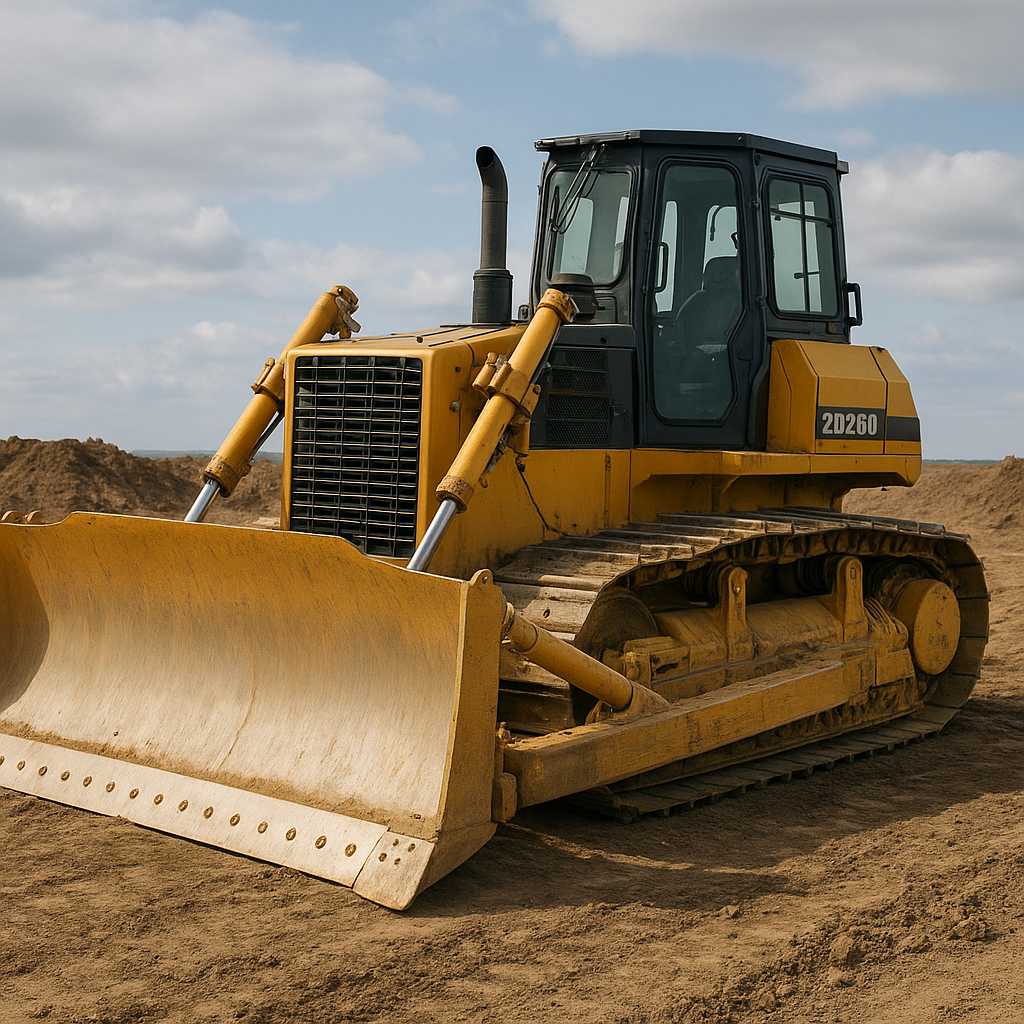
The Zoomlion ZD260 is a medium-sized bulldozer produced by the Chinese construction equipment manufacturer Zoomlion Heavy Industry Science & Technology Co., Ltd. Combining robust mechanical systems, modern hydraulics and competitive pricing, the ZD260 is designed to serve a wide range of earthmoving tasks across construction, mining, road building and agricultural projects. This article examines the machine’s design, typical technical characteristics, areas of application, operator features, and practical considerations such as maintenance, lifecycle costs and market positioning. Wherever numerical data is given it is presented as typical or manufacturer-style figures to provide realistic expectations for contractors and fleet managers.
Overview and design philosophy
Zoomlion’s approach to the ZD260 model balances durability with cost-effectiveness, aiming to deliver a machine that can operate reliably in diverse environments. The ZD260 is engineered to perform heavy pushing and leveling tasks while offering ease of service and parts availability. The basic architecture—conventional crawler chassis, ripper and front blade—reflects proven dozer design, while modern enhancements to the engine, transmission and hydraulic control improve overall performance and operator experience.
Key design priorities for the ZD260 include:
- High breakout and pushing capacity for bulk earthmoving;
- Dependable undercarriage components built to withstand abrasive and rocky ground;
- Service-friendly layout to reduce downtime during routine maintenance;
- Operator-focused cab ergonomics to increase productivity through comfort and visibility.
The ZD260 typically comes in several configurations to match client needs—ranging from a straight blade (S-blade) and semi-U-blade to configurations with multi-shank rippers. Optional packages often include enhanced fuel systems, air conditioning in the cab for hot climates, and reinforced undercarriage treatments for mining or quarry use.
Technical specifications and performance
Technical details for the ZD260 vary with model year and market configuration, but a typical specification set gives a clear picture of expected capability and performance. The model name “260” generally reflects the machine’s approximate engine horsepower class (around 260 hp), placing it in the medium dozer segment well-suited for contractors and medium-scale mining operations.
Engine and powertrain
The ZD260 is commonly equipped with an inline diesel engine provided by either Zoomlion’s in-house partners or third-party suppliers. Typical characteristics include:
- Rated power: approximately 260 hp (around 190–200 kW) at rated rpm;
- Turbocharged, intercooled design to maintain performance at variable altitudes and temperatures;
- Compliance with regional emissions standards may vary—many export models meet Stage II/III or equivalent rules via fuel tuning and after-treatment options;
- Transmission: power-shift planetary gear transmission with multi-speed ranges for travel and working conditions, offering smooth directional changes and efficient torque delivery.
Power management is focused on delivering consistent drawbar pull when loading and pushing, while keeping fuel consumption competitive within the class. Manufacturers typically provide engine protection features such as oil and temperature sensors to prevent catastrophic failures in harsh duty cycles.
Blade, hydraulics and implement performance
The front dozer blade is a primary measure of the ZD260’s earthmoving ability. Common blade specifications include:
- Blade types: straight (S), universal (U), semi-U and multi-purpose options;
- Blade capacity: typically in the range of 3.5–5.0 m³ depending on blade geometry;
- Blade width: often between 3.4 and 4.2 meters when using standard shoes and frame;
- Hydraulic system: load-sensing pump with control valves to regulate blade lift, tilt and angle, enabling precise grading and efficient material handling.
For ripping duties, the rear-mounted ripper assembly (single- or multi-shank) is rated for medium to heavy loosening tasks. Ripper penetration force and lift are engineered to complement the main powertrain, allowing the machine to break compacted surfaces prior to dozing.
Undercarriage and mobility
The crawler undercarriage is a critical component for traction and durability. Typical undercarriage attributes for the ZD260 include:
- Operating weight: usually in the 20–26 tonne range depending on attachments and options;
- Track shoe width: multiple choices (e.g., 600–800 mm) to balance ground pressure against flotation needs;
- Ground pressure: configurable to suit soft soils or hard surfaces through different shoe widths and ballast options;
- Track roller and idler layout: sealed and lubricated track rollers (SALT-type) and reinforced idlers to extend service life in abrasive conditions.
Good undercarriage design reduces fuel consumption and increases longevity; many fleet managers choose wider shoes for marshy or sandy environments and narrower shoes for hard quarry surfaces.
Performance metrics and fuel economy
Performance metrics such as travel speed, drawbar pull and fuel consumption depend on conditions and configuration. Typical factory or field figures reported for medium class dozers like the ZD260 are:
- Maximum travel speed: roughly 10–12 km/h in gear-based transmissions;
- Average working fuel consumption: highly variable, often in the range of 18–28 liters per hour during heavy push operations, and substantially less during light grading (figures depend on load and duty cycle);
- Typical payload throughput: on a well-managed site a ZD260 can move hundreds to thousands of cubic meters per day depending on cycle, ground, and crew efficiency.
Operators and fleet supervisors commonly monitor fuel use, idle reduction strategies and match blade type to task to optimize cost per cubic meter moved.
Applications and industry uses
The versatility of the ZD260 makes it suitable for a wide variety of sectors. Below are principal applications where this machine is often deployed:
- Construction: site clearance, bulk earthworks, road subgrade preparation, dam and levee projects;
- Mining and quarrying: overburden stripping, bench maintenance, reclaiming stockpiles and material handling in pits;
- Agriculture and land reclamation: large-scale land leveling, drainage canal shaping and reclamation of degraded soils;
- Forestry and logging: building skid trails, road maintenance and firebreak construction—typically with reinforced undercarriage and protective guarding;
- Municipal and civil engineering: snow removal with special blades, embankment shaping and landfill compaction support;
- Disaster response and military engineering: rapid clearance, berm building and temporary road creation in austere environments.
Site managers appreciate the combination of blade capacity and track traction, which allows the ZD260 to take on both fine grading and heavy dozing within a single shift. In many developing markets, the cost-to-capability ratio makes the ZD260 an attractive alternative to higher-cost legacy brands.
Operator comfort, controls and safety
Modern dozer cabins are designed not only for comfort but to enhance operator productivity and safety. The ZD260 typically includes a cab that features:
- A quiet, climate-controlled environment with adjustable seating and good visibility to the blade and ripper;
- Ergonomic control layouts—joysticks or levers arranged for minimal operator fatigue and fast response to blade commands;
- Instrumentation and monitoring screens that provide engine, hydraulic and diagnostic feedback;
- Safety systems such as ROPS/FOPS-certified cab frames, rearview cameras (optional), and emergency shutdown procedures;
- Access points and handrails designed to meet safety regulations and to simplify entry/exit during inspections or service.
Comfortable operators can sustain higher productivity and make fewer mistakes; therefore many fleet managers prioritize cab options, visibility packages and operator training when purchasing units for long-term projects.
Maintenance, reliability and lifecycle costs
Keeping a ZD260 productive over its working life requires structured maintenance and effective supply of spare parts. Key maintenance themes include:
- Regular undercarriage inspections—track tension, wear on shoes, rollers and idlers account for a significant share of operating costs;
- Scheduled engine services (oil, filters, coolant) at manufacturer-recommended intervals to preserve performance and avoid downtime;
- Hydraulic system checks—hoses, fittings and cylinders should be inspected for leaks, contamination and wear;
- Preventive checks of the electrical system and control modules to mitigate sudden failures in the field;
- Use of OEM or high-quality aftermarket parts for critical wear items to extend component life.
From an economic perspective, the ZD260 is positioned to offer a lower upfront acquisition cost than some long-established premium brands, but lifecycle cost depends heavily on operator behavior, site conditions and maintenance discipline. With proper care, a medium-class dozer like the ZD260 can provide robust service for many years; however, in extremely abrasive or rocky sites, undercarriage wear can elevate operating cost if not managed proactively.
Market presence, resale and competitive positioning
Zoomlion has grown rapidly by focusing on a broad product line and international expansion. The ZD260 competes in a segment populated by machines from global manufacturers. Its advantages usually include:
- Competitive purchase price and available optional features;
- Local dealer networks in many regions providing parts and service support;
- Flexible configurations that make it adaptable to numerous tasks;
- Attractive performance-to-cost ratio for fleet operators managing tight capital budgets.
On the other hand, resale value may not match that of long-established premium brands in certain markets where brand-recognition strongly influences second-hand prices. Buyers often mitigate this through certified pre-owned programs, extended warranties and by investing in maintenance records that increase transparency and perceived value.
Practical purchasing and operational tips
Prospective buyers and fleet managers often consider the following when evaluating the ZD260 for their operations:
- Match blade type and shoe width to the predominant ground conditions to maximize productivity and reduce wear;
- Request detailed fuel consumption figures under expected operating loads or perform a field trial to confirm economy in your working environment;
- Negotiate service agreements and parts packages to control uptime—access to genuine parts and trained technicians is crucial in remote operations;
- Train operators on fuel-efficient techniques, correct use of rippers and blade management to extend component life and reduce operating cost;
- Plan for undercarriage replacement cycles and budget accordingly; this is often the single largest component of mid-life refurbishment costs for crawler equipment.
Environmental and regulatory considerations
Emissions and noise regulations are increasingly important factors in the purchase and operation of heavy equipment. Zoomlion offers options to meet varying emission standards, but compliance depends on the specific engine and after-treatment configured for each market. Typical considerations include:
- Emission control packages for markets with Stage/Tier regulations;
- Options for diesel particulate filters or SCR systems on certain variants;
- Acoustic treatments to meet noise ordinances on urban construction projects;
- Fuel quality requirements—effective operation of modern engines depends on clean fuel and proper filtration systems.
Operators should verify that the machine’s emission level and noise output meet local regulatory requirements before purchase, especially for long-term urban projects.
Summary and final observations
The Zoomlion ZD260 represents a pragmatic choice for operators seeking a medium-class bulldozer that combines reasonable performance with accessible pricing and configurable options. Its strengths lie in mechanical simplicity, adaptable blade and ripper choices, and a competitive acquisition cost that suits contractors and mining operations in many regions. Important purchasing considerations include the machine’s engine configuration, undercarriage options, local dealer support, and a maintenance plan to manage lifecycle costs.
Used correctly, the ZD260 can deliver high productivity for tasks ranging from heavy dozing and ripping to fine grading. For buyers prioritizing long-term resale value or global brand recognition, these factors should be weighed against the lower initial cost and practical performance advantages the ZD260 provides.
Reliability, fuel efficiency, operator comfort, maintenance planning and the right match of attachments remain the key variables that determine whether the Zoomlion ZD260 will be the optimal choice for a given fleet or project.


)
)