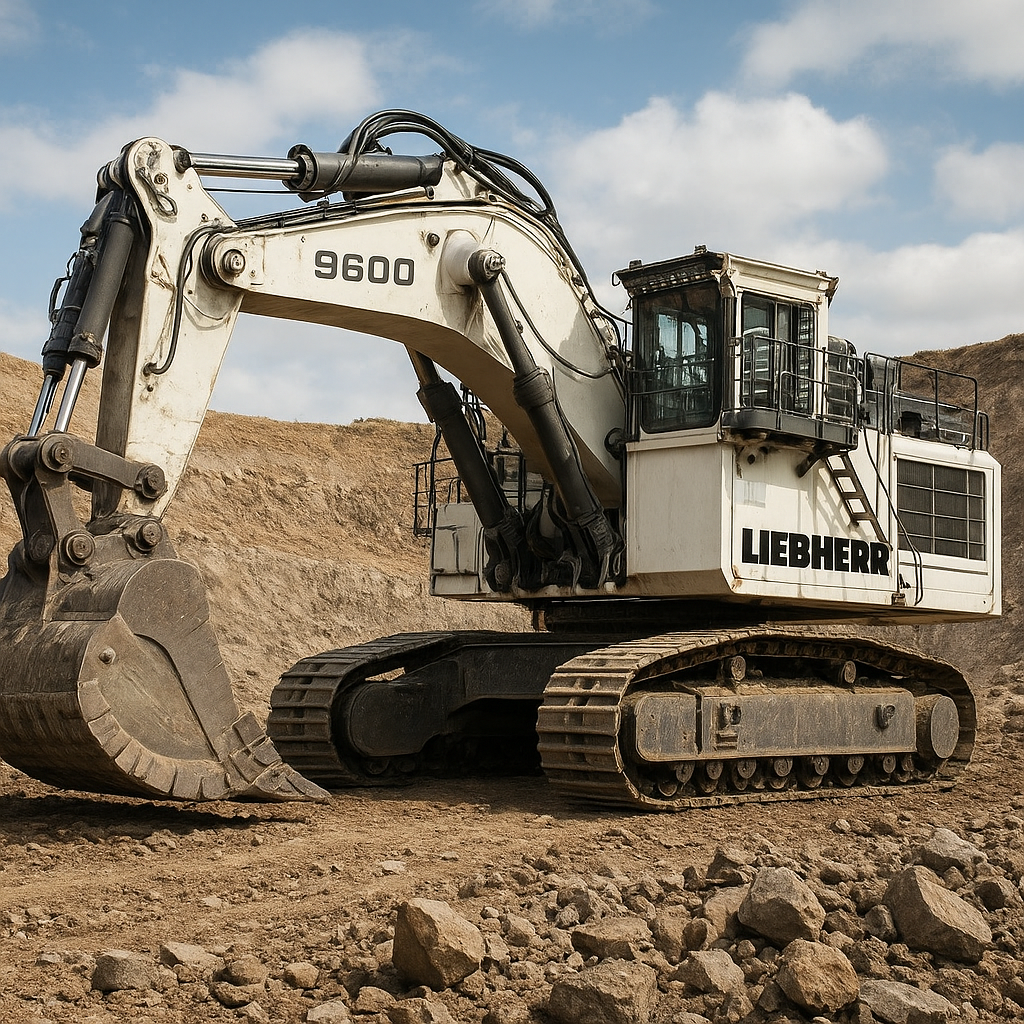
The Liebherr R 9600 represents a modern approach to large-scale hydraulic mining excavators, combining modularity, reliability and advanced electronics to meet the demands of open-pit mining operations worldwide. Designed to handle heavy-duty excavation, loading and material handling tasks, the R 9600 aims to deliver high productivity while reducing life-cycle costs and environmental impact. The following article reviews its design, typical applications, technological highlights, operational aspects, and commercial considerations, offering a comprehensive view for mine operators, engineers and equipment managers.
Design philosophy and key features
Liebherr’s R 9600 follows the company’s strategy of building robust, serviceable machines optimized for uptime and total cost of ownership. The machine integrates heavy-duty structural components with advanced hydraulic systems and on-board electronics. Core design priorities include reliability, modularity, ease of maintenance, and operator-centric ergonomics. These priorities translate into a machine that can be tailored to different mining environments and maintenance regimes without sacrificing performance.
Structural and mechanical design
- Heavy-duty undercarriage and frame optimized for high-stress cyclic loads typical in mining operations.
- Reinforced boom and stick assemblies designed to reduce fatigue and extend component life under continuous heavy loading.
- Multiple attachment options such as large bucket configurations, hydraulic thumbs, and specialized tools for rock and overburden removal.
Hydraulics and powertrain
The hydraulic architecture emphasizes efficiency and precise control. Variable-displacement pumps, electronically controlled valves, and smart flow management systems ensure that power is delivered where and when it is needed, minimizing losses. The R 9600 integrates modern engines and cooling systems chosen to balance fuel consumption and performance. Built-in diagnostic systems allow for predictive maintenance and fast troubleshooting.
Electronics, automation and connectivity
Liebherr equips its modern mining excavators with comprehensive electronic systems for machine control, diagnostics and fleet management. Integrated telematics enable remote monitoring of operating hours, fuel consumption, hydraulic temperatures, and fault codes. The machine can interface with mine planning and dispatch systems to improve cycle times and coordinate with haul fleets. Optional automation packages may include semi-automated digging sequences and optimized swing and crowd control for improved repeatability and productivity.
Applications and operational contexts
The R 9600 is primarily intended for use in open-pit mining, quarrying and heavy civil earthworks where sustained excavation and loading of haul trucks or conveyors are required. Its flexibility in bucket sizing and stick length allows it to be used across several material classes and tasks:
- Loading large haul trucks and ultra-class trucks when configured with high-capacity buckets and appropriate reach.
- Removal of overburden in surface coal or metal mines.
- Selective digging in ore benches and pit walls.
- Rehandling and stockpile management.
- Specialist tasks when fitted with attachments such as grapples or hydraulic hammers.
Because the machine is designed for continuous operation in harsh environments, it suits mines with high daily production targets where uptime and predictable maintenance intervals are critical to meet output schedules.
Technical characteristics and performance (typical)
Specifications for mining excavators vary by configuration, regional emission standards and optional equipment. The following items outline typical characteristics for machines in this class and reflect common configurations for the R 9600 family as provided by manufacturers and industry data.
- Bucket capacities: typically offered in a range to match material density and payload targets. Common options address both high-volume low-density materials and lower-volume high-density ores.
- Hydraulic system: electronically controlled variable-displacement pumps with optimized flow management and energy recovery strategies in hydraulic cycles.
- Engine and power: engines selected to meet regional emission regulations while delivering peak performance for digging and swinging operations; cooling packages sized for continuous heavy operation in hot climates.
- Operating weight: configured to balance stability and mobility; undercarriage and counterweight options allow adaptation to different site needs.
- Reach and digging depth: multiple boom and stick combinations enable customization of reach and depth to suit bench heights and truck dimensions.
Exact numeric values such as engine power, operating weight, or breakout force will depend on the chosen configuration and options. For procurement, operators should consult the manufacturer’s certified specification sheets and request performance data based on the intended mine profile (bench height, haul truck class, material density).
Operator environment and safety systems
Modern mining excavators prioritize operator comfort and safety because an efficient operator in a comfortable environment can sustain higher production rates with fewer errors. The R 9600 features a cab designed to reduce fatigue, increase visibility, and support long shifts with climate control and noise mitigation.
- Ergonomic displays and joystick layouts for intuitive control.
- High-visibility glazing and external camera systems to reduce blind spots and enhance situational awareness.
- Integrated safety systems, such as overload protection, anti-collision interlocks (when integrated with fleet management), and emergency shutdown protocols.
- Access systems designed for safe maintenance: wide platforms, anti-slip surfaces, and strategically placed ladders and handrails.
On-board telematics also contribute to safety by enabling remote alerts for abnormal behavior, such as excessive temperatures, hydraulic leaks or unexpected cycles, allowing site teams to respond before failures escalate.
Maintenance, serviceability and life-cycle costs
One of Liebherr’s selling points across their mining range is an emphasis on serviceability and long component life. The R 9600 continues this tradition by providing easy access to service points, modular components that can be swapped on-site, and digital diagnostics that inform predictive maintenance schedules.
- Modular hydraulic and electronic units to reduce downtime during repairs.
- Centralized lubrication points and grouped service panels to minimize routine service time.
- Long-life wear components and optional hardfacing packages for extreme abrasive environments.
- Remote diagnostic support and software updates to keep control systems optimized.
When evaluating the machine, buyers should consider not just the purchase price but also total cost of ownership including fuel, maintenance intervals, parts availability and resale value. A machine designed to minimize unscheduled downtime can substantially lower operating costs over a multi-year mine life.
Environmental considerations and emissions
Environmental performance has become an increasingly important factor in heavy equipment procurement. The R 9600 is designed to comply with current emission standards and can be equipped with features to reduce fuel consumption and emissions:
- Efficient engine tuning and after-treatment systems to meet local emission regulations.
- Hydraulic optimization and intelligent power management to reduce fuel burn during idle and low-load cycles.
- Options for electrified systems in specific applications, such as electrified drive components or compatibility with external electric power in shovel configurations.
- Noise reduction packages for operations close to community boundaries or sensitive environments.
Operators pursuing reduced carbon footprints can combine equipment selection with broader mine electrification strategies, payload optimization, and operational practices that limit fuel consumption per tonne moved.
Economic considerations and return on investment
When evaluating capital equipment like the R 9600, mine managers typically assess productivity gains versus acquisition and operating costs. Key economic drivers include:
- Cycle time reductions through improved dig precision and faster swing/boom response, enhancing truck fill factors.
- Lower maintenance costs due to modular components and predictive diagnostics.
- Fuel efficiency gains from advanced hydraulics and power management.
- Increased uptime from robust design and global service networks.
Return on investment is site-specific: a machine delivering higher hourly or daily tonnage can justify a premium purchase price if it aligns with the mine’s production profile and logistics. Integration with fleet management software further improves utilization and provides data to support ROI calculations.
Case uses and industry reception
The R 9600 has been received by the market as a modern, flexible mining excavator option for medium-to-large scale operations. Typical adopters include coal, copper, iron ore and aggregate operations seeking machines that can be tailored to local conditions. Early feedback from operators often highlights:
- Good operator visibility and ergonomics that improve shift productivity.
- Strong after-sales support including training and parts availability in many regions.
- Capabilities to integrate with existing fleet dispatch and telematics systems for optimized load cycle coordination.
Specific site case studies often emphasize measurable benefits such as improved truck fill factors, reduced fuel consumption per tonne, and fewer unscheduled maintenance events, though exact figures will vary by operation.
Comparisons and market positioning
Within Liebherr’s product lineup and against competitors, the R 9600 tends to occupy a space focused on adaptability and total operating economy. It competes with excavators from other global manufacturers that emphasize raw digging force or ultra-high payload capacity. The R 9600’s strengths are in combining modern electronics, modular serviceability, and configurability to fit diverse roles in mining operations.
- Against larger ultra-class shovels it offers lower capital cost and greater flexibility for multiple tasks.
- Compared with smaller models it provides higher bucket capacity options and systems designed for continuous heavy-duty cycling.
- Compared to competitors, Liebherr’s global parts and service network can be a deciding factor for mines operating in remote regions.
Procurement tips and site integration
Successful deployment of a machine like the R 9600 depends on careful matching to site parameters and operational goals. Practical tips for procurement and integration:
- Conduct a detailed duty-cycle analysis: match bucket size and stick length to bench heights, bench face geometry, and target truck classes to optimize productivity.
- Define maintenance strategies and spare parts logistics before delivery to minimize initial downtime.
- Implement operator training and simulation where possible to shorten the learning curve and exploit productivity features.
- Plan telematics integration early so that fleet management and dispatch systems can take advantage of machine data from day one.
Future trends and upgrades
The mining equipment sector is rapidly evolving with greater electrification, automation and data-driven optimization. The R 9600 and machines in its class are likely to see incremental upgrades in the near term focused on:
- Greater electrification options including hybrid drives or plug-in electric compatibility for mines with power infrastructure.
- Expanded automation packages for repetitive digging tasks, improving repeatability and safety.
- Advances in materials and coatings that extends wear life and reduces maintenance intervals.
- Improved analytics and AI-based predictive maintenance that lower life-cycle costs by preventing failures before they occur.
Operators who plan for these transitions can better protect their capital investment and ensure machines remain productive and compliant with future regulations.
Summary
The Liebherr R 9600 is a versatile mining excavator designed for demanding open-pit operations. It prioritizes reliability, serviceability, operator comfort and modern electronics that enable higher uptime and better integration with mine fleet management. While exact performance figures depend on configuration, the machine provides a scalable solution that can be tailored to different mining tasks—from overburden removal to selective ore excavation. For operations focused on improving productivity while controlling life-cycle costs, the R 9600 represents a strong candidate among modern hydraulic mining excavators.


)
)