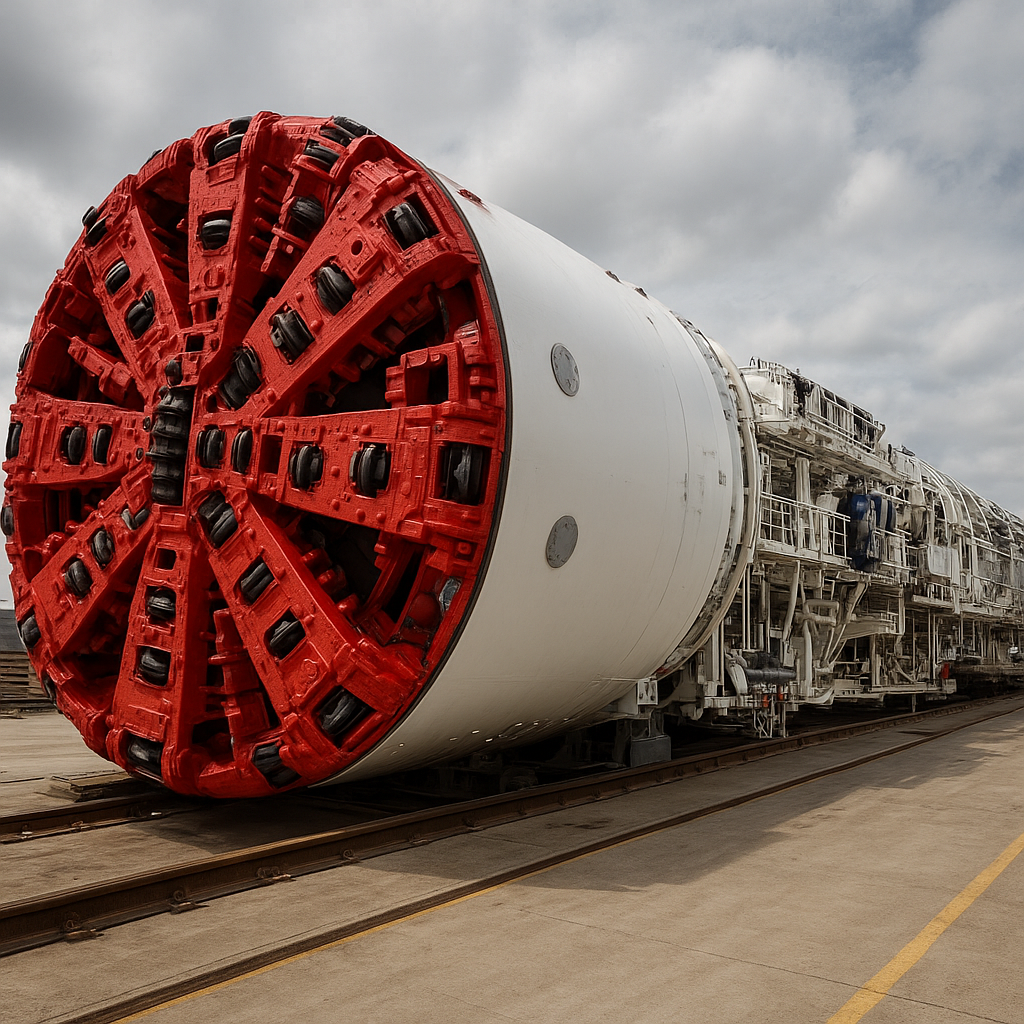
The NFM Technologies EPB TBM represents a modern approach to mechanized tunneling designed for soft ground conditions in urban and infrastructure projects. Combining a robust mechanical platform with sophisticated control systems, these machines are engineered to manage delicate ground pressures, minimize surface settlement, and maintain high production efficiency. In the following sections, we explore where these machines are used, how they work, their main components and advantages, operational considerations, environmental and safety impacts, and available performance statistics and ranges commonly associated with this class of tunneling equipment.
Overview of EPB TBM Technology and the NFM Approach
In tunneling, the term EPB stands for Earth Pressure Balance, a method that balances the pressure at the tunnel face by using the excavated material itself, conditioned as necessary, to support the ground while excavation proceeds. NFM Technologies, as a manufacturer of mechanized tunneling equipment, produces EPB TBMs that are tailored for urban metro tunnels, sewer and utility tunnels, and other sub-surface infrastructure works where control of ground movement and face stability is crucial.
Core technical concept
The fundamental principle of an EPB machine is to maintain a controlled pressure in the excavation chamber immediately behind the cutterhead. This is achieved by regulating the volume and rheology of the excavated spoil in the pressure chamber and synchronizing the screw conveyor (or auger) extraction rate with the machine advance. The approach contrasts with slurry TBMs, which use pressurized fluid to support the face.
NFM’s design features (typical)
- Modular shield and cutterhead arrangements for different diameters and soil conditions
- Advanced conditioning systems for spoil treatment (foam, polymers, or bentonite) to control material properties
- Integrated monitoring and control platforms to manage face pressure, thrust, torque and conveyor performance
- Customizable segmental lining installation systems for precast concrete rings
- Wear-resistant materials and accessible maintenance points for frequent component replacement
Applications and Typical Projects
NFM EPB TBMs are most often deployed where ground conditions include clays, silts, mixed soils, and granular deposits with variable water pressures. Their ability to operate in densely built environments makes them a natural choice for:
- Urban metro and rail tunnels where minimal surface settlement is paramount
- Sewer and wastewater tunnels beneath cities
- Road and highway underpasses with constrained alignments
- Utility corridors carrying water, gas, fiber and district heating
- Soft-ground crossings of rivers or shallow aquifers when careful face control is needed
Because EPB machines can be sized and equipped with different tooling and conditioning systems, they are versatile across a wide range of diameters—from small utility TBMs to large metro or railway shields capable of accommodating service walkways and trackwork. NFM’s machines are configured for both single and multi-drive setups depending on project scale.
Urban tunneling benefits
- Reduced surface subsidence risk due to controlled face support
- Lower noise and vibration compared to open-cut methods
- Shorter overall project timelines by minimizing traffic and utility disruptions
- Compatibility with precast segmental linings that provide immediate structural support
Main Components and Their Functions
A closer look at the primary elements of an NFM EPB TBM clarifies how the machine achieves stable, efficient excavation and tunneling:
The Cutterhead and Drive System
The cutterhead is the machine’s front element that breaks and dislodges the soil. It is fitted with replaceable disc cutters, scrapers, and knives optimized to the geology. The drive system consists of hydraulic or electric motors providing rotation and the necessary torque to shear through ground and obstructions. Torque and rotational speed are carefully controlled to match ground strength and cutter wear.
Pressure Chamber and Conditioning
Behind the cutterhead, the pressure chamber retains excavated material. Conditioning agents such as foam, polymers, or bentonite may be injected to change the spoil’s consistency, enabling better pressure transmission and easier conveyance. Effective conditioning reduces the risk of clogging and the likelihood of uncontrolled face movement.
Screw Conveyor and Muck Removal
A variable-speed screw conveyor or a combination of screws and belt conveyors evacuates conditioned spoil from the pressure chamber. Synchronization between the conveyor extraction rate and the TBM’s advance is critical; mismatches can cause over- or under-pressure at the face, risking instability or loss of control.
Thrust System and Segmented Lining Erector
Hydraulic thrust cylinders push the TBM forward against the already-installed precast concrete rings (segments). A built-in erector mechanism positions and installs segmental linings. Proper coordination ensures that as the TBM advances, permanent lining keeps pace and supports the surrounding ground.
Instrumentation and Control
Modern EPB TBMs include centralized control rooms with data logging (pressure, torque, thrust, advance rate, spoil characteristics), geotechnical sensors for settlement monitoring, and remote-access diagnostics. These systems support predictive maintenance, improve safety, and optimize performance.
Operational Considerations and Best Practices
Operating an EPB TBM requires experienced crews and careful planning. Key operational aspects include:
- Geotechnical investigation: Detailed ground models and borehole data determine cutterhead design, conditioning strategy and support systems.
- Pre-conditioning and testing: Trial mixes of conditioning agents and laboratory rheology help calibrate field injection rates.
- Real-time monitoring: Continuous tracking of face pressure, torque and advance rates allows rapid adjustment to changing conditions.
- Wear management: Cutter replacement schedules, cutterhead inspections and bolt-tightening protocols prevent unplanned downtime.
- Logistics and muck handling: Efficient spoil removal paths and muck treatment facilities are essential for sustained progress.
Successful projects also emphasize interface coordination with lining segment production, site dewatering systems, and surface traffic management plans.
Environmental, Safety and Urban Impact
EPB TBMs, including NFM’s machines, contribute to sustainable tunneling practices through lower surface disturbance and precise face control. Benefits and considerations include:
- Reduced ground settlement and therefore less risk to adjacent buildings and infrastructure
- Lower noise and vibration levels compared with blasting or cut-and-cover methods
- Contained spoil systems that limit dust and odour nuisance
- Controlled management of groundwater inflows and minimized risk of sinkholes
- Safety systems such as interlocks, emergency egress routes, and continuous gas and ventilation monitoring
Environmental compliance often requires monitoring of groundwater levels, discharge quality, and disposal practices for conditioned spoil. EPB operations can be adapted to accept inert additives or to separate reusable material from waste streams, improving sustainability.
Maintenance, Wear Parts and Lifecycle Costs
One of the main factors influencing the lifecycle cost of an EPB TBM is the management of wear parts and scheduled maintenance. Key points:
- Cutterwear: Disc cutters and cutting tools are consumables whose replacement frequency depends on geology; manufacturers design cutterheads for quick access.
- Seals and bearings: High-pressure face seals and shield bearings require inspection and periodic replacement.
- Conveyor and hydraulic systems: Regular lubrication, filter changes and hydraulic fluid checks extend component life.
- Spare parts planning: On large projects, onsite inventories for critical spares reduce downtime.
Good maintenance planning, combined with modern monitoring systems, can keep unexpected stoppages to a minimum and optimize mean time between repairs (MTBR).
Performance Statistics and Typical Ranges
Specific performance data vary by machine size, geology and project management, but the following ranges are representative of contemporary EPB TBM operation and are applicable to machines built by major manufacturers including NFM Technologies:
- Diameter range: Small utility TBMs around 1.5–3.5 m up to metro and mainline TBMs typically between 6 m and 15 m in diameter. NFM machines are produced in various diameters tailored to project needs.
- Advance rates: In favorable conditions, daily advances can reach 10–25 m/day for short bursts, whereas long-term average advance rates for urban projects commonly fall in the 2–8 m/day range, depending on geology, segment erection, and logistical constraints.
- Torque and thrust: Cutterhead torque requirements vary widely with diameter and ground; modern EPB TBMs can deliver torque from a few hundred kNm (small machines) to several thousand kNm (large shields). Thrust forces likewise scale with diameter and lining design, but cylinder packs providing thousands to tens of thousands of kN are typical on large machines.
- Muck handling: Muck removal capacity must match excavation; conveyor systems often handle several hundred to thousands of tonnes per day depending on project pace.
- Segmental lining time: Installation of precast rings typically accounts for a portion of the cycle; depending on crew and design, ring placement may take 20–90 minutes per ring, influencing overall advance.
These figures should be interpreted as indicative. Actual machine specification sheets give precise capacities for thrust, torque, hydraulic power, and spoil handling for each TBM model.
Case Study Summaries and Typical Project Workflow
While specific customer projects vary, a typical EPB TBM deployment proceeds through the following high-level stages:
- Design and manufacturing: Machine adapted to geological and logistical requirements, production of shield and components, and factory acceptance testing.
- Site assembly and launch: TBM segments assembled in a launch shaft or portal, hydraulic and electrical systems connected and tested.
- Commissioning and trial runs: Initial face conditioning and short trial drives allow calibration of polymer/foam dosing and controller settings.
- Production tunneling: Continuous operation with regular maintenance windows, ring erection, and settlement monitoring.
- Breakout and retrieval: On completion, the TBM is recovered in a reception shaft or dismantled in situ if required.
Projects often document key performance indicators (KPIs) such as meters mined per day, cutter consumption rates, slurry/foam usage, and downtime, which help in future bidding and planning.
Innovation Trends and Future Directions
Mechanized tunneling is evolving rapidly. NFM Technologies and comparable manufacturers are integrating innovations that increase productivity, safety and information transparency:
- Automation and AI-assisted controls that optimize face pressure and advance rates, and provide predictive alerts for wear and maintenance
- Improved conditioning chemistries that reduce disposal volumes and ease spoil handling
- Lightweight, high-strength materials that reduce machine mass and improve transportability
- Remote diagnostics and cloud-based data platforms that aggregate fleet performance data for benchmarking
- Modular machine designs enabling faster reconfiguration between projects and diameters
As urbanization and infrastructure renewal intensify, demand for efficient, low-impact tunneling will continue to push TBM manufacturers toward more resilient, connected and environmentally conscious solutions.
Choosing an EPB TBM and Contractor Considerations
For owners and contractors considering an EPB TBM—whether supplied by NFM Technologies or another producer—key decision factors include:
- Accurate geotechnical data and risk allocation in contracts
- Manufacturer track record for similar diameters and ground types
- Availability of local service and spare parts
- Project schedule realism, including assembly, commissioning and expected average advance
- Environmental permitting and spoil disposal plans
- Integration with segment supply and logistics chains
Selecting the right machine and contractual model can significantly affect project cost and schedule certainty. Collaboration among the owner, designer, TBM manufacturer and contractor from an early stage reduces uncertainty.
Summary and Key Takeaways
The NFM Technologies EPB TBM is part of a family of machines that provide a controlled, efficient and relatively low-impact method for constructing tunnels in soft and mixed ground. The core advantages are face stability through earth pressure balance, reduced surface settlement, and compatibility with urban construction constraints. Critical success factors include thorough geotechnical investigation, careful conditioning and monitoring of spoil, robust maintenance strategies, and advanced control systems to manage the complex interactions between mechanical systems and variable ground conditions.
Typical performance ranges for EPB TBMs cover a broad spectrum—diameters that fit small utilities to major metro lines, advance rates influenced by geology and logistics, and thrust/torque capacities scaled to match machine size. Innovations in automation, materials and conditioning continue to improve the efficiency and sustainability of EPB tunneling, making these machines a central technology for current and future underground infrastructure projects.


)
)