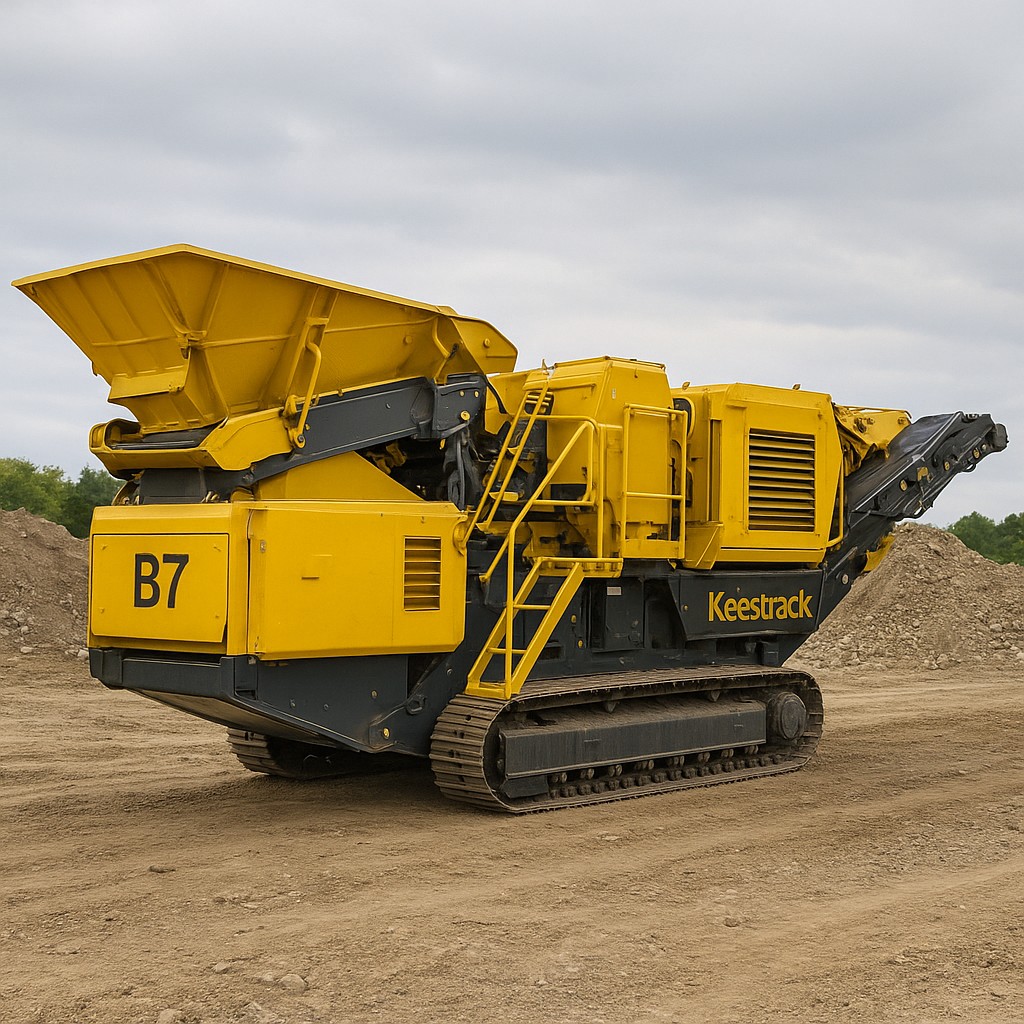
The Keestrack B7 is a compact, high-performance mobile jaw crushing unit designed for on-site crushing in a wide range of applications. Combining robust construction with modern control systems and a focus on operator convenience, the B7 aims to deliver reliable productivity and easy mobility for contractors, quarry operators and recycling businesses. This article examines the design philosophy, practical uses, technical characteristics and economic considerations surrounding the Keestrack B7, highlighting why this model has become a preferred solution where flexibility, durability and efficient material processing are required.
Overview and design
The Keestrack B7 belongs to a family of mobile jaw crushers built to handle primary crushing tasks while maintaining a compact footprint and straightforward transportability. The machine is a tracked, self-contained unit that integrates the crushing chamber, feeder, conveyors and engine into a single mobile platform. The design emphasizes ease of setup, rapid redeployment and low on-site footprint, making it well suited to contracts where mobility and quick job changes are essential.
Key design goals include mobility, user-friendly access for maintenance, and a crushing chamber optimized for a wide variety of materials. The chassis and undercarriage are built to withstand the stresses of rough terrain while enabling the unit to be transported between sites without complex disassembly. A typical B7 configuration will include a vibrating feeder with a grizzly or pre-screen option, a single toggle jaw crusher, a variable-speed belt feeder and one or more discharge conveyors.
Applications and typical use cases
The Keestrack B7 is engineered for versatility. Typical sectors and tasks include:
- Quarry and stone processing for primary reduction of blasted rock into crushed aggregate.
- Demolition and construction site recycling, where concrete and asphalt are processed for reuse.
- Road and infrastructure projects requiring on-site production of base materials.
- Small to medium scale mining operations that need a compact primary crusher.
- Contract crushing and rental fleets that demand rapid setup and high redeployment rates.
Because of its compact size and integrated conveyors, the B7 is frequently chosen for projects where space is limited, or where it is advantageous to process material close to the point of generation (e.g., on demolition sites or temporary quarries). The machine can operate as a stand-alone primary crusher or as the first stage feeding downstream screening and secondary crushing equipment, depending on the required product specification.
Technical features and approximate specifications
The B7’s technical package focuses on a balance of power, efficiency and serviceability. Below are the most relevant features and typical performance ranges; exact values depend on the chosen configuration, geology of the processed material and optional equipment.
Main construction and components
- Jaw crusher: Single toggle jaw chamber designed for high reduction ratio and stable output. Jaw profile options allow tuning for specific materials and product sizes.
- Feeder: Vibrating feeder with integrated grizzly or pre-screen to remove fines and regulate feed, improving crusher performance.
- Conveyors: Foldable or fixed discharge conveyors for crushed product; quick assembly supports fast setup and拆down.
- Powertrain: Diesel engine(s) with electric drives common on modern Keestrack units; many models offer diesel-hydraulic or diesel-electric hybrid options to optimize fuel efficiency and emissions.
- Controls: PLC-based control system with remote-control options, enabling safe remote operation and process monitoring.
Indicative performance and dimensions
- Feed opening: typically in the order of several hundred millimetres (e.g., approximately 600–800 mm by 400–500 mm depending on jaw setting)
- Throughput: typical nominal capacity often ranges from roughly 50 to 200 tonnes per hour, influenced heavily by material hardness, feed size and desired product gradation
- Engine power: many compact primary crushers use engines in a range of about 120–220 kW (160–300 hp) depending on options and electrical drive configuration
- Machine weight: compact tracked units commonly fall in the 15–25 tonne class, permitting road transport under general regulations with minimal permitting in many jurisdictions
- Typical footprint: transport width commonly around 2.5–3.0 m, transport height approx. 3.0–3.5 m and transport length in the 8–12 m band depending on conveyor positions and folding arrangements
These figures should be considered indicative. For precise technical data (exact feed opening, jaw chamber profile, throughput guarantees and weights) consult the OEM’s datasheet or an authorised dealer, as options such as additional screening decks, dust suppression systems and custom conveyors change the machine’s specifications.
Operation, maintenance and safety
Operating the Keestrack B7 efficiently requires trained personnel and a program of routine maintenance. Keestrack places emphasis on accessible service points and modular sub-assemblies to reduce downtime. Practical aspects include:
- Start-up and commissioning: Quick set-up is a key advantage—hydraulically folding conveyors and simple feeder connections enable rapid commissioning after transport.
- Routine maintenance: Access panels, large service doors and strategically placed lubrication points reduce time required for wear part inspection and basic servicing. Common wear parts include jaw plates, toggle components and conveyor belts.
- Wear monitoring: Modern units are often fitted with sensors and remote diagnostic capabilities to alert operators to abnormal vibrations, temperature rises or low oil pressure, enabling predictive maintenance.
- Safety systems: Emergency stops, guarded moving parts, anti-slip surfaces and remote-control capabilities enhance operator safety. Lock-out procedures for mechanical and electrical systems are standard practice.
Best practices for prolonging machine life include controlling feed size and distribution with the feeder, minimizing tramp material into the crusher, maintaining a steady, well-graded feed and scheduling periodic replacement of high-wear components before severe degradation occurs. For recycling contexts, pre-screening to remove fines and contaminants (rebar, large metal items) protects the crusher and downstream conveyors.
Economic and environmental considerations
Choosing the B7 involves more than just technical fit: cost of ownership, fuel consumption and environmental impact are crucial considerations.
- Operational cost: Compact mobile crushers like the B7 lower logistics costs by allowing material processing at the source. This reduces haulage costs and enables faster project turnaround. Fuel consumption and wear part usage contribute most to operating expenses, so matching crusher settings and feed quality to the job reduces unit operating costs.
- Resale and rental market: Resale value tends to remain strong for reputable brands with good service networks. Rental companies often find compact, versatile units popular because they suit a wide range of small-to-medium jobs.
- Environmental footprint: Diesel-electric and hybrid drive options can reduce fuel burn and emissions. On-site crushing reduces truck movements, lowering CO2 emissions and local disruption. Dust suppression and noise reduction packages further attenuate environmental impacts.
- Regulatory compliance: Many jurisdictions mandate emissions limits and noise restrictions. Configuring the B7 with the appropriate engine emission tier and adding acoustic enclosures or water-spray dust suppression helps meet local requirements.
Practical tips for buyers and rental companies
When evaluating the B7 for purchase or rental, consider the following factors to ensure the machine matches operational needs:
- Define the primary material types (e.g., granite, limestone, recycled concrete) and expected feed size and throughput—these determine the jaw profile and feeder options required.
- Assess mobility needs: if frequent redeployment over long distances is expected, verify transport dimensions and any special permits required.
- Clarify service and spare parts availability in your region—fast access to wear parts reduces downtime and total cost of ownership.
- Consider optional extras: pre-screening, magnetic separators for recycling, dust suppression systems, remote telematics and on-board electric power take-offs may be valuable depending on site conditions.
- Check warranty and service packages—extended service agreements or dealer-managed maintenance can simplify fleet management for rental companies.
Industry position and market observations
Keestrack has built a reputation for reliable, well-engineered mobile crushing and screening solutions. The B7, as a compact primary crusher, occupies an important niche between very small mobile units and larger static primary crushers. Market demand for compact, high-mobility plants has grown with the increasing focus on urban construction projects, recycling and short-term quarry operations.
While exact sales figures for the B7 model are typically held by the manufacturer and dealers, general market trends indicate steady demand for compact crushers in developing infrastructure markets and mature regions prioritizing material reuse. Rental fleets often include several units of this class due to their broad applicability and fast job turnaround.
Case examples and typical job profiles
Typical scenarios where a B7 is put to use include:
- Urban demolition site: Concrete and brick rubble are processed on site; ferrous separators and pre-screens remove contaminants, producing base material for re-use in foundations and road sub-bases.
- Small quarry startup: A compact primary crusher like the B7 allows a new quarry to begin producing saleable aggregate economically before investing in larger, fixed plants.
- Contract crushing: A contractor uses the B7 across multiple short-term road construction projects, benefiting from fast setup and minimal transport preparation.
These real-world uses underline the B7’s strengths: fast deployment, versatility, and suitability for mixed-material processing.
Conclusion
The Keestrack B7 is a compact, robust and adaptable mobile jaw crusher designed to meet the needs of modern construction, recycling and quarrying operations where flexibility and rapid deployment are critical. With a focus on serviceability, operator safety and fuel-conscious design, the B7 offers a practical solution for primary crushing tasks. Prospective operators should match machine configuration and optional features to their material types and site conditions, and confirm detailed technical specifications with authorised dealers to ensure the machine meets throughput and regulatory requirements.


)
)