Urban landscapes thrive on the seamless integration of underground transit networks, relying on a combination of specialized machinery and skilled professionals. This article explores the intricate processes and advanced equipment that drive the construction of underground metros and subway systems around the world.
Design and Geotechnical Investigations
The foundation of any successful underground project lies in thorough geotechnical studies and meticulous planning. Engineers conduct soil sampling, rock core drilling, and groundwater assessments to map subterranean conditions. High-resolution seismic surveys and borehole data reveal the composition and stability of the earth’s layers, enabling teams to choose the most appropriate construction techniques. Throughout this phase, digital modeling software integrates site data to simulate tunnel trajectories, ventilation shafts, and station caverns, optimizing alignment for minimal disruption to existing infrastructure.
Tunnel Boring Machines in Action
Components and Mechanisms
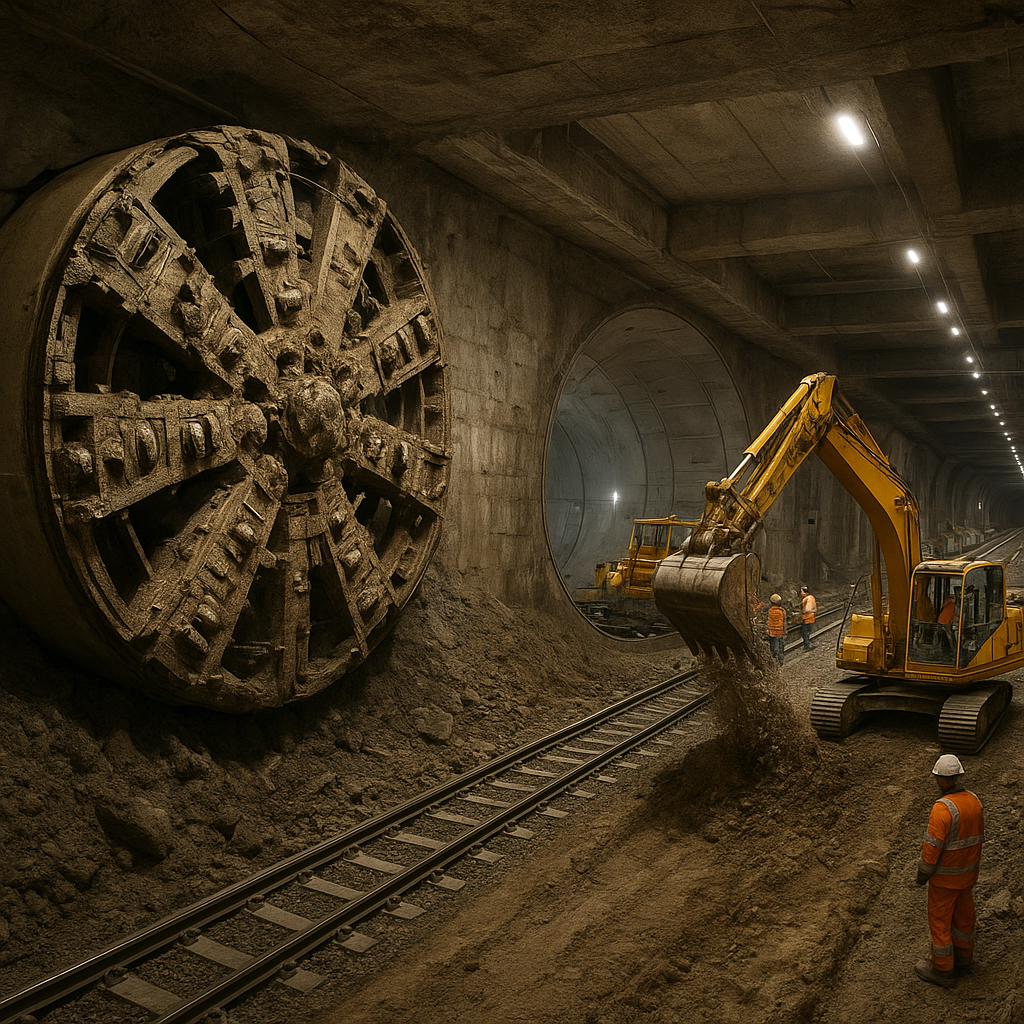
The centerpiece of modern tunneling is the tunnel boring machine (TBM), a colossal apparatus designed to excavate deep below city streets. A typical TBM consists of:
- Cutterhead: A rotating disc fitted with disc cutters or drag bits that grind through rock and soil.
- Shield: A cylindrical steel shell that supports the tunnel face and prevents collapse in soft ground.
- Conveyor System: A chain or belt mechanism that transports excavated spoil to the rear for removal.
- Thrust Jacks: Hydraulic pistons that push the TBM forward against preinstalled tunnel segments.
As the machine advances, precast concrete rings are erected segment by segment to form a robust tunnel lining. This method allows continuous progress while maintaining site safety and precision.
Types of TBMs
- Earth Pressure Balance Machines (EPB): Ideal for soft, water-bearing soils, using excavated material itself to balance ground pressure.
- Slurry Shield TBMs: Employ bentonite slurry to stabilize the tunnel face and carry spoil away from the cutterhead.
- Hard Rock TBMs: Equipped with disc cutterheads that exert high torque to break through competent rock formations.
Support and Monitoring Systems
Maintaining structural integrity and safety during excavation demands a suite of advanced monitoring tools. Real-time sensors installed on the TBM and surrounding support structures track parameters such as:
- Face pressure and torque on the cutterhead
- Ground settlement and deformation
- Convergence of the tunnel lining
- Vibration and noise levels transmitted to nearby buildings
Automated feedback loops adjust cutting rates, thrust pressures, and slurry flow to respond instantly to changing ground conditions. Geotechnical engineers review live data feeds in a control room, intervening when anomalies arise to prevent ground failures and ensure uninterrupted progress.
Logistics and Material Handling
Efficient logistics is critical when dealing with the massive volumes of spoil generated by TBMs—often thousands of cubic meters per day. Removal strategies include:
- Conveyor Belts: Linking the TBM’s discharge chute to surface crushers or transfer points within the tunnel.
- Rail Wagons: Battery-powered or diesel locomotives pulling muck cars along temporary tracks.
- Slurry Pipelines: For slurry TBMs, pumping mixture to separation plants above ground where solids are extracted and water is recycled.
On the supply side, just-in-time delivery of precast tunnel segments and structural materials prevents congestion in the confined workspace. Automated stacking systems and overhead cranes position each segment with exacting precision, while on-site storage yards use RFID tracking to streamline inventory management.
Safety and Environmental Stewardship
Underground construction poses unique challenges to worker safety and environmental protection. Projects adhere to stringent regulatory standards and best practices, including:
- Continuous air quality monitoring to detect hazardous gases and maintain adequate ventilation.
- Emergency refuge chambers equipped with breathable air supplies and communication systems.
- Vibration control plans to mitigate impacts on heritage structures and sensitive equipment.
- Groundwater management strategies to prevent aquifer contamination and surface subsidence.
Innovative tunnel design incorporates noise barriers, water-resistant linings, and environmentally friendly lubricants for the TBM’s bearings and hydraulic systems. In densely populated areas, machines operate at reduced noise levels using specialized sound insulation blankets and low-vibration cutterheads.
Automation and Digital Twins
The rise of Industry 4.0 has propelled automation into the heart of tunneling. Cutting-edge projects deploy robotic arms for precision welding of steel reinforcement and automated guided vehicles (AGVs) for material transport. A digital twin—a real-time virtual replica of the tunnel—integrates data from multiple sources, enabling operators to simulate scenarios and optimize workflows before implementing physical changes. Machine learning algorithms analyze operational metrics to predict maintenance needs, reducing downtime and enhancing overall efficiency.
Future of Underground Transit Construction
Looking ahead, the convergence of innovation and sustainable practices will shape the next generation of metro systems. Emerging trends include:
- Use of hybrid TBMs capable of switching between EPB and hard rock modes, increasing versatility across varied geology.
- Development of bio-based lubricants and corrosion-resistant composite segments to extend service life.
- Deployment of AI-driven site management platforms that coordinate multiple machines, optimizing resource allocation.
- Integration of green energy solutions, such as solar-powered control centers and regenerative braking systems in underground stations.
As these technological advances mature, urban planners and contractors will deliver faster, cleaner, and more resilient subway networks—ensuring that subterranean arteries continue to support the heartbeat of modern cities.