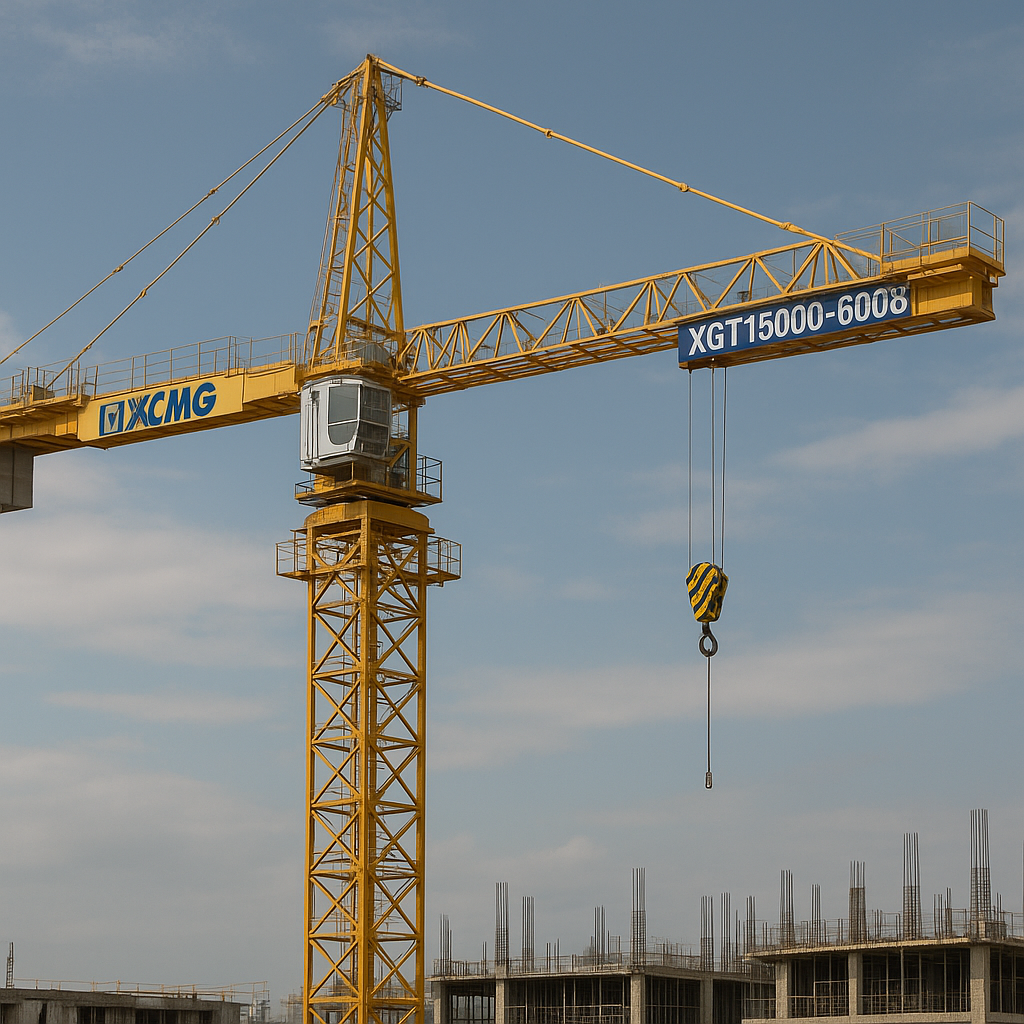
The XCMG XGT15000-600S is a high-capacity tower crane designed for heavy-duty construction projects where reach, stability and lifting performance are critical. Manufactured by XCMG, one of the world’s largest construction machinery producers, this model combines robust structural design, advanced control systems and modular assembly to meet demands of modern urban construction, power plants, bridges and industrial sites. In the sections below we examine its design and technical characteristics, typical applications, installation and safety practices, maintenance and lifecycle considerations, and the broader market and environmental context in which this crane operates.
Design and technical characteristics
The XCMG XGT15000-600S is engineered as a high-performance luffing or hammerhead-style tower crane (depending on configuration) that prioritizes a high rated capacity and flexible geometry for diverse jobsite conditions. Key design goals include maximizing the relationship between lifting capacity and footprint, enabling longer jib reaches without sacrificing rated loads, and simplifying assembly through modular tower and slewing components.
Core structural features
- Mast and slewing unit: The crane uses modular mast sections with bolted connections for vertical erection and a robust slewing bearing to transmit hoisting loads and lateral moments to the foundation or base frame.
- Jib and counter-jib: The XGT15000-600S is available with multiple jib-length options, permitting adaptation for short-radius heavy lifts or long-reach lighter lifts. The counter-jib houses ballast and winch groups for balance and control.
- Hoisting system: Multiple winches provide hoisting, trolleying and luffing motions, with reducers and brake systems meeting industry safety standards. Redundant braking and limit switches are typical to prevent overhoist and overload conditions.
- Operator cabin and controls: Ergonomically designed cabins with climate control, advanced displays and joystick controls are standard. Modern variants include remote diagnostics and optional remote-control operation for added versatility.
Performance specifications (typical and model-indicative)
Product designations commonly encode nominal capacity: XGT15000 indicates a rated capacity of approximately 15,000 kg (15 t) at a defined radius. The suffix 600S refers to a specific configuration or series layout. Typical performance parameters for a crane in this class include:
- Maximum rated lifting capacity: around 15 t at the shortest working radius
- Maximum safe working radius: configurable; commonly up to 50–70 m jib length for long-reach variants
- Maximum lifting moment: designed to handle heavy moments consistent with a 15 t class tower crane
- Hoisting speed and trolleying: multiple-speed winches providing precise load handling and positioning
- Installation height and derrick options: modular sections enable tall tower heights when tied into building structures or guyed supports
Note: Exact numeric specifications (such as maximum radius for full rated load, moment rating, hook speed and motor ratings) vary by factory-supplied configuration and optional packages. For project-critical planning, refer to the manufacturer’s official load charts and installation manuals for the specific serial-numbered unit.
Applications and typical use cases
The XCMG XGT15000-600S is suited for projects that require a combination of substantial lifting capacity and flexible reach. It is frequently employed where space is constrained but heavy components must be lifted to height, or where extended reach is necessary without resorting to mobile cranes or staged lifts.
Common sectors and project types
- High-rise construction: Structural steel modules, precast concrete panels and mechanical plant components are typical loads.
- Industrial plants and power stations: Turbines, generators and large piping segments are often handled with high-capacity tower cranes.
- Bridge and civil works: Span segments and formwork sections require predictable heavy lifts and long reach, making this class suitable.
- Port and logistics terminals: Shore-side lifts, bulky equipment installations and shipboard assemblies occasionally use tower cranes where fixed-position lifting is advantageous.
- Modular construction and prefab assembly: The crane’s capacity and precision make it suited for installing prefabricated modules and MEP plant skids.
Advantages in urban environments
In dense urban sites where ground access is limited and mobile crane placement is impractical, a fixed tower crane such as the XGT15000-600S provides predictable lifting capability with a reduced site footprint. Its modular mast allows for efficient vertical growth as building levels rise, and its counter-jib and ballast arrangements reduce the need for extensive ground anchoring compared to some alternatives. The availability of variants with remote monitoring and load-recording capabilities supports compliance with site safety management and project documentation.
Installation, operation and safety
Proper installation and operation of the XCMG XGT15000-600S are essential to realizing its performance while protecting workers and assets. The crane combines heavy structural components with high-energy winches and dynamic loads; therefore, rigorous procedures and experienced teams are required during assembly, operation, and dismantling.
Installation phases
- Site assessment and foundation design: Soil testing and geotechnical assessment determine foundation type (mass concrete pad, piled foundation, or anchoring to existing structures).
- Modular assembly: Mast sections, slewing unit and jib are assembled using auxiliary cranes or self-erecting equipment, following the manufacturer’s sequence.
- Ballast and counterweight placement: Accurate placement of ballast ensures the crane meets specified countermoment characteristics.
- Commissioning and load testing: Before handing over for operational use, static and dynamic tests, including proof-load tests, verify system integrity and instrumentation calibration.
Operational safety systems
- Load moment limiter (LML): Prevents operations that would exceed rated moment, protecting structural and foundation limits.
- Overload protection: Electronic and mechanical systems warn or automatically inhibit unsafe hoisting operations.
- Anti-collision and positioning aids: On multi-crane sites, coordination systems reduce the risk of interference.
- Wind and weather monitoring: Operational limits are defined for wind speed and icing conditions; modern controllers can lock out operations when thresholds are exceeded.
- Emergency lowering and redundancy: Backup power, braking redundancies and manual lowering procedures reduce risk in power-failure scenarios.
Operator training and competence
Skilled crane operators and rigging teams are essential. Besides formal certification, familiarity with the specific XCMG control interface, load charts and limiters is crucial. Regular drills for emergency procedures and coordination with signalers and lift planners improves safety margins on complex lifts.
Maintenance, lifecycle and economic considerations
Lifecycle costs and productive uptime are major considerations for contractors choosing a tower crane. The XCMG XGT15000-600S is designed for robust duty cycles, but proper maintenance, preventive service and periodic inspection dictate actual operating life and total cost of ownership.
Routine maintenance tasks
- Lubrication of slewing bearing, winch gearboxes and pin joints
- Inspection of wire ropes, hooks, safety latches and load blocks
- Electrical system checks including control panels, limit switches and backup circuits
- Non-destructive testing of critical structural welds and bolted connections at service intervals
- Calibration of load-moment and overload protection systems
Expected service life and resale
With correct maintenance and occasional component refurbishments, a well-managed tower crane can provide reliable service for 15–25 years or longer. Resale value depends on hours of use, condition of structural components and availability of documented maintenance history. XCMG equipment benefits from a global parts and service network, which can improve uptime and preserve value when compared to vendors with limited regional support.
Economic considerations
Decision drivers when selecting a crane like the XGT15000-600S typically include: total lifting requirement and duty cycle, site layout and access limitations, rental vs purchase analysis, and expected project duration. The modular nature of the crane can reduce mobilization costs across multiple projects, and higher lifting efficiency—fewer auxiliary lifts and faster cycle times—translates directly into labor savings and schedule compression.
Environmental, regulatory and market context
Tower cranes operate within a regulatory environment covering occupational safety, emissions, noise, and local permitting. Furthermore, the global crane market dynamics and manufacturer ecosystems shape availability, pricing and technological advancement.
Environmental and community impacts
- Noise and vibration: Modern electric drives and optimized gearboxes reduce noise compared to older hydraulic systems; nevertheless, local noise ordinances can affect allowable working hours.
- Emissions: Electric mains-powered cranes have nil on-site combustion emissions, favoring urban projects where diesel emissions are a concern.
- Energy use: Efficient motor control and regenerative systems (where fitted) can reduce peak power draw during deceleration phases.
Regulatory and compliance considerations
Depending on jurisdiction, tower crane installation requires structural approvals, crane-specific permits, and periodic inspection certificates. Load testing records, operator qualifications and maintenance logs are often audited as part of compliance regimes.
Market position and industry statistics
XCMG is a major global player in construction machinery and cranes. While specific sales figures for a single model like the XGT15000-600S are not always publicly disclosed, XCMG’s crane division has shown strong export growth, and XCMG ranks among the world’s largest crane manufacturers by production volume. Industry-wide:
- Demand for tower cranes correlates strongly with urban construction activity, particularly in Asia, the Middle East and parts of Africa where high-rise building continues to expand.
- In recent years, the global tower crane market has been driven by infrastructure spending and urbanization; forecasts prior to disruption events projected moderate compound annual growth rates in the mid-single digits.
- Manufacturers are increasingly offering telematics, remote diagnostics and predictive maintenance to support uptime and reduce lifecycle costs—features available as options on many modern XCMG cranes.
Operational case scenarios and practical tips
To help project planners and site managers, below are illustrative scenarios and recommended best practices when deploying a crane of this class.
Scenario: High-rise façade installation
- Use the XGT15000-600S for lifting façade panels and glazing units to multiple floors. Configure jib length to provide required reach while maintaining rated loads for the typical panel weight.
- Install mast tie-ins at regular floor intervals as construction progresses to increase tower stability and allow deeper lifts as floors rise.
- Coordinate lifts with just-in-time delivery to minimize on-site storage and reduce crane idle time.
Scenario: Industrial module placement
- For heavy equipment like HVAC skids or generators, plan lifts at the shortest practical radius to maximize safe capacity. Use certified rigging and taglines to control orientation.
- Perform dynamic risk assessments for complex lifts and ensure a dedicated lift supervisor is present to authorize live changes to the lift plan.
Practical tips
- Always refer to the load chart specific to the crane’s installed jib and counterweight configuration when planning lifts.
- Record wind and weather conditions and observe manufacturer stop-work thresholds for gusts and sustained wind.
- Implement a preventive maintenance schedule and keep detailed records to maintain resale value and ensure regulatory compliance.
Conclusion
The XCMG XGT15000-600S is a capable and flexible tower crane option for contractors executing heavy-lift, high-reach and space-constrained construction works. With a nominal class capacity around 15 t, modular mast systems, robust safety features and modern control electronics, it addresses many challenges posed by urban high-rise and industrial projects. Successful deployment depends on meticulous planning: selecting the right jib and counterweight package, ensuring compliant foundations and tie-ins, training operators and rigging crews, and maintaining thorough maintenance and inspection routines. When integrated into a broader site logistics and safety program, the XGT15000-600S can contribute to improved productivity, schedule reliability and economic efficiency on demanding projects.


)
)